Motorcycling has many risks involved, and no matter how experienced one is, the most common fear that persists in every rider’s head is the ‘fear of an accident’.
Now, one can surely cut down the chances of meeting an accident by honing the riding skills. Also, staying alert with pure focus while riding is certainly one of the traits of a good rider but sometimes if you are running out of luck you can easily go down because of someone else’s fault.
Motorcycle riding is quite a risky task, especially if you are a beginner rider and roads around your vicinity aren’t in the best shape. Also what increases the risk is absence of proper road lights due to which most of the accidents happen at night.
Most of such cases happen because of less visibility of the rider, and hence it’s always recommended to wear reflective jackets, pants and every needed accessory that makes you more visible out there on the road. One such important after-market accessory is ‘flasher lights’.
What are the Hazard Flasher Lights?
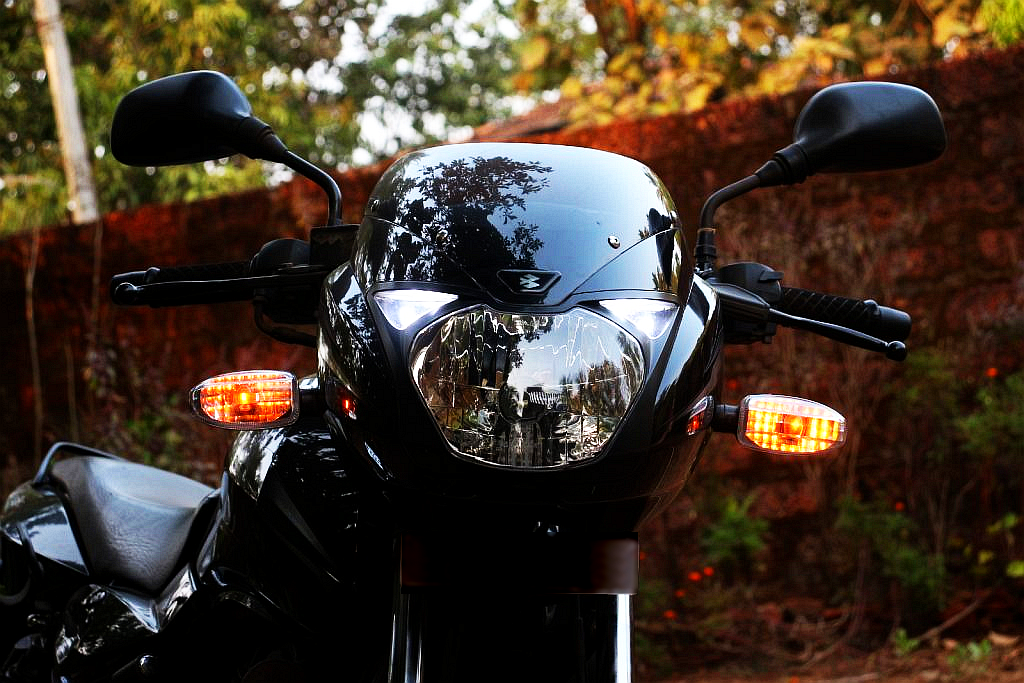
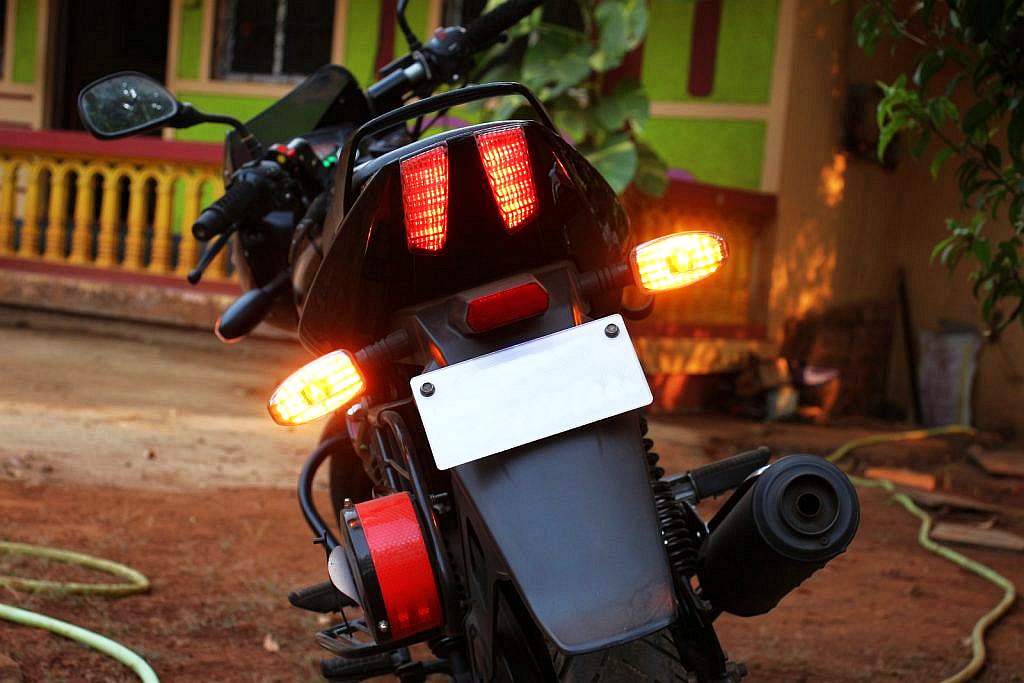
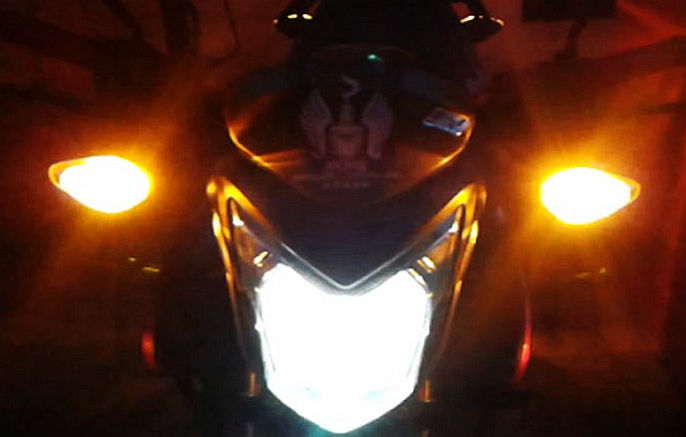
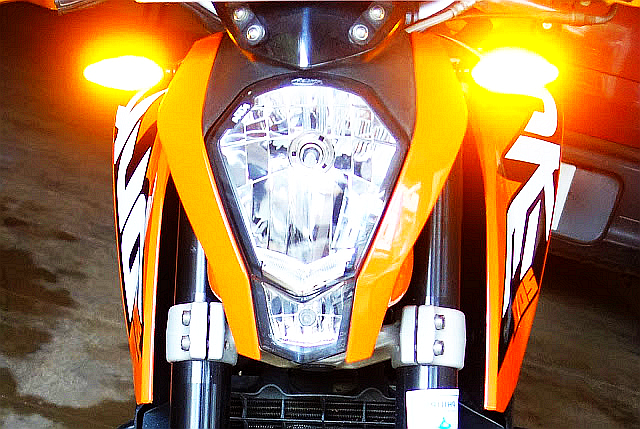
Flasher Lights are designed to give motorcycle turning indicators various blinking effects which increase visibility on the road. These flasher lights can be operated in various formats or patterns. And each pattern can be easily selected on a push of a button.
_______________________________________
Flasher lights are designed to attract attention out there on the road.
How do Flasher Lights Make Riding Safer?
These lights are nothing but a modified form of hazard lights (which are available in the stock form in some motorcycles). Flasher lights are designed to attract attention out there on the road. These can be deployed at times when the visibility is quite low for example during the night time or foggy conditions. These lights can also be used when a vehicle is pulled over to the side of the road, to make the motorcycle more visible to the on-going traffic.
Apart from being useful, you will also agree onto the fact that they make the motorcycle look good, especially when riding with a group and all the bikes are lit-up with flasher lights.
_______________________________________
Make sure that you visit a certified mechanic or electric technician for safe installation of these lights.
Also, it is recommended that you use LED direction indicator lights since LED lights are much brighter compared to the traditional halogen lamp lights, also they have a much longer life cycle compared to other traditional lights.
Since flasher lights change the pattern of lights and make the lamps blink much faster than usual, hence these lights are more compatible to be used with LED directional indicators.
Also, make sure that you visit a certified mechanic or electric technician for easy and safe installation these lights. The PnP Hazard Flasher module is a highly recommended, easy to install flasher device which has been designed to fit in all various kinds of motorcycles.
_______________________________________
“One such important after-market accessory is Hazard Flasher Lights or Pnp Flasher lights.”
_______________________________________
Moust of all, Remember that Always You Can:
Choose Your Destiny!
Visit our website if you want the perfect wheels for your Motorcycle!
One of the greatest fears of a motorcyclist is to get stuck somewhere in the middle of the road next to nowhere.
If the cause is a busted chain set or an engine then there is nothing much you can do about it, as calling for a tow van is the best option you have, but a busted tyre? Well that should definitely not be something to worry about and in the article below we explain what needs to be done in case you have a flat tyre.
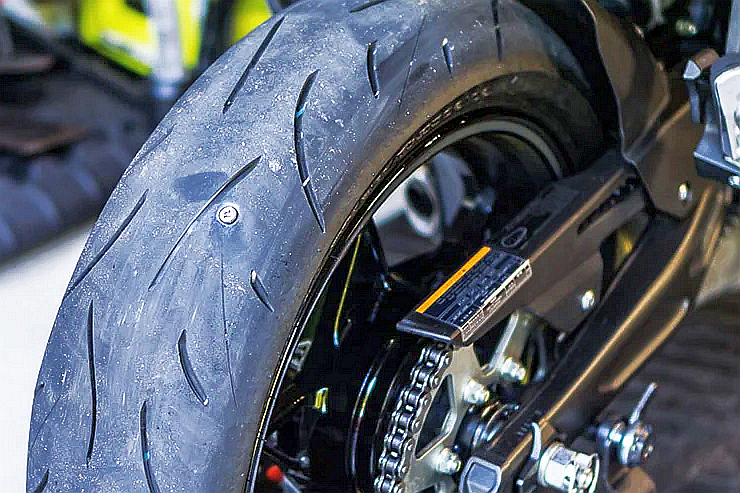
As soon as a sharp article (usually a nail or a thin nut) hits the tyre at a wrong spot, it usually pierces the rubber surface especially when the tyre is on the move as it is comparatively easy to slip in due to momentum forces and softer surface due to raised temperature. As a result, it deflates the tyre and you can’t move any further until the issue is fixed.
_______________________________________
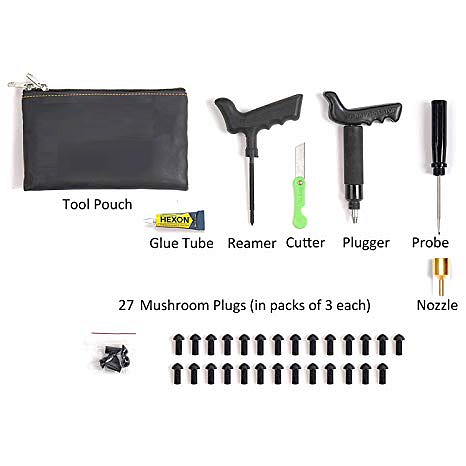
Maybe is a good idea if you simply carry a Mini plug puncture repair kit
Now what?
Either you can push your luggage laden motorcycle at least a few kilometers down the road to the next fuel pump or a tyre repair shop, else you can simply carry a Mini plug puncture repair kit as available on Grandpitstop.com, which is good enough to repair a leakage in less than a minute.
_______________________________________
How can a puncture be fixed?
All you have to do is simply follow the steps below using the Mini Plug Puncture Repair Kit:
Make sure the motorcycle is parked properly on a plain surface or else you really wouldn’t want it to tumble on either sides when you trying to work on the more important issue.
Take a closer look at the tyre, it shouldn’t be the rare case of tyre blow out, if no then thank lord for that, else keep the towing van number handy (no we are not joking).
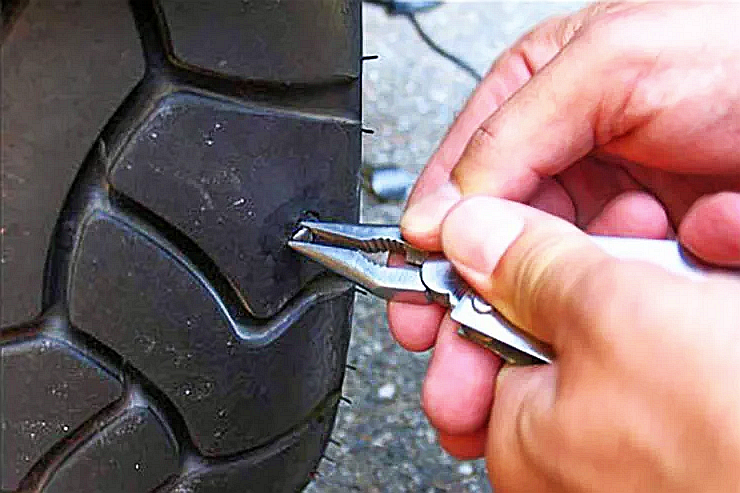
If it is a regular puncture, and you can clearly see the nail resting inside the tyre in peace, pull it out and examine the leakage properly.
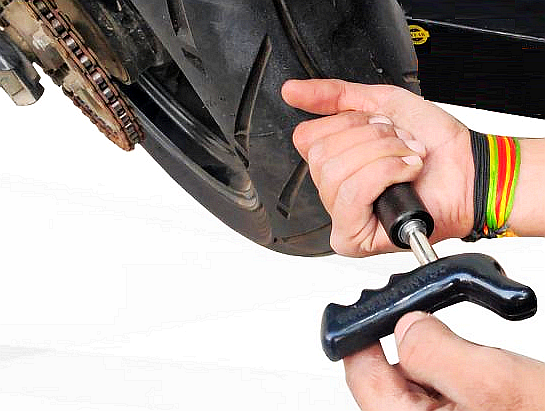
Use the reamer from the repair kit pouch to widen the leakage making space for the repair plug/mushroom to fit in the tyre.
Soon after that, use the probe to insert the nozzle into the space drilled using the reamer.
Pull out the probe, let the nozzle rest and screw the mushroom plug into the nozzle.
Rotate the key and push the mushroom plug inside the tyre, and remove the tools.
After the above step, the plug has already been fixed into the leakage space and it has been sealed properly by this time.
Lastly, pull the plug outside making sure that it fits the inside surface well (acting as a rivet), and you are good to go.
_______________________________________
The punctures can be easily fixed using the above steps.
Inflate the tyre
The punctures can be easily fixed using the above steps, but soon after you will need to inflate the tyre which can be done using Grandpitstop’s tyre inflation kits available online. These kits comprises of C02 cartridges which tend to inflate all kinds of tyres in no time.
Make sure you carry the puncture repair kit and the inflation kit on all your motorcycle road trips, which will surely save your time and energy in case there is a nail waiting for your motorcycle tyre on the next corner of the trip.
Motorcycle crashes are bound to happen. It doesn’t really matter if you are a rookie rider or a professional at least once in a while you will bite the dust because crashes are unavoidable sometimes.
But there are certain tips and tricks that you can practice, or at least keep in mind that will trim down your chances of a crash while riding a bike.
1. Use Turn Indicators
_______________________________________
You can get yourself knocked out (from behind) if you don’t turning with a signal.
The most common way you can get yourself knocked out from behind is by turning without a signal. If you don’t signal the direction you are about to take, then there are good chances that the vehicle coming from behind will not be alerted about your sudden lane/direction change and hence may not brake in time.
So the first rule of safe riding is to use direction indicators which are not just for your safety, but for the safety of others too.
2. Use both the brakes
_______________________________________
Braking is one of the most important skills to learn as it can save your life.
Braking is one of the most important skills to learn as it can save your life. The right way to brake is to use braking force on both the ends or in simple words use both brakes whenever you need to stop. This distributes the braking forces and neither end washes out or skids.
Another important point to note here is that use the front-brake very cautiously, if your motorcycle doesn’t have ABS (Anti-brake Lock System) then there are good chances that the front-end might get locked when the lever is pressed harder than required. So always maintain a safe braking distance from the vehicle ahead, and brake in time and cautiously.
Also, make sure that your brakes are properly serviced and the disc pads have enough life left. If your brakes aren’t in the best state then you are only inviting trouble for yourself.
3. Use Rear View Mirrors
_______________________________________
There is a reason why rearview mirrors are called life savers.
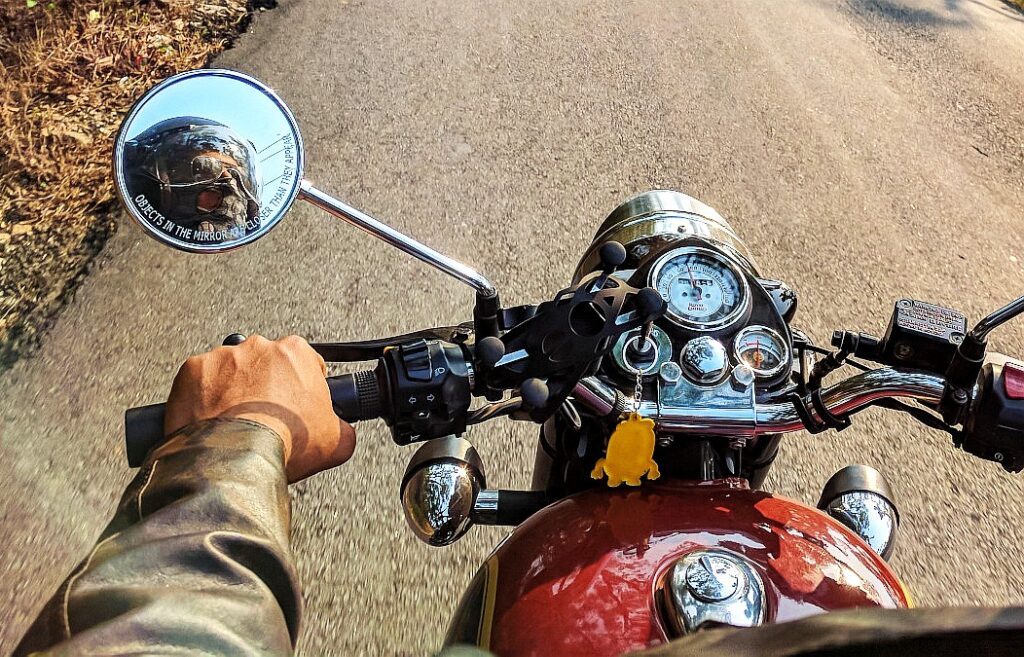
There is a reason why rearview mirrors are called life savers. They provide a good view of the vehicle oncoming from the back. Hence always make sure that you look behind whenever you need to change lanes, or overtake. Also, at the same time, do not forget to use the turn indicators to alert the other vehicle for the direction changes.
4. Avoid Night Riding
_______________________________________
Riding a motorcycle at night comes with its own share of risks.
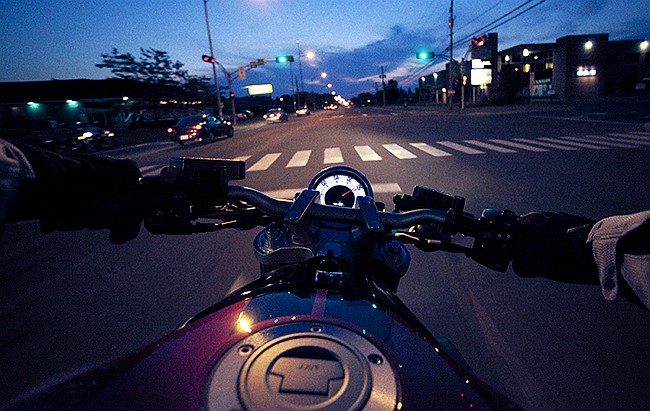
Riding a motorcycle at night comes with its own share of risks. Visibility drops at night and it becomes harder to see the obstacles, and then there are some fools who drive on the high-beam. All these factors combine to make the night riding far riskier compared to the day riding. Even experienced riders who have a fair share of experience under their belt will recommend the same.
Even if you decide to ride at night, make sure you wear enough reflective clothing and have extra lights installed on your bike for the best visibility. And if possible, always ride out with some friends/companions at night.
5. Do not ride faster than your guardian angel!
_______________________________________
The faster you ride the more risk you invite.
The faster you ride the more risk you invite. Make sure that you have enough patience, and respect for your motorcycle and your life. Never try to test the limits of your bike on the public roads, and most importantly avoid road-racing at all costs.
“Going fast on a motorcycle is okay, but never hurry”
Motorcycle maintenance is no rocket science, and cleaning a motorcycle chain comes in as one of the easiest things you can learn if you need to take care of your bike well and of course save some cash at the same time.
Chain cleaning and adjustment comes in as an integral part of bike maintenance which needs to be done periodically after every 600 kilometers to 700 kilometers of usage depending up on the terrain and riding conditions.
Why chain cleaning is important?
_______________________________________
Periodic chain maintenance extends life of the chain set.
Periodic chain maintenance extends life of the chain set. The motorcycle chain tends to stick dirt and slush and efficiency is thus decreased. With time all the unwanted particles sticking on the chain also cuts down the rings that hold the chain together. Also, the most common problem faced by people who doesn’t clean and lubricate their bike chains very often is ‘chain rusting’. A rusted chain will never be as efficient as a well maintained chain and thus power loss at the rear wheel comes naturally.
Leaving the power losses aside, a well maintained chain’s life is much longer compared to the one which is never taken care of.
How to clean lubricate chain easily?
_______________________________________
Include a chain cleaner spray, a chain cleaning brush, a cloth and a chain lubricant spray.
There are some very basic necessities for this process which include a chain cleaner spray, a chain cleaning brush, a cloth and a chain lubricant spray. Also if your motorbike doesn’t feature a centre stand you will definitely require an external support for the rear wheel which may be provided by a Paddock Stand or a G-Roller.
The Process:
Park the motorcycle on the centre stand/paddock stand and engage the gear box in neutral to make sure the rear wheel is free to move.
Rotate the rear wheel clock wise and gently apply the chain cleaning spray. At the same time make sure you cover the ground with thick sheets of paper to prevent any spillage of the cleaning liquid on the floor.
Now use the cleaning brush throughout on all the chain walls to make sure no surface remains undone.
After the chain is thoroughly cleaned, use the cloth to soak up all cleaning liquid dripping from the chain set.
Let the chain dry for at least an hour and then use the chain lubricant spray and gently cover all the chain surfaces while repeating the earlier wheel motion.
Do not ride the bike until the lubricant spray settles down on to the chain which takes at least 40 to 60 minutes. Also, do not wash the vehicles right after applying the lubricant spray as it might get washed off in the process too.
Over application of spray may result in lube leaking out to the floor creating black patches which are hard to remove, so make sure you prevent over application of the lube spray.
_______________________________________
Chain cleaning and lubrication is a very simple process.
Please Note:
Chain cleaning and lubrication is a very simple process but can prove to be hazardous if all the steps aren’t properly followed. Make sure you turn the ignition off and never use the bike’s mechanical power to rotate the rear wheel.
If done so, you might end up losing chunks of your fingers stuck between the chain and the rear sprocket and of course you wouldn’t want that. Also make sure to cover the face with a mask or a wet cloth while applying sprays to prevent accidental inhalation.
Nobody wants anything bad to happen to their motorcycle, which is why lots of us consider bolting frame sliders to our bikes. But is a frame slider going to save your bacon, or it could have potentially caused more harm in a crash?
Let’s be honest, when bikes tip over at the gas station or in your garage, that’s a pretty common way for a motorcycle to succumb to gravity. In those scenarios, frame sliders are a great investment and are totally worth it.
1. What Do Frame Sliders Do On a Motorcycle?
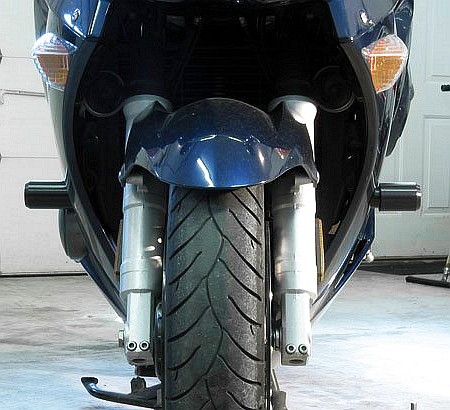
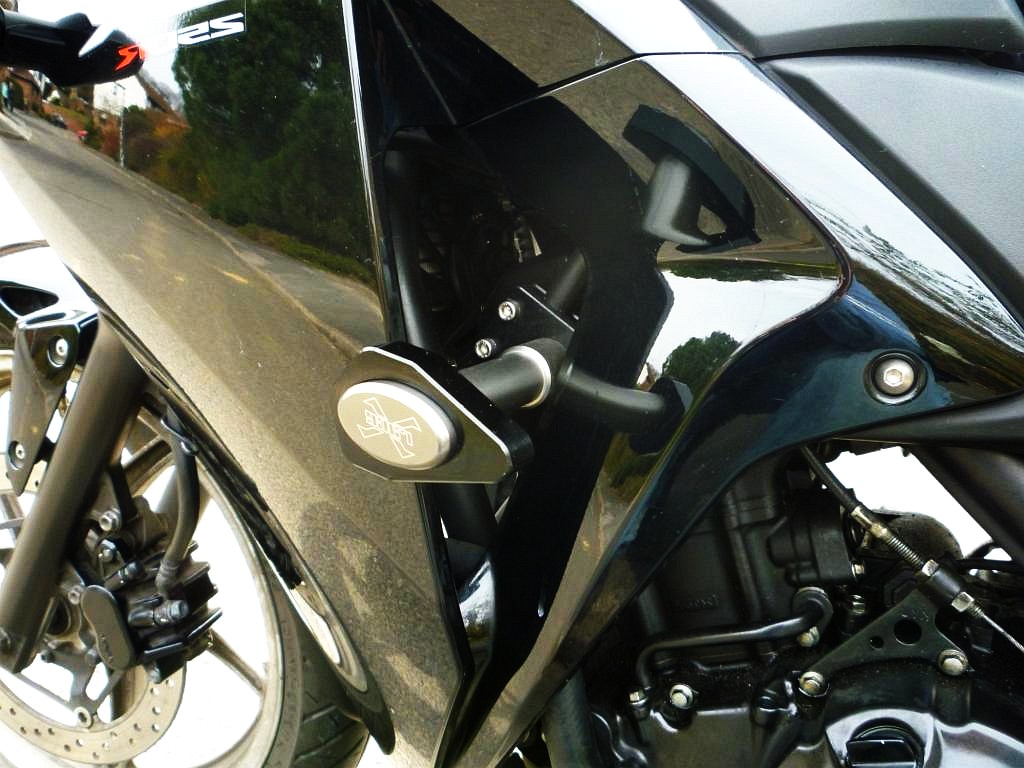
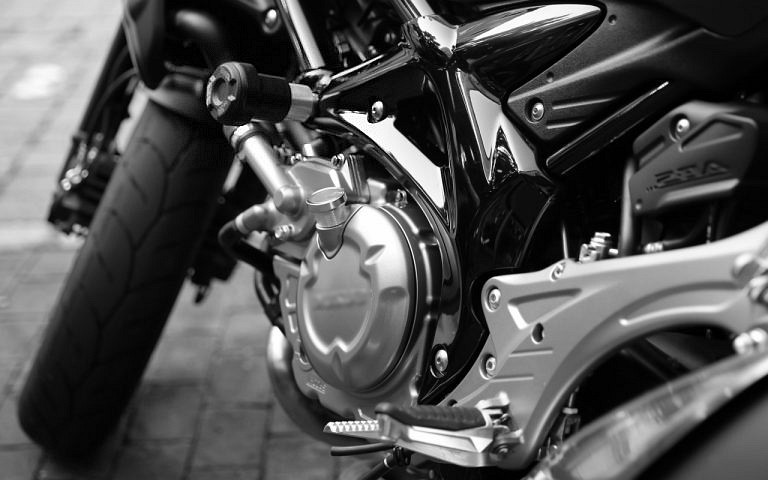
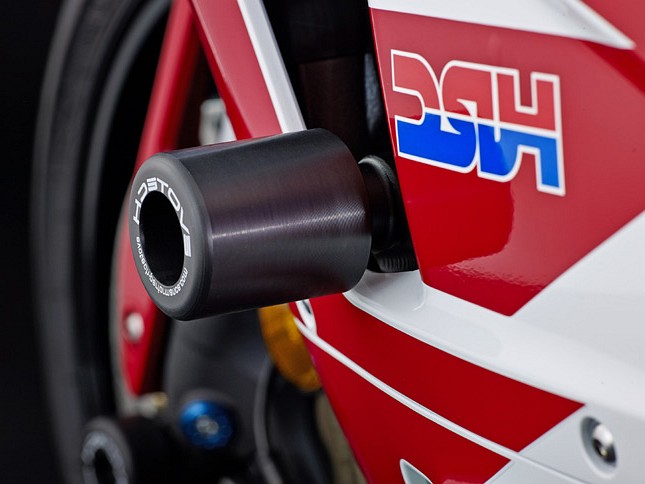
Frame sliders, crash bobbins, bearing protectors, whatever you call them, they’re designed to help protect vulnerable and expensive parts when your motorcycle tilts off of its tires.
_______________________________________
Frame sliders, they’re designed to help protect vulnerable and expensive parts of your motorcycle.
The theory is that by positioning a sacrificial contact point on the side of the bike, that item will take the brunt of the impact. The slider will take the abrasion instead of your bodywork, your frame, or your engine cases.
This whole crash protection conversation would be simpler if these things were just called tip over protectors. Even the crappiest kits on the market are going to do something to prevent harm if your bike just falls over at a standstill.
Motorcycles are made to move, and once you add kinetic energy by ramping up the speed, things get a lot harder to predict. How well frame sliders work in a crash depends on many factors. Like, how your bike went down, was it violent like a high side, or was it more gradual like a front-end push in a sweeping corner?
The surface you crash on is also an important factor. Asphalt may be abrasive, but at least it’s flat. Soft surfaces like the grassy shoulder of a highway or the gravel trap at a racetrack are likely to cause your bike to dig in and start to cartwheel, and that’s when things get badly damaged.
High-speed crashes are unpredictable, capricious SOBs, so you have to have reasonable expectations. Now that we recognize that frame sliders aren’t a magical force field, we can talk about these accessories like reasonable people.
_______________________________________
Frame sliders come in two styles: you’ve got your cut kits and your no cut kits.
For starters, frame sliders come in two styles: you’ve got your cut kits and your no cut kits.
Cut kits require sawing holes in your bodywork for the frame slider to pass through, whereas no cut kits use brackets to position the slider around the fairing. If the goal is to protect your bodywork, why would you ever want to drill a hole in it? Well, as a general rule, cut kits are more structurally sound.
The frame slider’s location and its mounting system haven’t been compromised to work around the bodywork, so the slider is more likely to stay put and do its job in a crash.
Frame sliders also come in varying lengths, from little short pucks that tuck in against the bodywork to long ones.
As a general rule on the street, since you’re looking at stationary tip-overs or low-speed falls, a longer slider is better since it will keep more parts off the ground. At the same time, that longer slider is more likely to get bent or break it’s mounting hardware if it gets a lot of force applied to it in a faster crash.
That’s why guys who ride at the track or racing tend to run shorter frame sliders.
They won’t do as good a job of keeping your bodywork pretty, but they’re less likely to get wrenched off to keep the bike lower to the ground.
_______________________________________
If you’re serious about crashing, you also have case covers and axle sliders.
It’s less likely to tumble, and they’ll still protect the important stuff like the frame and the engine. If you’re serious about crashing, then you not only have frame sliders, you also have case covers and axle sliders, so you have lots of sacrificial points of contact.
Whether you’re riding on the track or the street, all of this protection isn’t going to do much for a motorcycle that’s cartwheeling toward the horizon. That brings us to the contentious bit of forum folklore that says frame sliders will cause your bike to flip over and tumble.
Blingy pieces made from aluminum or chrome steel aren’t going to glide across the ground smoothly and are liable to snag and send your bike into the air. For the puck to be effective, it needs to be made from a low friction material that’s durable and even a little resilient that it absorbs some impact energy.
That’s why brands with half a brain make their pucks from synthetic polymers. If you’re looking at a kit, so it comes with actual carbon fiber sliders, it might as well be a joke because CF has no abrasion resistance, and it’s going to shatter as soon as it touches the ground.
With frame sliders, you definitely get what you pay for, so it’s really important to buy from a reputable brand that has put some R&D into its design.
2. Types Of Frame Slider And Which Are Best
_______________________________________
Crash sliders originally started on race bikes.
Crash sliders originally started on race bikes. They tried to find a way to keep their frames from being ground away to nothing when their bikes hit the deck and slid down the track.
However, as things evolved, street riders saw it and either liked the style or liked the possibility of protecting other parts of their bike beside the frame.
One of the things you want to think about when you’re purchasing a set of crash lighters is the length of the slider. Generally speaking, a shorter slider will be better for high-speed scenarios, and a longer slider will be better for helping out in the driveway or perhaps parking lot situations. I’ll explain why in just a moment.
We’ve got to analyze how a crash happens. First, the bike goes down, and then the bike slides across the pavement. The reason this is important is that there are two stages to this. You’ve got that initial impact that needs to be absorbed, and then you have the bikes sliding down the street. We need to keep the bike elevated up off the pavement.
The sliders’ length matters because, in a high-speed scenario like a track crash, the bike has a natural tendency to want to flip over when it snags something. The taller slider is going to give you a little bit more leverage. That means the bike will be more prone to flipping over or barrel rolling, and that’s the stuff that makes crashes expensive.
_______________________________________
Frame sliders weren’t initially designed to do that, but designers realize that people look for that type of protection in today’s sliders.
For those of you who are riding on the street and who don’t typically hit the same speeds you would on a track, the longer sliders can be to your benefit. You may not wind up having all the high-speed protection in the world. However, if you just drop your bike on your driveway or you’re buddy bumps into your bike, the longer slider may help protect some of your engine covers as well as plastics.
Frame sliders weren’t initially designed to do that, but designers realize that people look for that type of protection in today’s sliders.
One of the other things you want to keep in mind is how you’re going to install them. There are two types of sliders. There’s cut kits, and then there are no cut Kits.
The names are pretty self-explanatory. You will need to cut a hole into your plastic with a cut kit to mount the slider. With a no-cut kit, there’s usually some sort of a bracket. You might think that the no-cut kit sounds easier, and you may be right. It is simpler in terms of installation.
However, because the bracket is now cantilevered a little bit, you get a reduction in the amount of impact protection you’re going to get. So when your bike initially slams down into the roadway, you may find that they can bend to the point where they’re doing a little bit of damage themselves.
You really do have to balance your installation ease with how brutal you think your crashes might be.
We use cookies on our website to give you the most relevant experience by remembering your preferences and repeat visits. By clicking “Accept”, you consent to the use of ALL the cookies.
This website uses cookies to improve your experience while you navigate through the website. Out of these, the cookies that are categorized as necessary are stored on your browser as they are essential for the working of basic functionalities of the website. We also use third-party cookies that help us analyze and understand how you use this website. These cookies will be stored in your browser only with your consent. You also have the option to opt-out of these cookies. But opting out of some of these cookies may affect your browsing experience.
Necessary cookies are absolutely essential for the website to function properly. These cookies ensure basic functionalities and security features of the website, anonymously.
Cookie
Duration
Description
cookielawinfo-checbox-analytics
11 months
This cookie is set by GDPR Cookie Consent plugin. The cookie is used to store the user consent for the cookies in the category "Analytics".
cookielawinfo-checbox-functional
11 months
The cookie is set by GDPR cookie consent to record the user consent for the cookies in the category "Functional".
cookielawinfo-checbox-others
11 months
This cookie is set by GDPR Cookie Consent plugin. The cookie is used to store the user consent for the cookies in the category "Other.
cookielawinfo-checkbox-necessary
11 months
This cookie is set by GDPR Cookie Consent plugin. The cookies is used to store the user consent for the cookies in the category "Necessary".
cookielawinfo-checkbox-performance
11 months
This cookie is set by GDPR Cookie Consent plugin. The cookie is used to store the user consent for the cookies in the category "Performance".
viewed_cookie_policy
11 months
The cookie is set by the GDPR Cookie Consent plugin and is used to store whether or not user has consented to the use of cookies. It does not store any personal data.
Functional cookies help to perform certain functionalities like sharing the content of the website on social media platforms, collect feedbacks, and other third-party features.
Performance cookies are used to understand and analyze the key performance indexes of the website which helps in delivering a better user experience for the visitors.
Analytical cookies are used to understand how visitors interact with the website. These cookies help provide information on metrics the number of visitors, bounce rate, traffic source, etc.
Advertisement cookies are used to provide visitors with relevant ads and marketing campaigns. These cookies track visitors across websites and collect information to provide customized ads.