BTRubber / You and Your Motorcycle “3 Times Ready for Hell”

Read Time:5 Minute, 26 Second

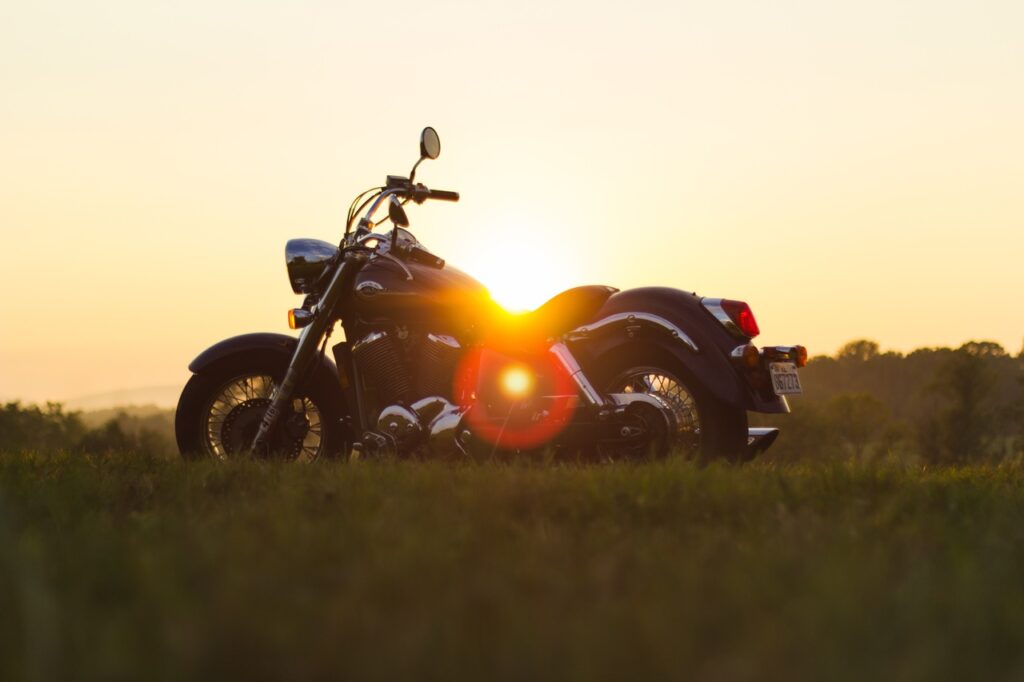
As spring transitions into summer (some people says it’s “the hell”), it’s time to dust off the bike and head back out onto the road. But, before you strap on your helmet and thumb the starter, here are 3 tips for getting back on the road this hot summer!

1) Performing Maintenance

Before taking your first ride you’ll need to make sure your motorcycle is up to the task. Hopefully you put your motorcycle away properly last fall, so it takes minimal effort to bring it to life. If not, you may be in for some frustrating downtime.

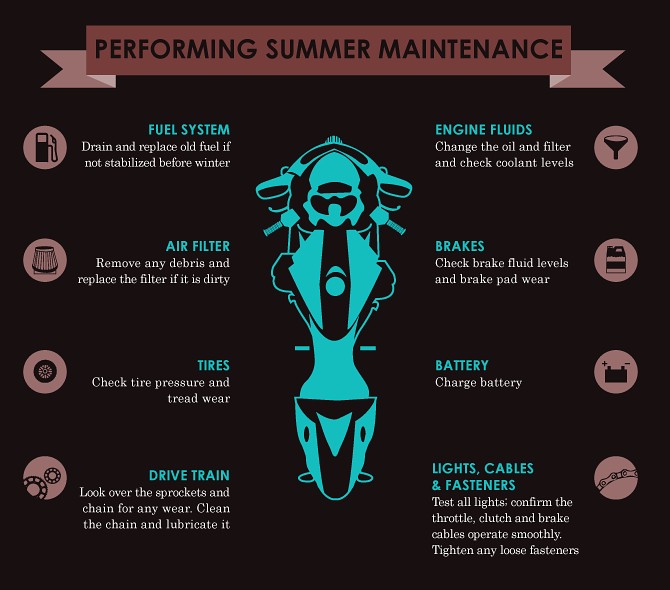
With the help of a motorcycle owner’s manual, someone with moderately competent mechanical skill can perform most of the tasks we are about to discuss. For tasks that are not covered in your owner’s manual, please consult your dealer’s service center. These are the eight most important things to check on your motorcycle.

a) Fuel System

One of the most common pre-season mechanical problems involves the fuel system. It is caused by riders parking their bikes without adding fuel stabilizer to the gasoline. The problem is that old fuel turns into a gooey varnish that can clog the small passageways in the fuel system. This is a significant problem on motorcycles with carburetors, but even fuel-injected bikes can be affected.

If you neglected this task you may be looking at the time and expense of a thorough fuel system cleaning. If the gas in your tank is old it’s best to resist starting your motorcycle. Instead, drain the old fuel from the tank (and drain the carburetors if applicable). This can prevent stale gas from circulating through the system. If your bike runs poorly even after draining the gas, consult a mechanic and learn your lesson by storing your bike properly next time!

b) Air Filter

Check your air filter, as rodents seem to be particularly attracted to building nests in air boxes. Remove any debris and replace the filter if it looks particularly dirty.

c) Tires

Tire pressure will drop significantly over the winter and nothing affects handling and wear more than very low tire pressure, so be sure to put a gauge on those stems before the motorcycle rolls out of the garage. If the tread is worn near the tread-wear indicators, or if the tires show any signs of rot, now’s a good time to replace the old tires with new rubber.

d) Drive Train

While you’re down there, check drive train wear. Sprockets should show no significant signs of hooking and the chain should not pull very far away from the back of the sprocket. Replace the chain and sprockets as a set if necessary. If all looks good, check the adjustment and give the chain a good lube. Hopefully you lubricated the chain before storage, which means no rust should be present. If this duty was neglected, give the chain a clean and lubricate it before the first ride, then perform a more thorough lubrication after the chain is warm.

e) Engine Fluids

Check your oil level, or better yet, change the oil and filter if you didn’t do it before tucking your bike away last fall. Old engine oil contains acids that are best removed. If your bike is liquid-cooled, check coolant levels, including the fluid in your overflow tank (see your owner’s manual).

f) Brakes

It is important you maintain your brakes. Squeeze the front brake lever and press on the rear brake pedal to feel for a firm application. Look in the sight glass or at the brake master cylinders to see that brake-fluid levels are good and if the fluid is the color of apple juice or darker, plan on replacing it soon.

Grab a flashlight and take a close look at your front and rear brake calipers to see how much brake pad material there is remaining. Most brake pads have a notch cut into the pad as a wear indicator. If in doubt, have the pads replaced. It’s cheap insurance.

g) Battery

Weak or dead batteries are another common mechanical issue that can stand in the way of reviving a motorcycle after a long period of dormancy. Hopefully you kept your battery charged. If not, you will likely have to charge the battery before it will start the engine. If it will not hold a charge, a new battery is in your future.

h) Lights, Cables, and Fasteners

Once your battery is good to go, be sure to check that all of your lights are operational. Check that both front and rear brake-light switches illuminate the brake light. Check turn signals, taillight, and headlights (high and low beam) to make sure they work.

Confirm that the throttle, clutch and brake (if applicable) cables operate smoothly before heading out. Finally, go around the whole bike, tightening any loose fasteners.

2) Awakening the Rider

Now that you’ve made sure your motorcycle is ready to roll, you can think about your first ride. A word of caution before you press the starter button: spending many months in a car can cause you to become oblivious to motorcycle issues like visibility or road surface hazards.

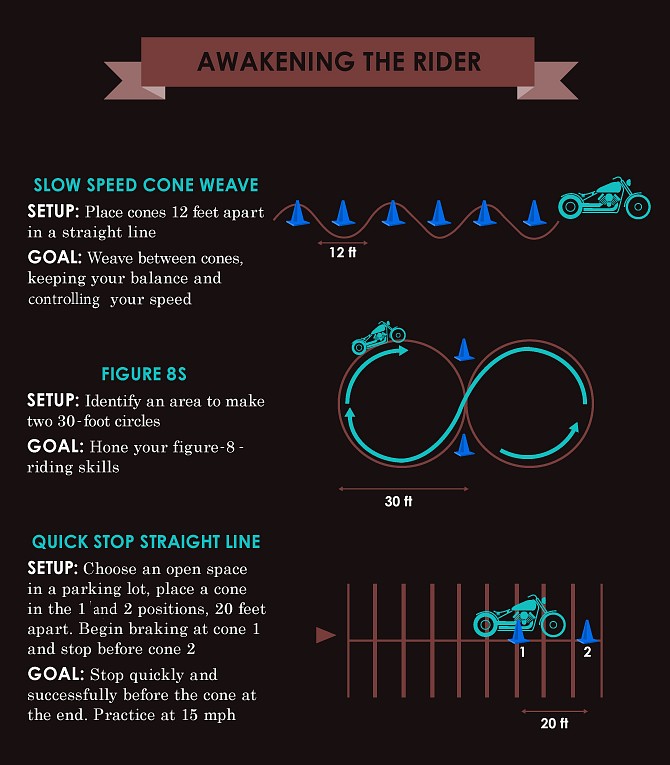
It’s a good idea to begin your season by taking a refresher course with a local motorcycle-training program. It’s also smart to take some time to brush up on your emergency skills in a parking lot. Whether you choose to attend a formal rider course or go it alone, we recommend that every rider practice the critical skills by performing some cornering and braking drills. Here are three basic, slow-speed exercises to awaken your inner rider.

3) Summer Roads and Inattentive Drivers

Even if you and your bike are fully ready for the new season, remember that the roads may not yet be motorcycle-friendly. Expect surface hazards during the early summer until the earth thaws and the road crews can repair the scars. And remember that drivers aren’t used to seeing motorcycles on the road, so be extra vigilant when riding in traffic.

Study your owner’s manual and perform these routine tasks so you are prepared for the upcoming season. Also, be sure to carefully evaluate road conditions before venturing out. Taking the time to prepare for the upcoming season can ensure it is a safe and enjoyable one.

Moust of all, Remember that Always You Can:

Choose Your Destiny!

Happy
Happy
0 %
Sad
Sad
0 %
Excited
Excited
0 %
Sleepy
Sleepy
0 %
Angry
Angry
0 %
Surprise
Surprise
0 %

BTRubber / Riding Hard in City Traffic? Know this 4 Essential Survival Tips!

Read Time:6 Minute, 17 Second

This recommendatios come from the Motorcycle Safety Foundation (MSF). Here are some tips that should help you too survive riding in city traffic.

First off, if you didn’t know it by now, congratulations: you own an invisibility cloak! No matter what you do to increase your visibility to others, there will always be drivers who won’t see you. You can have modulating headlights, reflective tape and jacket, and heck you can wear a spinning yellow light on top of your helmet. But, you must still ride as if you’re invisible. Even police cars, with their lights flashing and sirens blaring, have had cars pull out in front of them or been hit by unwary drivers!

01. Be Unhittable

One of the principles I ride by is “Be Unhittable.” What does this mean? It means ride fully expecting drivers to not see you and positioning yourself to be more visible to any driver that can possibly ruin your day.

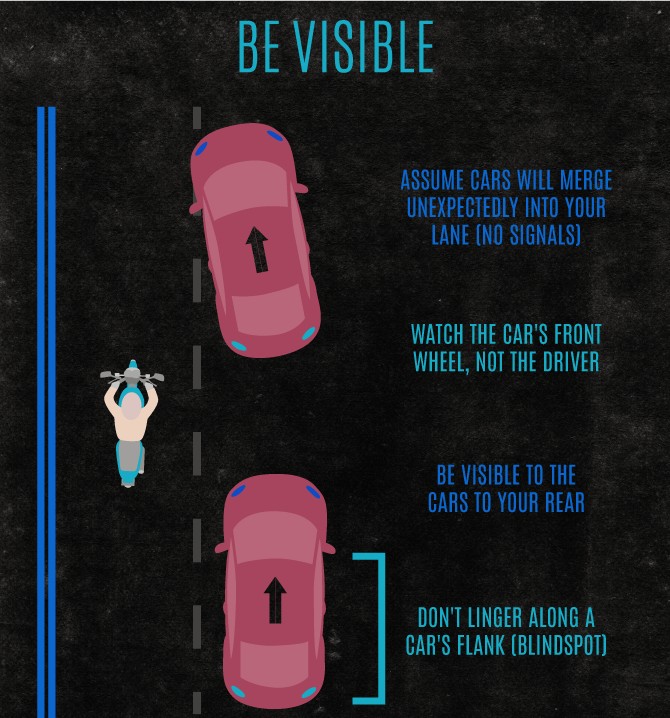
Positioning is important: try not to ride adjacent to cars. You should always ride in the front line of vision of the driver behind you, not in their peripheral vision. Often people fail to use their turn signals, or even fail to check their blind spots, so keep alert and out of the blind spots of other vehicles. Place yourself so that if the driver unexpectedly moves into your lane, he will do so without hitting you.

Along with being aware of what is immediately around you, don’t forget to check what is seven to 12 seconds in front of you. The way I see it, if traffic events surprise you, you weren’t paying attention. Riding in traffic is not the time to think about anything but the threatening environment around you.

Do you ride where there’s an “escape lane”? Do you create options for yourself in case the car in front of you stops unexpectedly or the car behind you doesn’t notice that traffic has come to a stop?

Do you create and maintain a safe reaction zone between the vehicle in front of you and your motorcycle? (This zone is also called a Safe Following Distance.) Essentially, it’s all about giving yourself enough time to react.


02. Use a Visible Intersection

Although you cannot assume for an instant that any driver sees you, you must ride in a way that affords them the chance to see you.

A Safe Following Distance not only gives you the time you need to react to a situation, but it also serves to prevent the vehicle in front of you from blocking the oncoming traffic’s view of you. If you ride too close to a vehicle’s bumper, chances are drivers coming your way won’t see you and will try and make a turn into you after they pass the vehicle ahead of you.

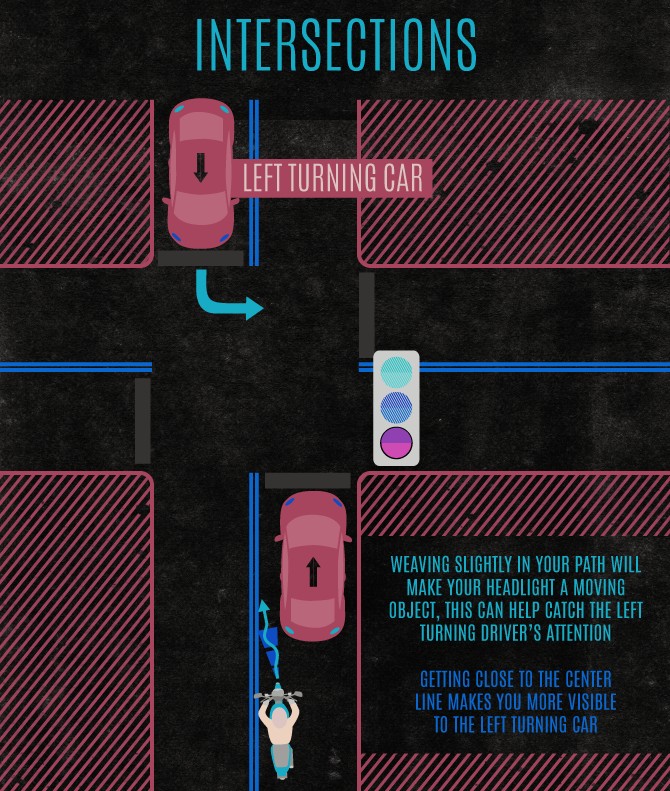
In my opinion, the greatest threat to motorcyclists at intersections is a left-turning vehicle. There have been medical studies which suggest motorcycles are “not seen” by car drivers who are turning left because humans don’t perceive motorcycles as a threat, compared to the size of the car they are in. In essence, the brain appears to ignore the smaller vehicle that’s oncoming. How many times have you heard the stories where the driver of a car is quoted to say: “Honestly, Officer, I didn’t see him”?

As you approach the intersection, you must catch the eye of the left-turning driver by presenting yourself in their line of vision. By doing a slight weave within your lane, your headlight becomes an unusual moving object. This perhaps will gather more attention from that driver. Furthermore, don’t watch the driver’s eyes, but rather watch the front tire and what it is doing. I’ve had drivers look me straight in the eye and still initiate a left turn towards me. If at all possible, transit an intersection with a “buddy”: a car either to your left or right, which the left-turning driver will perceive as a threat. Always be on the lookout for escape lanes as you approach intersections. You should have a final resort if the driver happens to turn into your path. Lastly, don’t forget to double-check your turn signals after you’ve made a turn, and before you approach intersections. You don’t want to signal the wrong information!


03. Escape Lanes

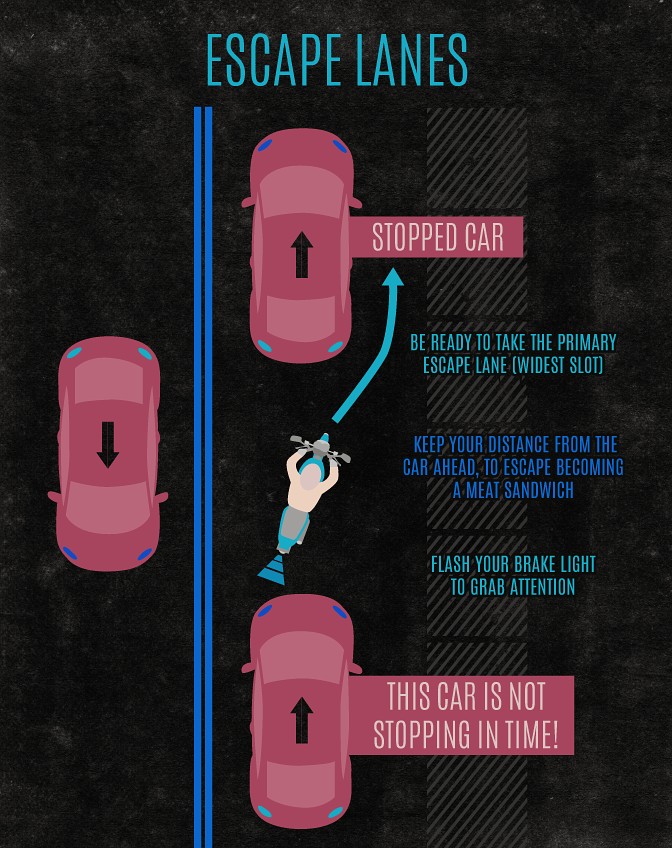
Understanding the concept of escape lanes is imperative to being safe on your bike. Basically, you want to develop the habit of being constantly aware of available space in the road ahead, should the need arise to maneuver there. The escape-lanes concept applies to two different situations.

First, when stopped at an intersection, the car in front of you can become one third of a “meat sandwich” should the car coming up behind you fail to stop in time. Know whether you’d maneuver right or left in that situation. Also, remember to flash your brake light to attract a driver’s attention as they come up to the intersection behind you. I tend to keep a close eye on the approach of the car behind me, and only relax when I see them slow and come to a stop.


Second, while riding along pick a lane where, if necessary, you could swerve out of harm’s way. On my commute, this involves riding in the lane next to a bike path, or perhaps next to a painted median where I could possibly swerve to avoid a collision with a car. Riding next to raised medians should be avoided.

Escape lanes come and go, and you must continually look for them. One sign you’re not paying enough attention to what’s around you? A car suddenly passes you and you weren’t even aware it was there.


04. It’s up to you

In sum, it is up to you to ride as though you were invisible to other drivers. A bike will always lose in a collision with a car. You may have had the right of way, but do you really want to be dead right? I’ve talked about how to be unhittable, making yourself more visible to other drivers, and most of all remaining aware of what is around you and in your line of travel. The British teach their riders to always do the “Lifesaver.” What’s that? Before you change lanes, actually turn your head and look: you’d be surprised how many times you’ll find a car riding along in your blind spots.

Get to know your commute route, including the best times to travel, and the best shortcuts and traffic patterns. I’ve found that the shortest way is not the best way, and the taking the longer route can result in a lot less stress. At the same time, my closest calls have actually been on quiet neighborhood streets and not congested city roadways!

There’s a lot more to learn and practice about safe motorcycle riding, and the techniques and best practices needed in different environments. If you haven’t taken the MSF’s Basic Rider Course, We strongly encourage you to do so. We’ve met riders who, after riding for years, took the course and admitted they discovered some bad habits which required correcting. Safety on a bike is the key to ensuring you’ll be riding for years to come.

Ride Safe. Ride Aware.
Choose Your Destiny

Happy
Happy
0 %
Sad
Sad
0 %
Excited
Excited
0 %
Sleepy
Sleepy
0 %
Angry
Angry
0 %
Surprise
Surprise
0 %

BTRubber / What You Should Know about the Temperature and Grip of Motorcycle Tyres?

Read Time:4 Minute, 13 Second
To know more visit: https://BTRubbertire.com

The outcome of the combined forces of friction, tyre vertical load and the contact patch of the tyres with the road, tyre grip, is an important factor in your motorbike tyres. As you may already know, it is affected by the temperature of your tyres. 


In this article, we will explore the relationship between motorcycle tyre grip and temperature. We will also explain how to check the tyre temperature and what else you should do to ensure good grip and safe driving. 

Does tyre pressure increase with temperature? How do I know how my tyre temperature changes while I ride my motorbike? Read on and find the answers to these and other questions you might have.

How tyre temperature impacts your motorbike

The temperature of a motorcycle tyre influences numerous properties of the vehicle on which it is fitted. It is, therefore, extremely important to understand that a difference of just a few degrees can have catastrophic consequences.

What are the consequences of too hot tyres?

In short, rising tyre temperature mostly affects:

  • Braking capabilities of your motorbike – because friction coefficient is changed, brakes may be less effective at very high temperatures
  • Riding safety while cornering – during fast driving on corners, the tyres may reach a temperature of even more than 100°C!
  • Tyre elasticity – higher temperature increases the elasticity of a motorbike tyre and may consequently lead to tyre deformation
  • Tyre pressure – the air pressure in your tyre may grow because of the increased tyre temperature 

What are the consequences of cold tyres?

While many riders know that hot tyres can cause various problems, not all of them are aware that when tyres are too cold, they can cause some issues, too. These include:

  • Reduced grip – since the grip increases with temperature, a colder tyre has less grip
  • Greater susceptibility for skidding on turns
  • Reduced stability
  • Reduced tyre pressure
  • Greater transmission of unevenness in the road surface to the handlebars

To know more visit: https://BTRubbertire.com

Tyre temperature and motorcycle riding

Clearly, the strong relationship between motorbike tyre temperature and grip further extends to numerous other riding parameters.

Riders have different preferences and expectations. To meet their various needs, the tyres designed for everyday use are made of compounds which enable driving across a broad range of temperatures.

To know more visit: https://bit.ly/2RLUAx3


These tyres typically have a very broad range of optimum tyre temperature. They are designed to be elastic from just 5 degrees Celsius, while not suffering from excessively fast wear at temperatures of even around 90 degrees Celsius. This figure is the level of temperature that can be reached when riding at high speeds, such as on motorways.

The rubber compound ensures grip

The adhesive parameters of particular tyre models are determined by the chemical substances used in the manufacturing process of the tyre construction.

A variety of compounds are used for various different tyre types:

  • In touring tyres, the compound which is used in production contains a mix of resin and plasticizers, providing significant protection when dealing with cold tyres.
  • For sports tyres, in turn, a compound containing resin is used, as this ensures ideal grip as the tyre’s workload increases. It is additionally common for soot particles, or oil, to be used to increase the degree of grip offered.
To know more visit: https://BTRubbertire.com

How to measure the tyre temperature

There are numerous ways to check the temperature of your tyres. In regular conditions of a typical, everyday use, getting a tyre temperature sensor is probably the best and easiest method. 

Apart from using tyre temperature gauges and sensors, your other possibilities to check the tyre temperature include: 

  • You can use an infrared thermometer, as this will give quick and accurate readings.
  • You can also touch the tyres with your hand. Optimum tyre temperatures begin at 20°C which will feel quite cool, while a temperature of 35°C feels pleasantly warm. In turn, the heat closer to 60°C will make you take your hand away from the tyre.

The situation is, of course, slightly different in the case of motorcycle racing, where specialistic sports tyres for advanced riding are used. In such situations tyres get heated up to 100°C and, in extreme cases, even as high as 200°C. Then touching the tyre will not be a good option so in such circumstances you should use an infrared thermometer or other remote device.

You should also remember that, over time, all motorcycle tyres lose their traction properties, even if they do not appear to be damaged. It is, therefore, recommended to replace your tyres with new ones every season, even if they are not showing external signs of wear.

It is equally important to use your tyres correctly. If you are not sure whether or not you are following the manufacturer’s recommendations, take a look at our user guides or contact us and find out more.

BTRubber Tires / Chooce Your Destiny!
To know more visit: https://BTRubbertire.com
Happy
Happy
0 %
Sad
Sad
0 %
Excited
Excited
0 %
Sleepy
Sleepy
0 %
Angry
Angry
0 %
Surprise
Surprise
0 %

BTRubber / 10 best motorcycle tips (for beginners)

Read Time:4 Minute, 24 Second

Learning how to ride is a process that will very likely occupy most of your adult life.

Learning how to ride is a process that will very likely occupy most of your adult life. Indeed, those of us who have been riding for decades still learn new tips and tricks every time we jump on a bike. Well, maybe not that often, but we still keep on learning. Since we know, first hand, that knowledge is paramount to be a better rider, we put together this list of beginner motorcycle tips to help you out.

Are you ready? Here we go!

1. Keep your eyes open, assume you´re invisible

This is the number one beginner motorcycle tips: assume the car in front of you, besides you, or behind you is not seeing your vehicle.  This simple but effective technique will allow you to always be ready to take action. Remember that if you are always prepared, you´re never sorry. So, keep your eyes open to spot faulty manoeuvres in other vehicles and assume they are not aware of your presence.

2. Don´t break when on a turn

Do you know what happens if you hit the brakes right before the apex of a turn? If you are leaning on one side, the bike will stand straight and stop your manoeuvre instantly. The result is that you are going to hit the fence on the side of the road if you are lucky. Always hit your brakes before the turn and use the throttle to push the machine through it.

3. Squeeze that fuel tank!

A very important beginner motorcycle tip is to squeeze your fuel tank. Your knees, on most motorcycles, will be on both sides of the fuel tank. When you squeeze them in, you distribute your weight better, and you´ll put less of it on the handlebar. By doing this, you´ll gain more control over your vehicle effortlessly. So, squeeze that tank!

4. Stop blinking!

This is a very common mistake that can potentially take you to an accident: leaving your turning lights on. By doing this, you´ll be sending an incorrect message to other drivers and riders, and the result can be a catastrophe. To avoid this from ever happening to you, I suggest you install a very small gadget called Smart Turn System on your bike. This easy-to-install device will automatically deactivate your turning lights when it senses you have completed your turn. Install this on your motorbike and stop blinking in vain; you can potentially save your life and the lives of others.

5. Always keep your heels in

Your heels play a big part in your balance; thus, they need to be in the correct position. To improve grip, control, and safety when you are riding, keep them in, close to touching the bike´s frame. You´ll become a believer if you try it at least for a week.

6. Keep your eyes protected (leave that visor closed)

This again is another important beginner motorcycle tip. Your eyes are not only paramount for riding; they also are the only pair you´ll get in this lifetime. It can be annoying not feeling the wind in your face as you ride on a hot summer day with your full-face helmet on. Nevertheless, leave that visor down and protect your eyes; you never know when a simple bug can turn into a nightmare.

7. Keep it loose on the top

Keeping the upper part of your body loose will help you manoeuvre your bike. How so? The answer is very simple; you´ll have more control over your articulations and can respond better to extreme situations. Try moving your elbows like a chicken while holding the handlebar; if you can do it, you´re on the right path. On the other hand, if you can´t, try loosening up. You´ll notice the difference, especially when taking turns.

8. Keep it tight on the bottom

As much as you should be loose on the top, you should keep your bottom tight. Press those heels in, squeeze the gas tank, and you´ll notice that your sense of stability will grow tremendously. Furthermore, the combination of a loose top and a tight bottom will give you enough flexibility and control to tackle almost any surface.

9. Ride at your own pace

When riding a motorcycle, especially when you are a beginner, you need to take things at your own pace. You are not racing anyone, and no matter how cool it looks on TV to go that fast, if you are not prepared for it, you can cause an accident. Take it slow, learn how to control your machine, and grow from there. Being a great rider is a process that takes years to complete.

10. The golden rule of beginner motorcycle tips: when in doubt, always slow down

Finally, this is a golden rule, one of the beginner motorcycle tips you should never abandon: when in doubt, slow down. Making decisions at high speed demands knowledge, nerves of steel, and, more than anything else, experience. Whenever you feel insecure about a situation, slow down, and you´ll always be safe.

As always we say:
Chooce Your Destiny!

Happy
Happy
0 %
Sad
Sad
0 %
Excited
Excited
0 %
Sleepy
Sleepy
0 %
Angry
Angry
0 %
Surprise
Surprise
0 %

BTRubber / How to Read your Motorcycle Tire Codes! (Part 2)

Read Time:4 Minute, 6 Second

Motorcycle tires

Motorcycle Tires – Intro, About The Codes

Understanding motorcycle tire codes

Besides the basics like the rim diameter (otherwise it won´t fit your bike), there is much more information written on the sidewall of a motorbike tire. Let´s take a look at the essential four pieces of information you have to know.

You might be thinking right now that you always use the same brand and model of tire, and so maybe knowing the different codes that tire manufacturers use is not that important. You could rely on the employee’s attire shops to know their stuff and do their jobs right. But, what if you knew better than them? Knowledge of this kind might save you from a tough situation; knowledge is freedom, and learning about motorcycle tires is a rider’s freedom.

If you want to get de BTRubber Codes (Specs) go to: https://BTRubbetire.com
Direction of rotation

This is the simplest of all the indicators. You will notice that your tire has an arrow. Well, that is exactly the direction that guides you to turn when going forward.

Load and speed index

This is another straightforward indicator made up of a two-digit number and a letter. You will read something like 58W, which indicates that not only do you have a set of tires that can reach 270 km/h but also that they can transport up to 520 pounds (236kg) in weight. There are charts for this available in Wikipedia if you want to know the letters, speed limits and loads.

Tube designation

This is, perhaps, the second easiest indicator to read. For example, you might see something like: “Tubeless, tread: 4 plies nylon, sidewall: 2 plies nylon.” What does it all mean? Well, it is relatively easy to decipher: It says that you have a tubeless tire that has four plies of nylon on the tread and two plies of nylon on the sidewalls. This is very helpful to determine the resistance, durability and stiffness of your current tire.

Summary

The summary usually condenses all the information you can find somewhere on the tire. Let’s break it down:

Tire width – This number indicates the width of your tire in millimetres measured from the widest point on each side.

Aspect ratio – They calculate your tire´s aspect ratio using the height of the sidewall and the tire’s total width and then express it as a percentage.

Speed rating – You can go for the chart available online to find these ratings. This is important for those riders who make improvements to their bikes, and it enables them to check whether they need a higher category of tire for their bike. Also, if you are riding an older model and can´t find the exact replacement for the originals, you can take a look at this chart.

Tire construction – In the tires construction section you will find a very clear explanation of what the letters refer to (90% of the time you will most likely see the letter R).

Rim diameter – There is not much to explain. In this section since you must know this information before buying your tire. Purchasing the wrong rim diameter will be an epic fail since you will not be able to fit it to your bike. Again, for those who change their bikes from stock, bear in mind that sometimes, replacing the front fork, for example, can change the rim diameter you need.

Understanding these codes is undoubtedly beneficial in the long run. There is no way you can remember all the charts, but having them handy is an option. Remember that knowing, what you are talking about, might help you to chooce the best options.

Conclusion

Motorcycle tires have closely followed and complemented the improvements made in terms of vehicle speed and power over the years. The major motorcycle tire companies ensure to make faster rides safer, and that’s the reason there is a boost in the ongoing development of engine power. On the contrary, they were there, pushing the limits of innovation time after time. As a result, motorcycle tires are now the safest they have ever been. Besides safety, they now also incorporate many specialised measures that improve speed, grip and suspension.

All technology and funding applied by these companies towards improvement, research, development and manufacture have paid off. Motorcycle manufacturers expend many staff-hours finding the perfect tires to match their vehicles.

Now that you know all there is to know about these rubber saviours, you can make the most of your motorbike knowing that you will be safer at all times. Feel free to share this valuable information in riders “forums or with friends and family”. We would also love to hear your own experiences.

BTRubber Tires: Chooce Your Destiny!
To be continue… Next:

BTRubber Tires / How to Read your Motorcycle Tire Codes! > Part 3, Soon!
Happy
Happy
0 %
Sad
Sad
0 %
Excited
Excited
0 %
Sleepy
Sleepy
0 %
Angry
Angry
0 %
Surprise
Surprise
0 %