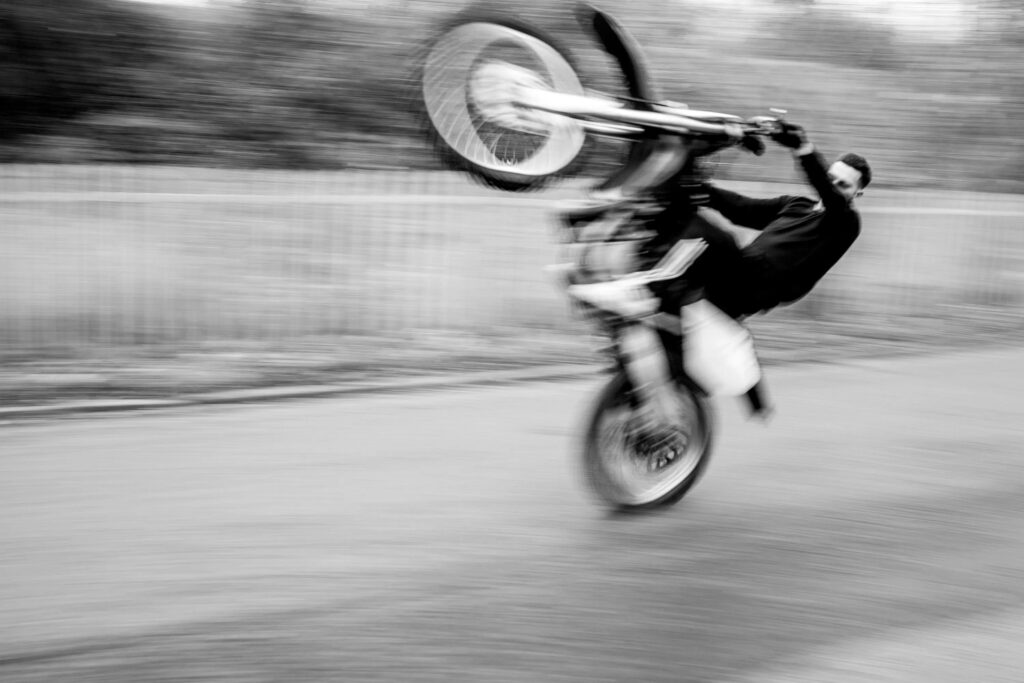
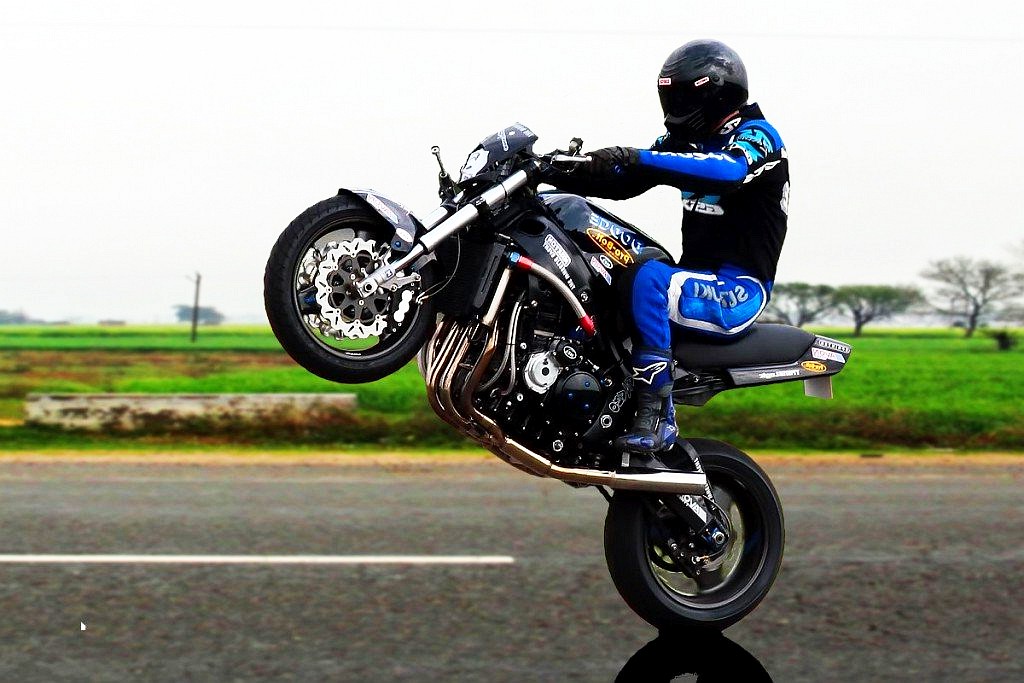
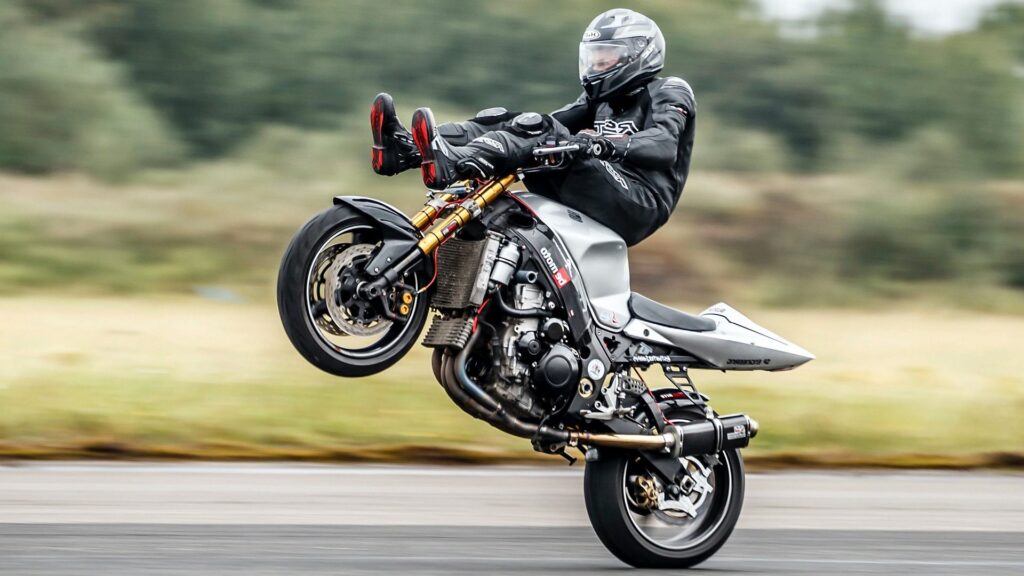
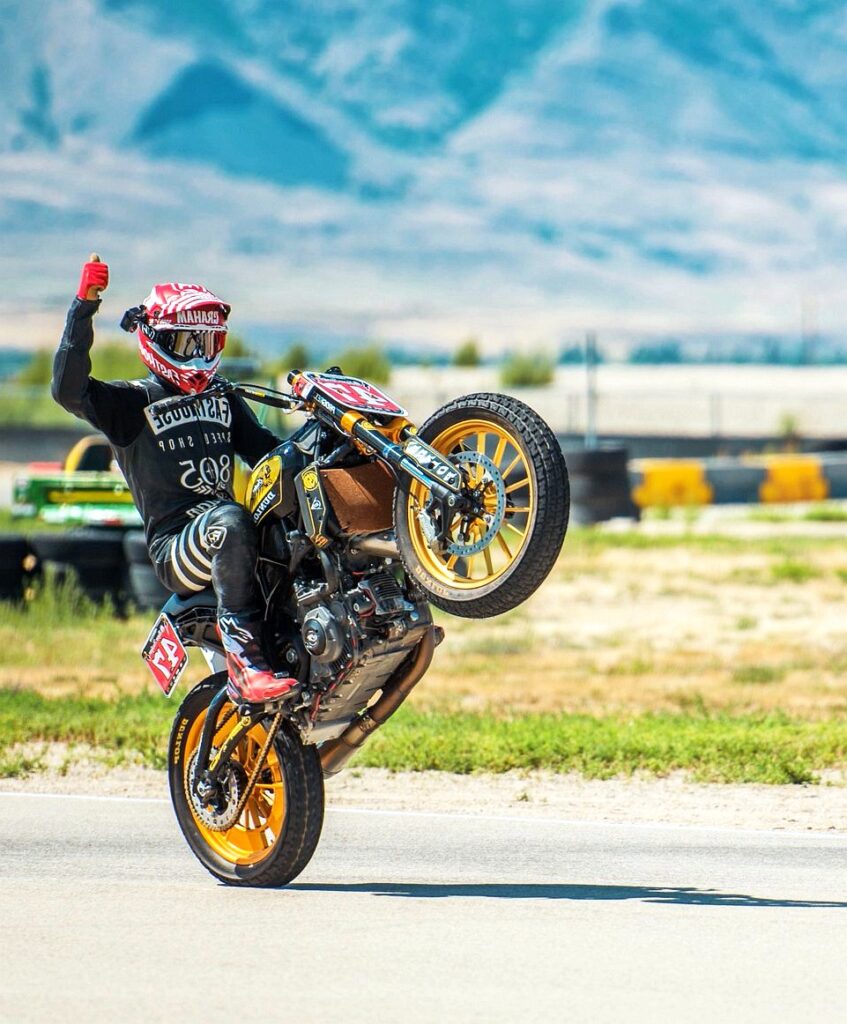
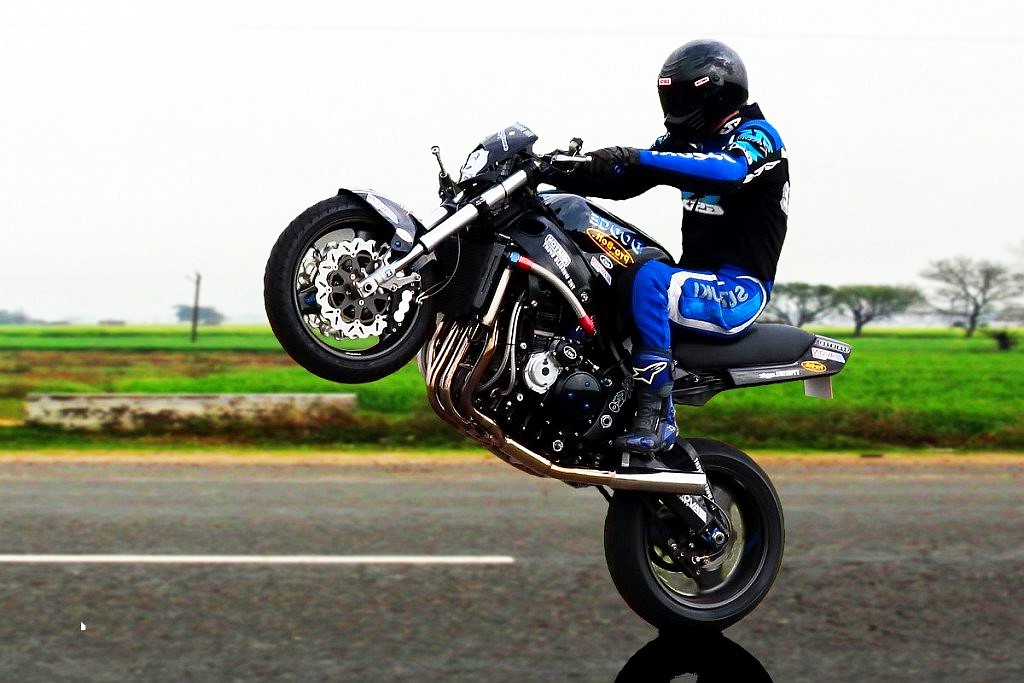
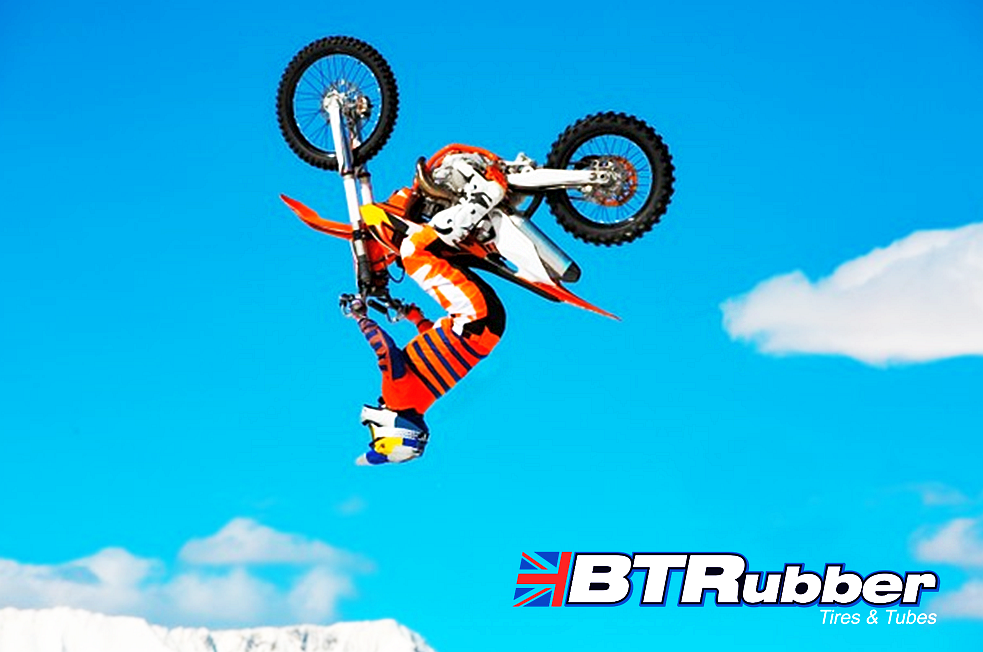
Wheelies are super fun, and we all know that wheelies are one of the purest forms of joy known to humanity, but they can be dangerous.
Wheelies are bad for your motorcycle, especially those bad wheelies. I’m talking about sloppy jerky wheelies where you’re revving the engine out and dropping the clutch to get the front end up, and then either chopping the throttle or, worse yet, riding it after the rev limiter and slamming the front end down.
If that’s how you’re doing wheelies, do yourself and your bike a favor and stop!
_______________________________________
Who motorcycle rider has never done a wheelie in life? A lot of people!
Are Wheelies Bad For Your Clutch?
Doing bad wheelies like that is torture on your clutch, and it’s putting excess wear on your clutch plates in your clutch basket. It’s shock loading your chain and sprocket, and it’s hammering your fork.
If you slam the front end down hard enough or often enough, you can blow a fork seal.
If that happens, you’re going to barf oil all over your brakes, and you’re going to have to deal with a costly or time-consuming fork rebuild.
Blowing a fork seal is a bummer, but obviously, the worst scenario for a wheelie is if you loop it over backward and send your bike cartwheeling down the road.
_______________________________________
You’re going to have to deal with a costly or time-consuming rebuild
Not only is that bad for you and your motorcycle, but in the modern YouTube era, that sort of mistake is liable to embarrass you for years to come. Clearly, those wheelies fail guys you see on Youtube would have been much better off if both wheels had just stayed on the ground.
So are there non-harmful wheelies? Absolutely. Smooth-controlled wheelies where you lift the front end with clutch finesse or pure horsepower and then set it down gently are not going to do any harm to your motorcycle.
You see 600, 1000s, and MotoGP bikes doing this kind of para Wheelies all the time in racing.
_______________________________________
It’s just a function of accelerating hard enough that the bike begins to rotate up on the back tire.
Can Wheelies Damage Your Engine?
Even if you’re as smooth as can be and have perfect technique, and can ride wheelies for miles, it is possible that cruising with the front wheel 4 feet off the ground could damage your engine due to oil starvation.
With most models, that is not a problem, but some bikes like the Suzuki SV650 are famous for seized cylinders due to oil starvation.
Are Wheelies Dangerous?
As we said previously, you only have to look at some of the wheelies fails on Youtube to see that it can be dangerous, especially for inexperienced riders. Not only do you need special skills to keep the front wheel off the ground, but it also makes it difficult to see ahead, which is especially dangerous if you attempt a wheelie in a built-up area.
Are Wheelies Illegal In The US
While it may not be illegal to do a wheelie, most states in the US have laws that cover dangerous driving that could prosecute a rider doing a Wheelie. For example, Florida does not have a law explicitly forbidding wheelies but does have a law that requires two wheels to stay on the ground.
A common question that we get from first-time motorcycle buyers is why a motorcycle tire is often “expensive”? There are different and very important reasons to be able to “value” all this:
Three main components contribute to the higher tire price compared to a car or SUV tire. Motorcycle tires have more engineering requirements than car tires, as there are significant differences in high power-to-weight ratio, size of contact footprint, and other elements.
Engineering requirements increase the cost of a motorcycle tire. Tire design and engineering are perhaps the most important steps in a motorcycle tires production process.
Electronic schematics, field tests, and extensive testing must ensure that each tire holds necessary safety and quality standards.
Several Materials
Motorcycle tires are made from several materials that require considerable time and effort to source and, therefore, contribute to the tires’ overall cost.
Natural rubber is obtained from a rubber tree’s latex and is then combined with petroleum-based synthetic rubbers.
Other costing ingredients are added to perfect the properties of the rubber compound.
The cost of materials influences the final retail cost of your motorcycle tires.
The Production Process
Finally, the requirements of the production process can contribute to the final retail price of motorcycle tires. Assembly curing and crucial quality control, testings are labor-intensive parts of the production process.
Workers will check each tire shape and measurement for any defects and run it through a computerized road simulation that spins the tire at average road speeds.
¡But Wait! There are quite a few types of tires available for your best choice and purchase; here are some perfect for you:
_______________________________________
Visit our website if you want the perfect wheels at the right price!
We all know that the tires on your bike are critical to performance and safety, but there are many options out there to choose from.
To help you make sense of things, we are going to describe the main tire categories and driving the point home; We’re going to compare them to shoes.
Tires are always a compromise between grip and durability. They range from hard, long-lasting buns for touring bikes, all the way up to super soft, super grippy race slicks.
Which tires are best for you, depends on the kind of bike you ride
And What type of road you ride on, your style of riding and how long you have been riding, and, of course, weather conditions.
So keep all of that in mind. To kick things off, we’re going to start with the category of tire We like to compare to work boots.
_______________________________________
Visit our website if you want the perfect wheels at the right price!
Cruiser Tires
All the Harley’s, Indian’s, victories, and customs you see out on the road, are going to be rolling around on a tire like the popular Bridgestone tires.
Bridgestone’s Exedra Max is sick and stiff because it’s designed for extremely heavy, really big motorcycles.
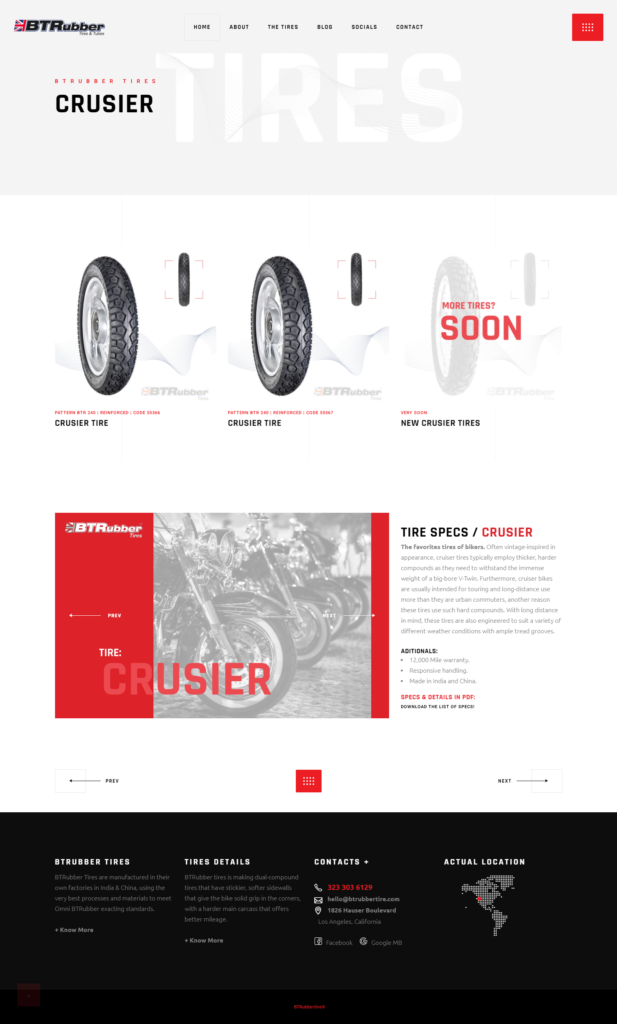
Think of them as work boots, sturdy and durable and made for doing work. Cruiser tires are meant to handle a lot of miles and perform well in all weather conditions, so they use a harder rubber compound, as well as lots of tread grooves to channel out water.
They’re great for straight-line stability and offer awesome mileage, but not necessarily a lot of performance or outright grip, and on a cruiser, that’s an ideal compromise.
On the spectrum of street tires, cruiser rubber is at one end to mark the boundaries. Let’s move to the other end of the spectrum and talk about slicks.
Slicks are thick. There is nothing as inspiring as the first heat cycle on a fresh pair of slick. The grip is just unbelievable. These things are the pinnacle of performance, and because of that, they are very expensive, and it has very specific criteria that need to be met for them to offer optimal grip.
They’re very sensitive to pressure and temperature, and because they grip so incredibly well, they only last about two dozen laps. In the world of shoes, slicks are sprinter spikes.
They are very focused, totally uncompromising, and totally out of place at any place but the track.
I’ve heard Street riders say if they think they need flex because they’re headed to the track, but that’s kind of like a casual jogger strapping these bad boys on to go for a run around the park.
It is total overkill and, frankly, it’s totally unsuitable unless you can meet the requirements of the equipment for slicks.
That means using tire warmers to heat them to about 180 degrees and washing your pressures like a hawk.
DOT Race Tires
Just below race slicks are DOT race tires. These are essentially slick with a minimum amount of tread cut in them to meet Department of Transportation standards and conform to production racing rules.
They might look like street tires, but there are totally different animals.
Like slicks, DOT tires need to be hot, to grip well, only work well in the dry, only offer optimal traction for a heat cycle or two and are constructed specifically for racing.
That means a stiffer carcass for handling vicious acceleration and braking and an aggressive profile with a tall crown.
We’re talking about the kind of kicks that athletes put on to click off a five-minute mile.
They are awesome for performance, definitely made for speed, but not exactly ideal for everyday walking.
As for using your racer buddies, DOT takes off on the street because you want to be the fastest guy at Mulholland, don’t Do it.
There is no way you’re going to get these things hot enough to work. These are race use only, which is why you can only get them through trackside vendors.
Sports Touring Tires
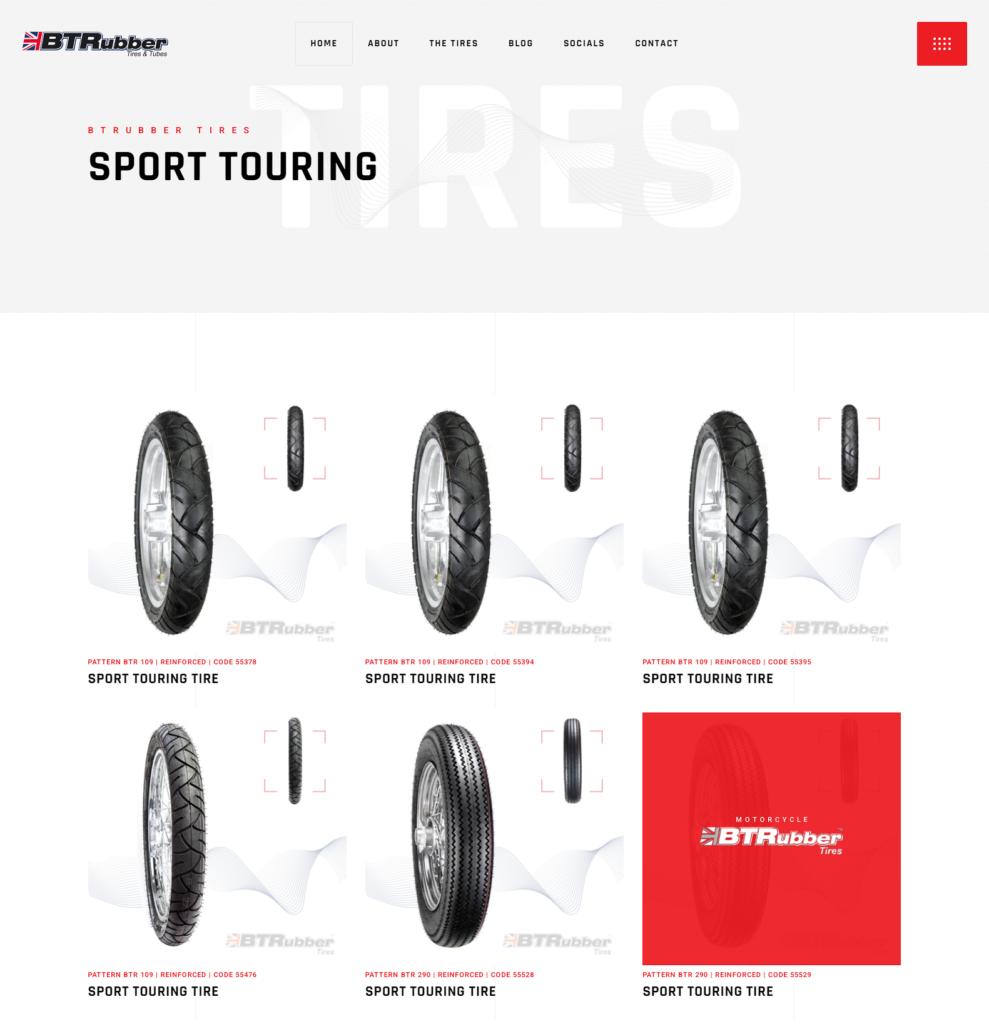
This next category of tires combines a little bit of that Cruiser tire durability with a lot of performance. Sport touring tires are like cross-trainers or trail running shoes. They are comfortable, they are versatile, and they are very athletic.
These are the shoes We like to wear daily, and ST tires are what I want to be riding on.
In this category of the tire, you’re likely to see many tread groups. Some of which are going to extend towards the middle of the tire to help with water dispersion.
However, the shoulders might be slick or semi-slicks, si you have a great grip at full lean.
They have a harder rubber down the middle for mileage, so you don’t wear the thing out while you’re commuting or touring, and then there’s softer rubber on the shoulders so you can still slay it in the corners.
The compound is also designed to work across a wide range of temperatures, and there’s stuff, like silica mixed into the rubber, so there’s good wet grip. That means ST tires will work well, whether it’s cold and rainy or hot and dry.
In terms of traction, sport-touring tires have more than enough to drag us, and they’re going to last a long time. When you think of SP rubber, you think of old guys on BMWs, but modern sport-touring tires, they’re badass.
They offer lots of performance regardless of the weather or the temperature, and they’re going to last a long time.
Hypersport Tires
Last but not least is a category of tires that I liken to a good pair of jogging shoes or running shoes. As the name suggests, Hypersport tires are all about performance. They’re made to rip it up on a twisty road and also do the occasional track day.
_______________________________________
We think you should buy sport-touring tires instead of hypersport tires
They utilize a ton of trickle-down race tire technology to offer you more traction, speed, and agility. They are definitely at the premium end of the street tire spectrum.
Hybrid sport tires are also a little more sensitive to temperature and pressure than sport-touring tires, and they’re not always great in the wet.
They do often use a dual compound tread to give you a little bit better mileage, but the fact is they tend to wear out quickly. But hey, that’s the price you pay for a great grip.
Unfortunately, a lot of street riders think they need Hypersport tires because they ride hard. The truth is they’d probably be better off on sport touring tires. You’re going to get more versatility with an ST tire and more life out of it.
We hope you can learn something about the many tire choices that are out there! If you need to know even more, please go visit our website and get the very best tire for your most exciting experience.
Everything that has ever been manufactured has an expiry date.
Myths Vs. Facts
It doesn’t matter if you are riding a cruiser, a Harley, or just touring; everything that has ever been manufactured has an expiry date, and motorcycle tires are no different.
How do you know when to change motorcycle tires? A motorcycle front tires can be viable for up to 3900 miles, and the rear tires for 1,900 miles, or three to five years.
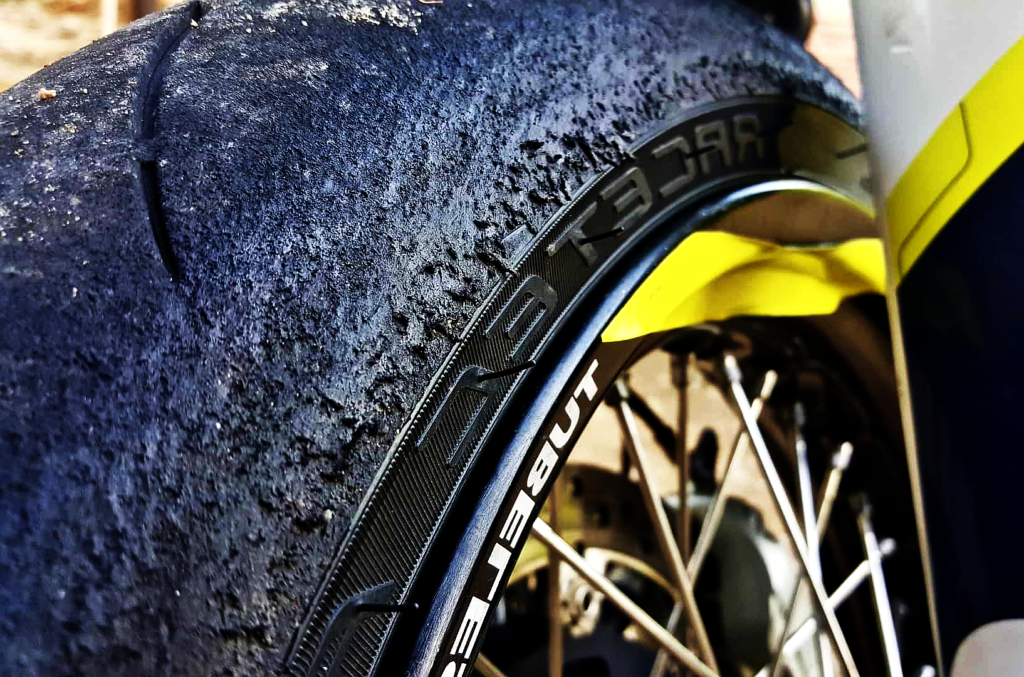
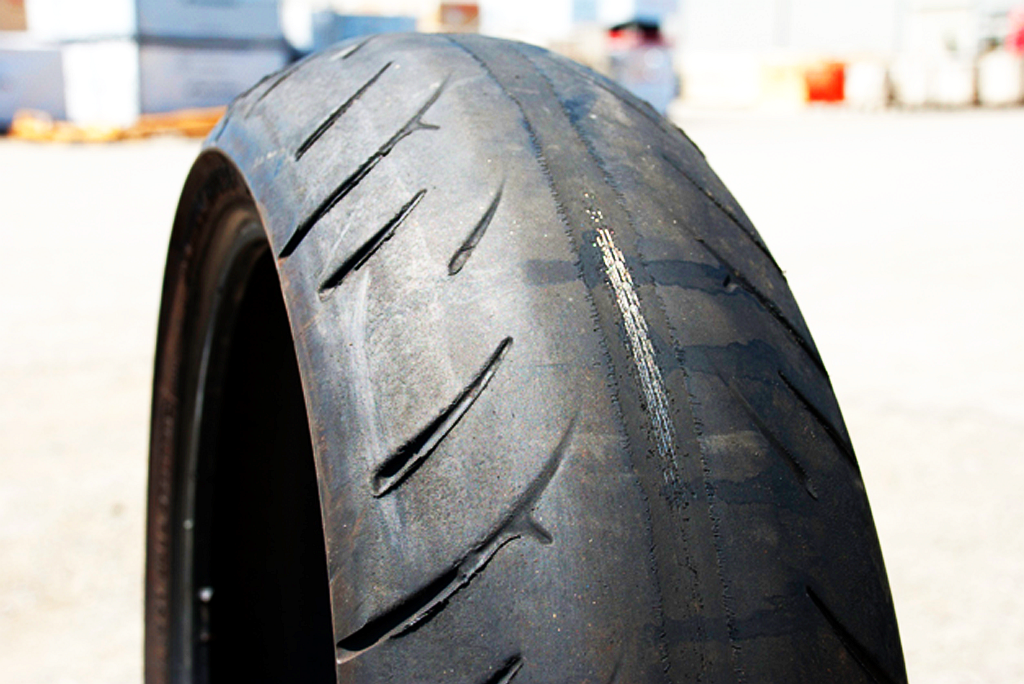
Tires are one of the most critical components keeping us from landing on our heads. Many factors contribute to a tire being worn out, including the most obvious. This is an extreme example of a tire being flat worn out.
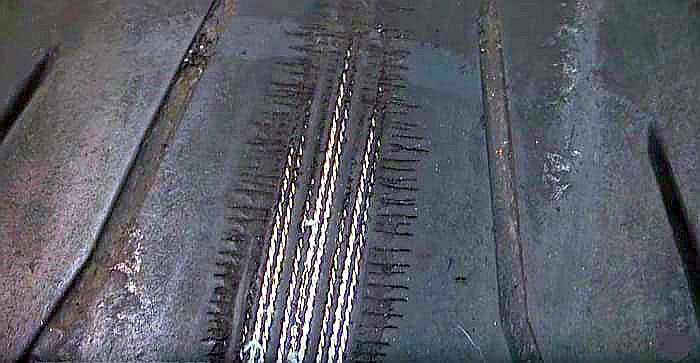
This is what we jokingly refer to as “throwing sparks.” The rubber has worn away revealing the metal bands, or chords, that hold the tire together.
When the rubber starts making these weird patterns, that means the metal chords are just about to wear through.
_______________________________________
Motorcycle tire wear metal cords
It’s worth noting that a tire does not wear at the same rate throughout its life. As the rubber becomes thinner, the tire wears faster. Like car tires, motorcycle tires have wear bars.
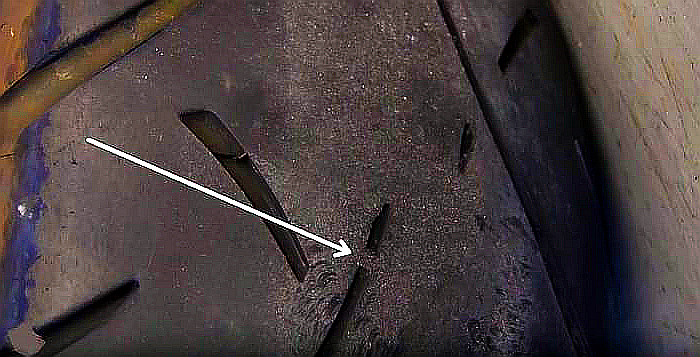
When the tire wears down to the point where these bars are level with the rest of the tire, it’s time to replace it.
_______________________________________
Motorcycle tire wear bar
For most modern motorcycle tires, the front tire is tasked with moving all the water out of the way. This often means the rear tire will have a solid strip of rubber with no saiping or tread in the center.
This is done to help the rear tire wear more slowly and withstand more abuse from acceleration.
This is why it’s essential to always run matched tires. Not only can mismatched tire construction cause we’re handling issues, but the tread pattern on matching tires have been specifically engineered to work together.
The problem with tires with this solid strip of rubber in the center is that it’s tough to tell when the tire is at the end of its life, particularly for those of us who live in and ride in the real world, where we wear out tires in the center long before we wear them out at the edges.
So here’s our plea to the manufacturers. Race slicks use these little dots to indicate wear. When the dots disappear, there is no more rubber on the tire.
_______________________________________
What would be the best tires for this matter?
Yes, BTRUbber Tires:
BTRubberTire.Com
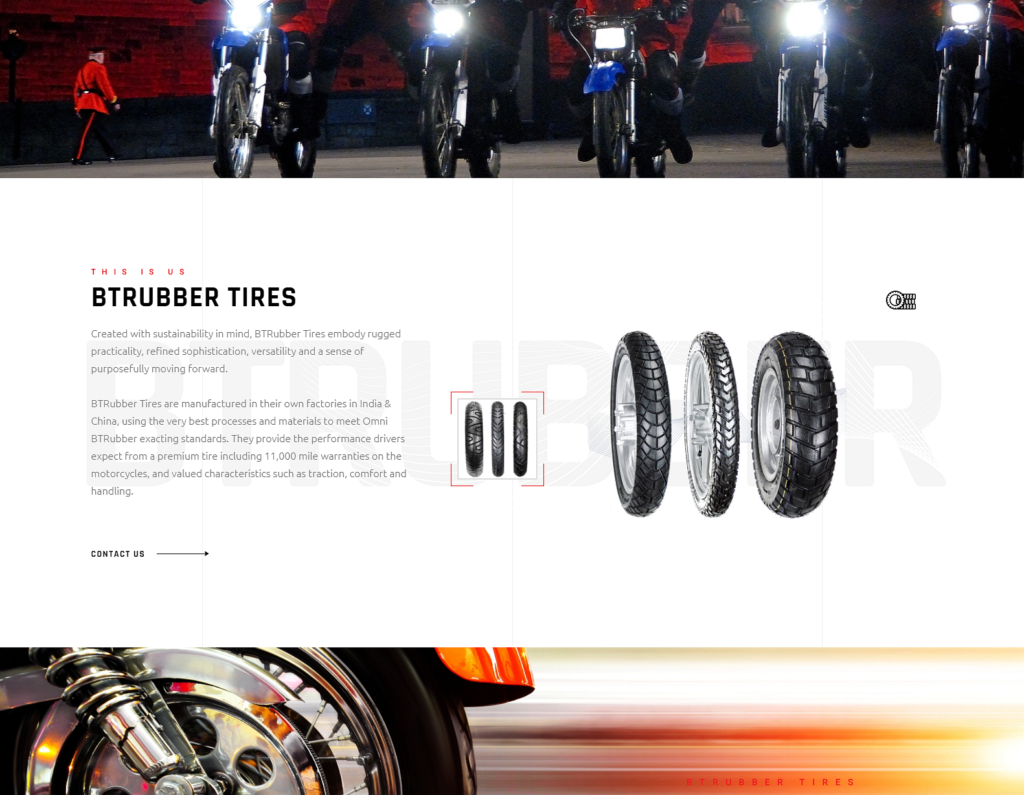
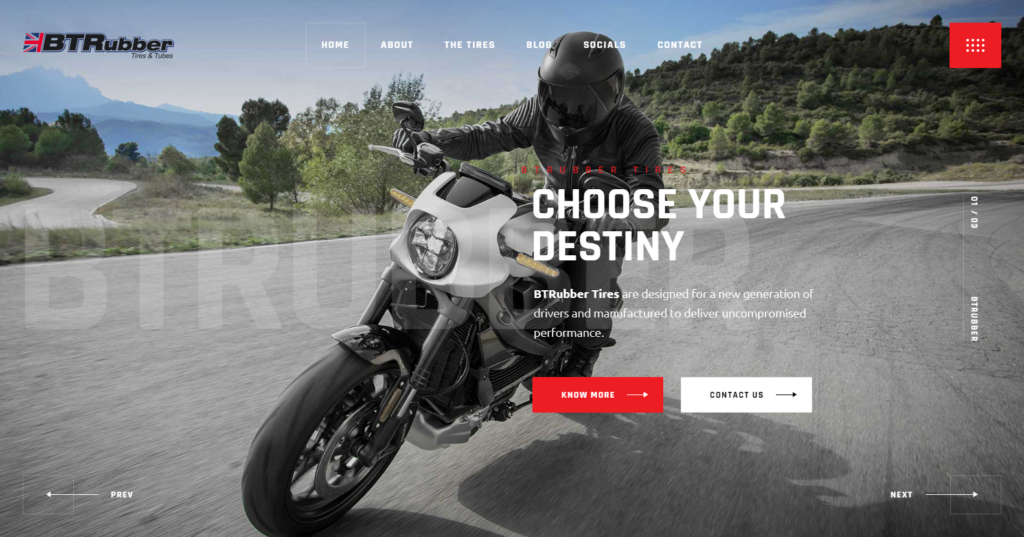
Created with sustainability in mind, BTRubber Tires embody rugged practicality, refined sophistication, versatility and a sense of purposefully moving forward.
BTRubber Tires are manufactured in their own factories in India & China, using the very best processes and materials to meet Omni BTRubber exacting standards. They provide the performance drivers expect from a premium tire including 11,000 mile warranties on the motorcycles, and valued characteristics such as traction, comfort and handling.
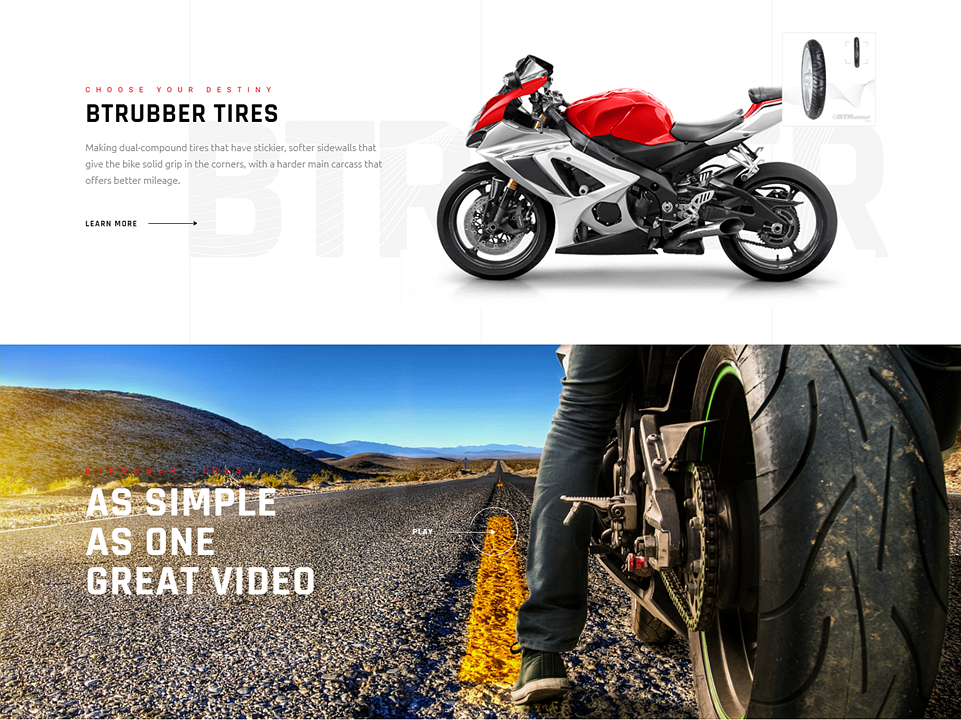
Making dual-compound tires that have stickier, softer sidewalls that give the bike solid grip in the corners, with a harder main carcass that offers better mileage.
_______________________________________
Another very important things to consider
Tire Age
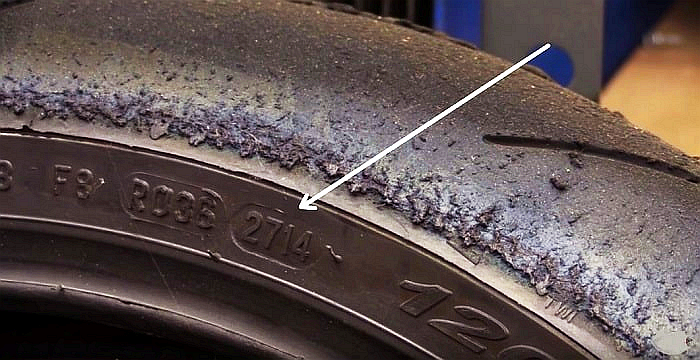
All tires are stamped with the data manufacture. A stamp is a four-digit number molded into the sidewall of the tire.
If the number is “2714” that means the tire was manufactured in the 27th week of 2014. If the number is “0516” that means the tire was manufactured in the fifth week of 2016.
_______________________________________
Motorcycle tire age
If the stamp is only three digits long, that means that the tire was manufactured before the year 2000. So, how old of a tire should you run on your bike? Don’t confuse the manufacture date with the “Sell-By” date.
Most manufacturers recommend the tire be sold before the tire is five years old. When you’re buying tires, it’s good to be mindful of the age a tire that’s three or even four years old is OK.
But also pay attention to the age of the tires on a used bike that you may be considering. If the tires look great, but we’re manufactured ten or more years ago, you’ll probably want to add the cost of new tires into the price of the bike.
Here’s the thing, as rubber ages, it interacts with the air in the atmosphere, causing oxidation. Oxidation causes the rubber to harden and become brittle.
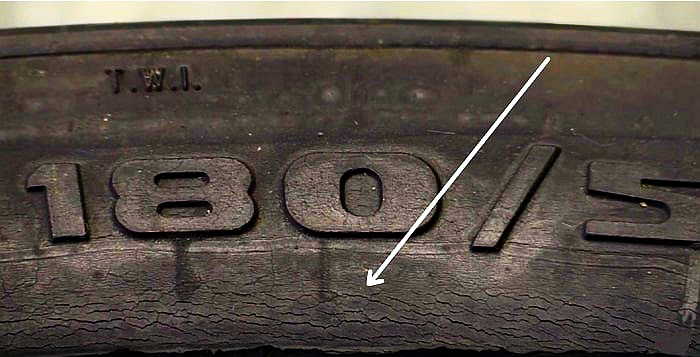
The rubber will wear away much more slowly but will offer significantly lower levels of grip. Oxidation also shows up as cracks or “checking” on the sidewall. Cracking on the sidewall, or in between the traction blocks, indicates severe oxidation, and it’s a sign that the tires should be replaced.
_______________________________________
Motorcycle wear due to oxidation
Which brings us to the third reason why a tire wears out.
Heat Cycles
Heat increases the rate of oxidization, so if your bike lives in a hot garage, or you live in a hot environment, your tire will lose its grip more rapidly because the heat accelerates the rate of decomposition of the rubber.
What’s more, every time your tire warms up and cools down, it goes through a heat cycle, which also compromises the grip the tire can provide.
When a tire has gone through so many heat cycles that it can no longer provide adequate levels of grip, that tire is “baked-out.”
And not all tires deal with heat cycles the same way. A race tire, or even a DOT race tire that can withstand extreme heat punishment on the racetrack may only be able to withstand two or three heat cycles before the level of grip is significantly diminished.
While a sport touring tire may not be able to withstand the harsh punishment and heat like a race tire can, it can typically survive a lifetime of heat cycles from everyday riding stresses before grip decreases.
_______________________________________
It’s always best to replace your tires as a set
However, tires intended for cooler, wetter climates are less capable of dealing with too much heat when used in hot, dry climates and may bake-out long before the tread is worn away.
This is part of the reason racers and track day riders use tire warmers. Not only to keep the tire warm and grippy but to reduce the number of heat cycles that the tire will have to endure.
This is also why it’s a good idea to try to replace your tires and sets. Your front tire is going through just as many heat cycles as your rear tire and is baking-out at the same rate. We’ve seen a lot of riders who will replace the rear tire, and then a few months later replace the front tire, and then a few months after that, replace the rear tire again.
So they are always chasing a new set of tires. And nothing makes your bike handle like new like a fresh set of tires. So, again, if you can swing it, it’s always best to replace your tires as a set. But if you can’t, for whatever reason, then at least stick with matched tires.
Knowing how old your tires are, or how many heat cycles they’ve endured, maybe a more significant indication as to how worn your tires are then how much tread remains.
_______________________________________
It is better for you to buy at btrubber tires
Being aware of these things can help you make the best decision to know when it’s time to buy new tires for your bike.
The Bonus
The way we tend to know the mileage left in a tire is the simplest of all: We track mileage. We’ve collected a relatively substantial database of tires that we ride, and the mileage we got out of them, and we’ve posted that information on our website.
There is still a wide range of factors involved here, so we don’t take these to be gospel, but they do give us anecdotal evidence to determine if a tire should be replaced before a trip or can go the distance.
How Long Do Motorcycle Tires Last?
A motorcycle front tires can be viable for up to 3900 miles, and the rear tires for 1,900 miles, or three to five years.
Is it Ok to mix tire brands on a motorcycle?
The tire manufacturers say definitely not, but many riders think this is just a tactic to boost sales. There is, however, a technical explanation behind that recommendation. Tires are developed in pairs, so traction and handling qualities are determined by testing two of the same tire on the same motorcycle.
The tire manufacturers are cautious, as you would imagine, and they’re loathed to recommend that one of their tires be matched with a complete unknown on the other side of the bike. They don’t know, and frankly, you don’t either, if that combination will handle naturally and retain an acceptable level of stability.
_______________________________________
If you’re going to mix and match brands, do so within a fairly narrow range of types.
You dirt bike guys are about to reach for the keyboard, but hang on, that recommendation applies mostly to street bikes, where the tire’s precise shape and size influence traction and handling. It’s a different deal offroad.
Their mixing and matching is commonplace, usually by riders looking for the best combo of traction handling for their particular kind of terrain with their particular bike. With the bike always braking and gaining traction, things like detailed profiles and tread patterns aren’t quite as influential in the way they handle.
That means the main recommendation is to avoid going to the different front to rear, like having an aggressive now beyond the rear and a street bias tire on the front. Now each provides a very different kind of traction over various terrains, meaning that your bike’s handling could change pretty dramatically.
If you’re going to mix and match brands, do so within a fairly narrow range of types. like sticking to a pair of 50/50 tires, or maybe an 80 10 tire pair at each end of the bike.
We strongly recommend you run the pressure recommended in your bikes owner’s manual, not the max PSI rating stamped into the sidewall.
Get your hands on a quality tire pressure gauge and check your pressure at least once a week, or before any long ride.
To be continued…
_______________________________________
Moust of all, Remember that Always You Can:
Choose Your Destiny!
Visit our website if you want the perfect match between wheels and tools!
It is a fact that motorcycle tires generally last for a less time than car tires. Most manufacturers suggest getting an annual inspection if you’ve used your tires for more than 5 years and if the tire is more than 10 years old
It is better to replace it as it has reached the end of its useful life period.
Motorcycle tires should always be replaced if they are showing signs of wear and tear or coming to the end of their useful life period for both safety and quality purposes.
_______________________________________
Even we wish to, tyres are not forever
Part of the most critical parts of the bike
Tires are undoubtedly one of the most critical parts of the whole bike since the quality of the ride and performance of the bike is determined by the quality and fit of the tire itself. Motorcycles have only two points of contact with the road and therefore, it is of utmost importance to ensure that these points of contact are of the right size, shape, and compound. With a motorcycle, careful attention has to be given to the maintenance of tires to ensure your safety and a great experience.
The motorcycle grip is generally achieved through the use of soft rubber. The contact patch between the road and your motorcycle tire is generally about that of a credit card which means that using hard tires may leave the motorcycle prone to slipping and sliding. The extra grip of the motorcycle that you get as a result of soft rubber also results in its shorter lifespan since softer rubber wears out fast.
For safety, it is best to replace tires once the soft rubber becomes worn out so that you get the proper grip required at all times.
_______________________________________
Look Out For: The first of these is the tread depth.
What to Look Out For
There are a few signs that you can keep an eye out for to determine whether it’s time to replace your tire or not. The first of these is the tread depth. It is universally agreed that you must have 1/32” to 2/32” of tread depth.
The easiest way to determine this is generally by inserting a penny into your tread. If you can see the top of the head, then the tire has enough remaining tread. Generally, the middle of the tire is the most worn out since it sees the greatest amount of contact with the road.
A few manufacturers also have indicators cast into the grooves of the rubber tread. These are generally located a bit off the tire’s center and are an indication of the lowest amount of tread that is safe to ride with. It looks like a raised segment of rubber and is situated in one of the tire grooves.
_______________________________________
What would be the best tires for this matter?
Yes, BTRUbber Tires:
BTRubberTire.Com
Created with sustainability in mind, BTRubber Tires embody rugged practicality, refined sophistication, versatility and a sense of purposefully moving forward.
BTRubber Tires are manufactured in their own factories in India & China, using the very best processes and materials to meet Omni BTRubber exacting standards. They provide the performance drivers expect from a premium tire including 11,000 mile warranties on the motorcycles, and valued characteristics such as traction, comfort and handling.
Making dual-compound tires that have stickier, softer sidewalls that give the bike solid grip in the corners, with a harder main carcass that offers better mileage.
_______________________________________
There are also various situations where a tire doesn’t get completely worn out until this point. However, this does not mean that it is safe to ride with it since the shape of the tire also plays an important role in determining whether it is time to replace it or not. There are various cases where the tire is worn out unevenly. The most common form of this is when the tire gets worn out from the central part of the tread resulting in a squarish wear. It is best to get the tire replaced if it shows any sign of uneven tread as well.
_______________________________________
The devil is in the details
The next important thing to watch out for is defects in the tire
This may be seen in the form of dry rot or the cracking along the sidewalls of the tire. This type of damage calls for an immediate replacement since riding such a tire hampers the quality of your ride and the vehicle’s performance as well. There may also be the problem of cupping or scalping in your front tire where the tire shows wear and tear along the length of the tread. This leads to various handling and stability issues. It is dangerous to keep such a tire.
Lastly, it is also important to take into consideration how long it’s been since you bought the tire. The age of the tire plays an important part since the rubber also gets harder over the years and loses the grip required. The date code can generally be found on the sidewall of the tire – it is shown in the last four digits wherein 2311 means the 23rd week of 2011. If the tire is over five years old, it has to be checked regularly and if it’s over ten years old, then it is time to get a replacement tire.
_______________________________________
Regular checks to ensure that the tires are in proper working condition
Inspecting and Maintaining Tires
Regular checks to ensure that the tires are in proper working condition are always a good idea. Moreover, it is a good idea to change tire tubes also since they have a tendency to stretch over time and could crease if you put in a new tire without also replacing the tire tube. The tire size should also be compatible with the size markings of the tube. Regular checking of the tire will also make sure that there are no cuts or punctures that go unnoticed since they could lead to further damage down the line.
Having the right tire pressure is also a very important part in the maintenance of the tire, especially because they can easily get either over-inflated or under-inflated. When the tire is cold, an accurate pressure gauge should be used to measure and ensure that the pressure of the tire is in the right range. This should be done before any long rides and at least once a week.
There are safety problems caused by underinflated and overinflated tires. They tend to build more heat, causing an uneven wear and tear due to poor handling and corner turns. The tire may also be more easily damaged if a sudden impact happens and the ride becomes harder, causing an unnecessary increase in the tread’s wear and tear. Hence, the pressure of the tire must be maintained at the levels given in the manual to ensure rider safety. This way, tires can be maintained for longer.
To be continued…
_______________________________________
Moust of all, Remember that Always You Can:
Choose Your Destiny!
Visit our website if you want the perfect match between wheels and tools!
In the present or in the near future, flying with a motorcycle is the deal!
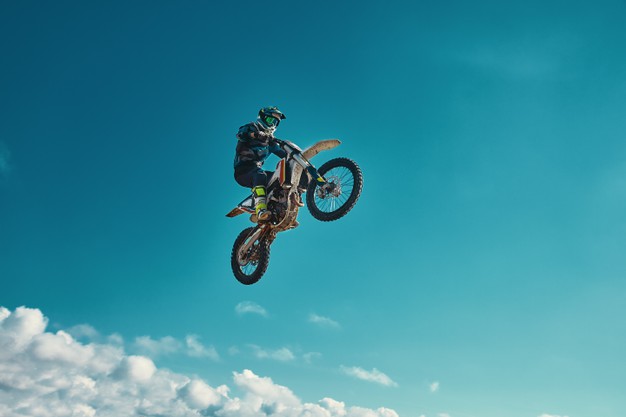
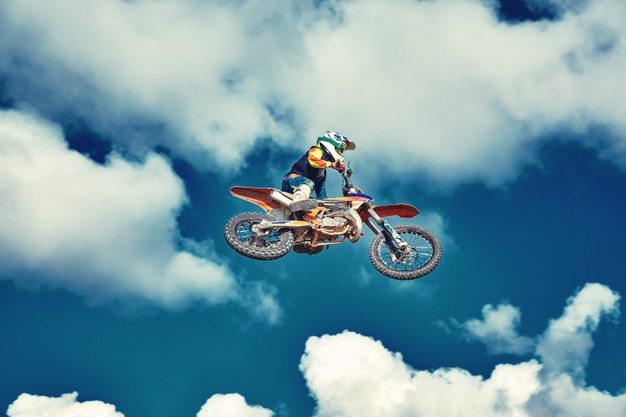
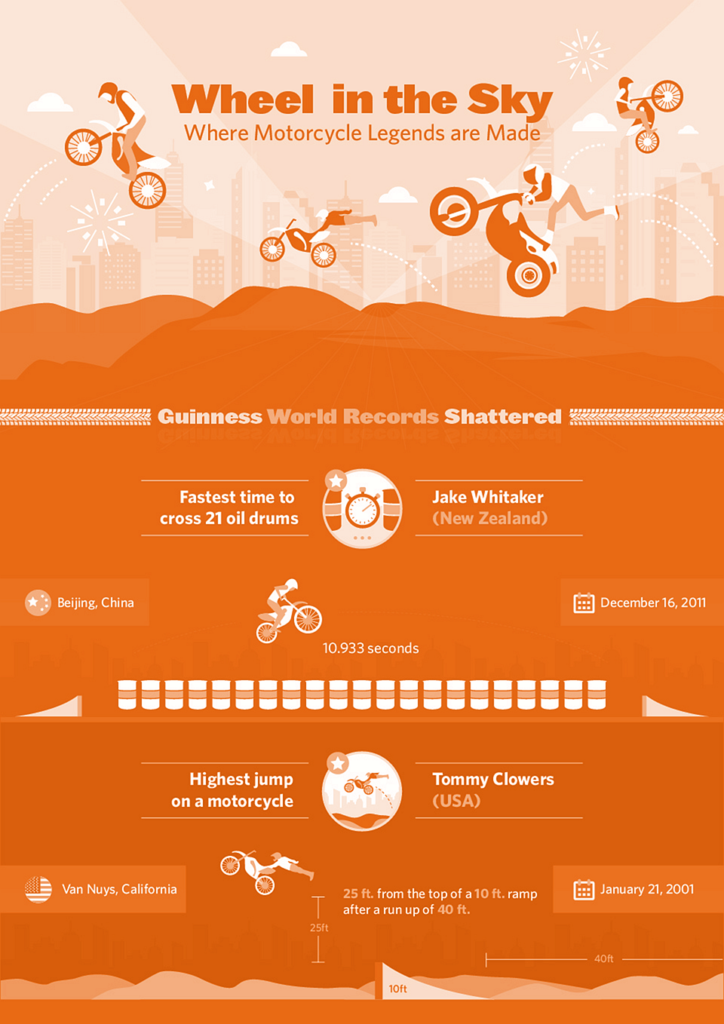
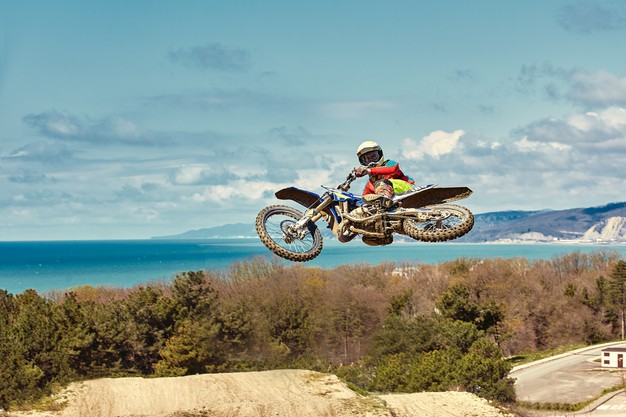
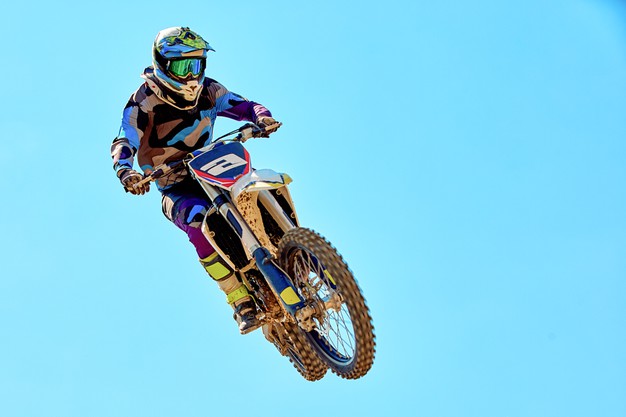
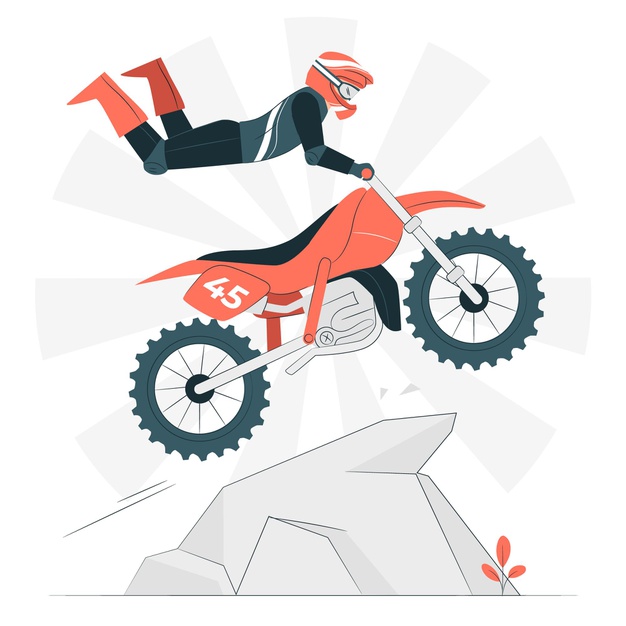
What motivates mere mortals to put their lives on the line in the name of glory, fame, and a Guinness World Record? For decades now, motorcycle stunt jumpers have been defying the impossible to sail further and higher into the sky than their predecessors. Let’s take a look at the ones who sailed to greatness.
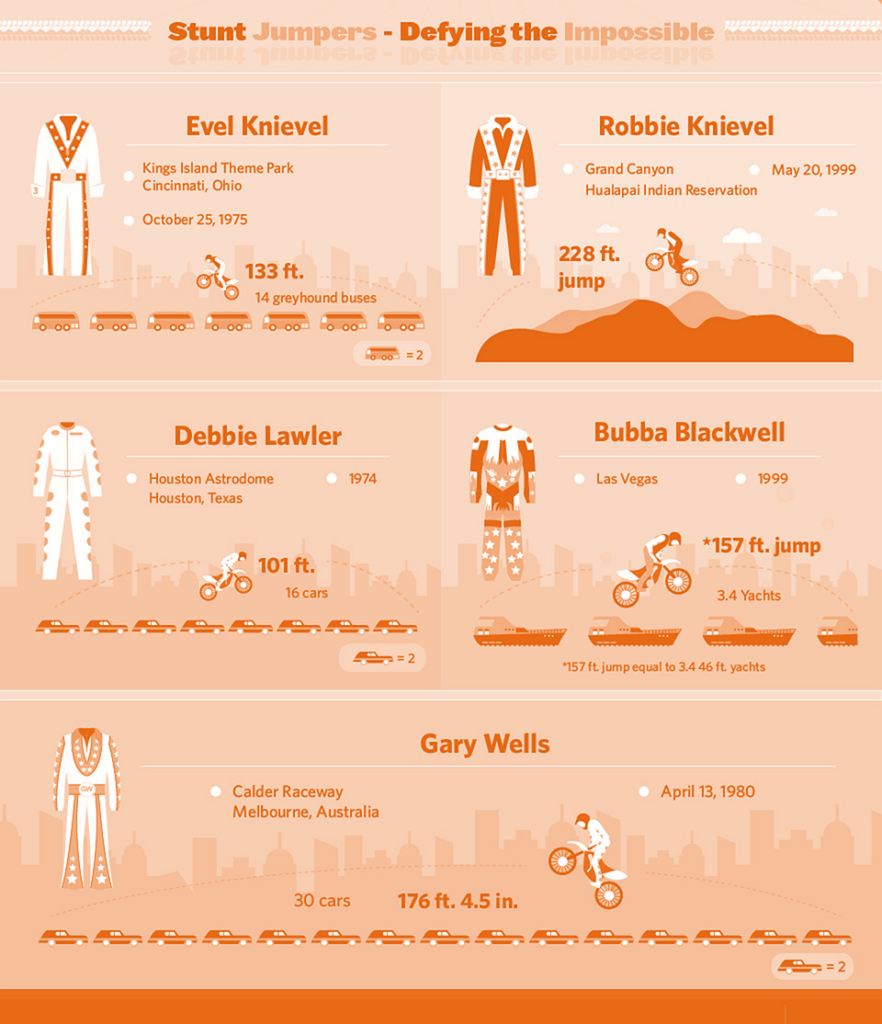
Evel Knievel was the most well-known American daredevil of his time. One of his most famous jumps, in 1975 at the Kings Island theme park in Cincinnati, Ohio, earned him the record for successfully jumping the most buses (14) on a Harley Davidson, which he held for the next 24 years. He was also bestowed with the honor of “most broken bones in a lifetime” by the Guinness Book of World Records. It wasn’t long before his son, Robbie Knievel, was nipping at his heels and recreating his previous jumps. At the Snake River Canyon in 1999, the younger Knievel set his personal record with a jump of 228 feet.
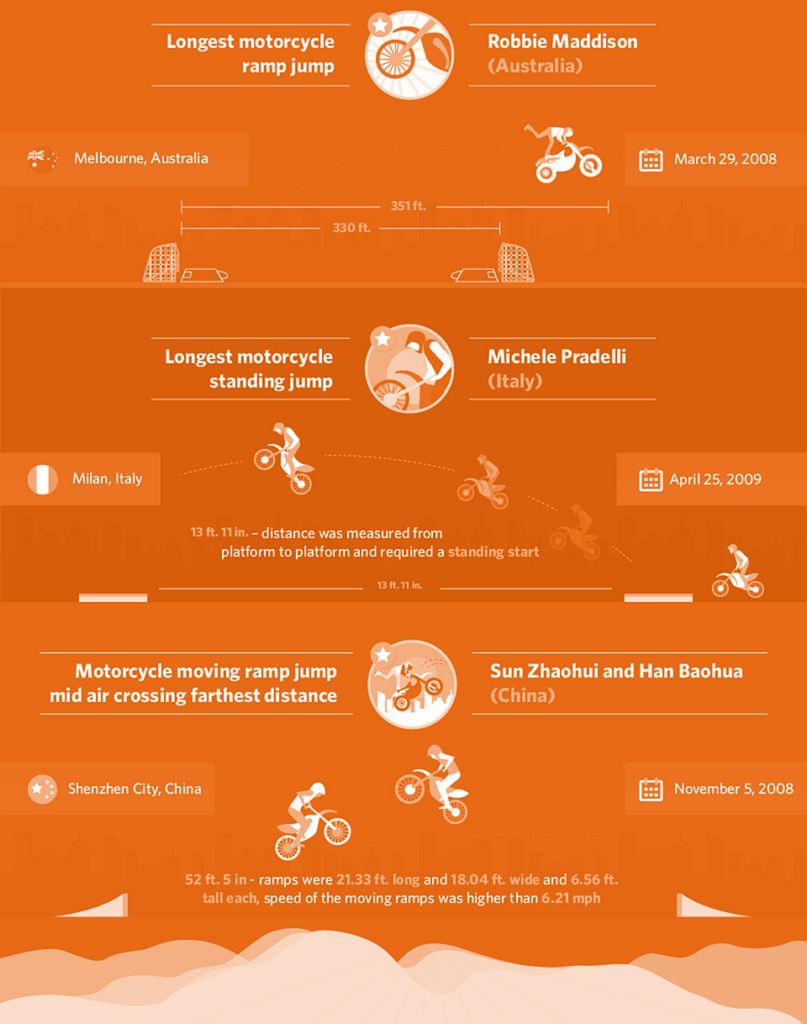
It would appear as though records for the most daring motorcycle jumps are set to be broken. From the “longest motorcycle ramp jump” to the partner event of “motorcycle moving ramp jumps”, stunt jumpers have had to come up with new, creative ways to beat the legends that came before them.
Even if you’re baffled by their life-threatening endeavors, it’s hard not to be impressed by the stunt jumpers who dared to push the limits.
_______________________________________
And what would be the best tires for this matter?
Yes, BTRUbber Tires:
BTRubberTire.Com
Created with sustainability in mind, BTRubber Tires embody rugged practicality, refined sophistication, versatility and a sense of purposefully moving forward.
BTRubber Tires are manufactured in their own factories in India & China, using the very best processes and materials to meet Omni BTRubber exacting standards. They provide the performance drivers expect from a premium tire including 11,000 mile warranties on the motorcycles, and valued characteristics such as traction, comfort and handling.
CHOOSE YOUR DESTINY!
Making dual-compound tires that have stickier, softer sidewalls that give the bike solid grip in the corners, with a harder main carcass that offers better mileage.
_______________________________________
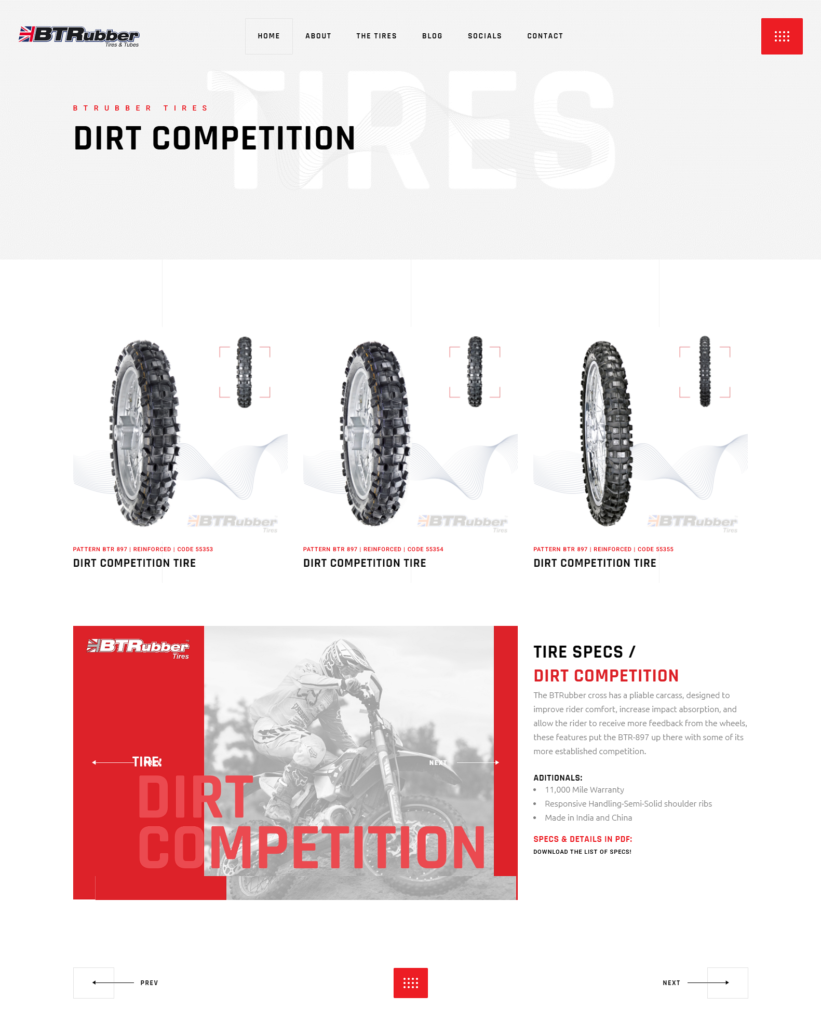
The BTRubber cross has a pliable carcass, designed to improve rider comfort, increase impact absorption, and allow the rider to receive more feedback from the wheels, these features put the BTR-897 up there with some of its more established competition.
ADITIONALS:
11,000 Mile Warranty
Responsive Handling-Semi-Solid shoulder ribs
Made in India and China
_______________________________________
Some kind of Motorized Angel!…
But what about the not-so-distant future?
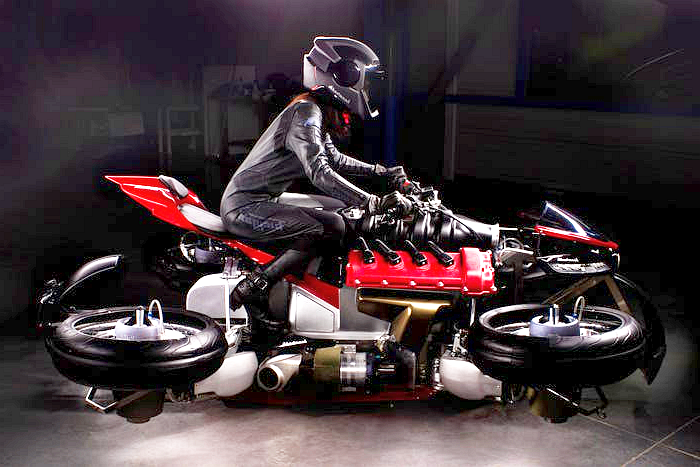
I present to you: The first ever transforming (Yes, transforming!) Jet Powered Street Legal Flying Motorcycle!
The “Moto Volante”
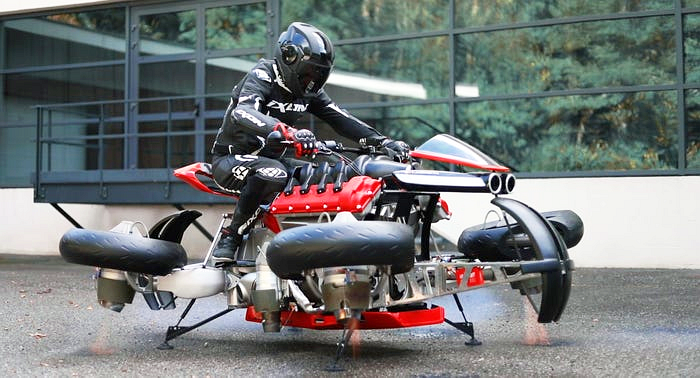
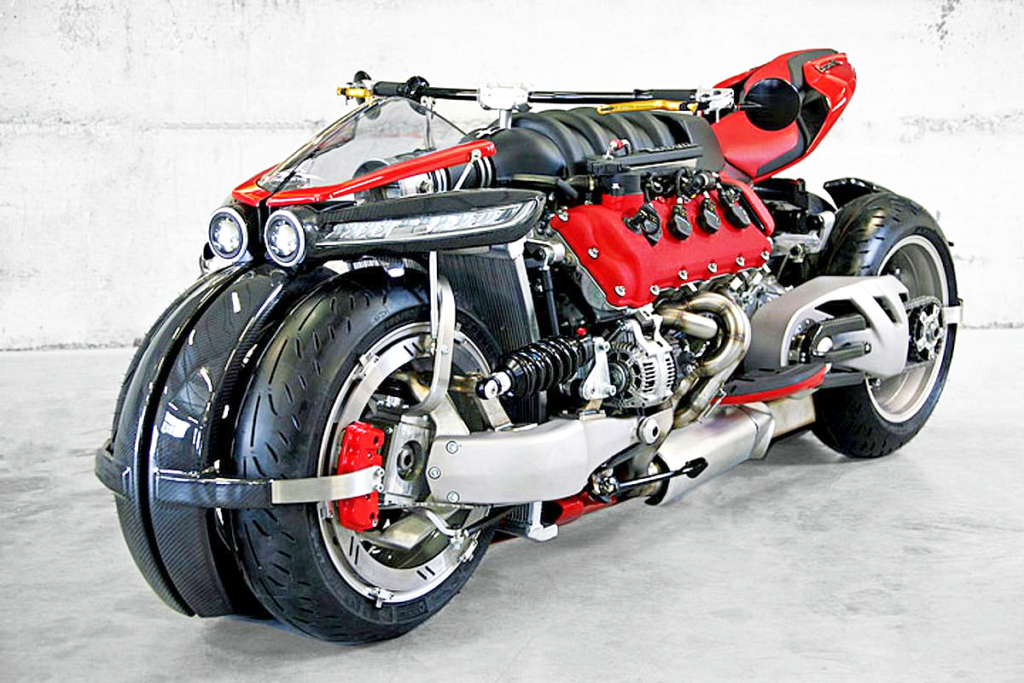
Is the world’s first actual flying motorcycle. It can be driven on the road and flown in the air when its wheels fold out and upward to become jet-powered thrust pods. French custom auto/moto maker Ludovic Lazareth has a long history of building wacky and bizarre one-offs and short-run vehicles, but the Moto Volante flying motorcycle is his most ambitious yet.
The Intention
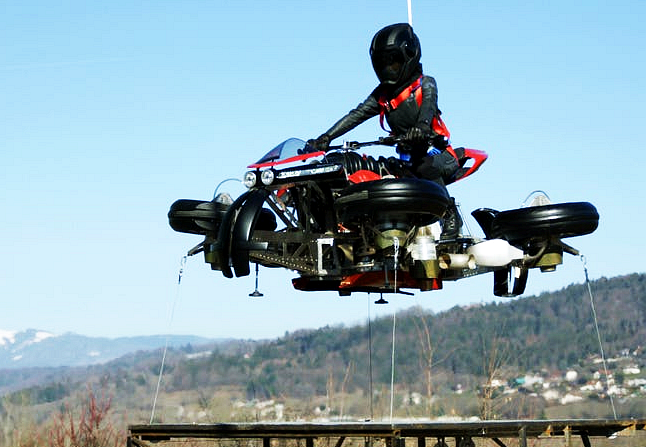
This vehicle is for the rider to be able to cruise it on the road, and then when they’ve had it with traffic, they can pull over to a suitable launch area. With just the press of a button, the bike converts from ride mode to fly mode and, after waiting about 60 seconds for the jets pre-heat, the driver can lift off and leave the gridlock behind as a pilot.
_______________________________________
Appearance wise, it is an evolution of Lazareth’s own mind-boggling LM-847 – a tilting four-wheeler built around a fire-breathing 470-horsepower Maserati engine. But the Moto Volante is on another level. Placed in the hub of each wheel is a 96,000-rpm JetCat jet turbine, as well as hydraulic actuators that tilt the four wheels out and up, forming a configuration something like a jet-powered quadcopter.
The Project
Developed in conjunction with Jetcat, the German company that makes the jet turbines used by “Jetman” Yves Rossi, as well as the NASA/Skunk Works X-56A experimental aircraft, among others.
_______________________________________
On the ground or in the air, it works wonders!
Two extra jets can be added near the middle of the chassis to handle more weight, although it is capable of a 1-ton load already so that is probably unnecessary. The entire bike weighs just 140 kg (308 lb) and makes some 240 kg (529 lb) of thrust in flight mode, the equivalent of about 1300 hp of power. Most importantly, each wheel is equipped with a quick opening parachute… just in case.
La Moto Volante joins Jetpack Aviation’s Speeder as the only two jet-powered flying motorcycle concepts to make headlines as of yet. However, the Speeder is much more of a single-purpose vehicle without any road capability, meaning it can’t be driven on the road. The Speeder most likely flies much better but Lazareth has a full-size prototype in the air that’s also road-certified which is extremely impressive!
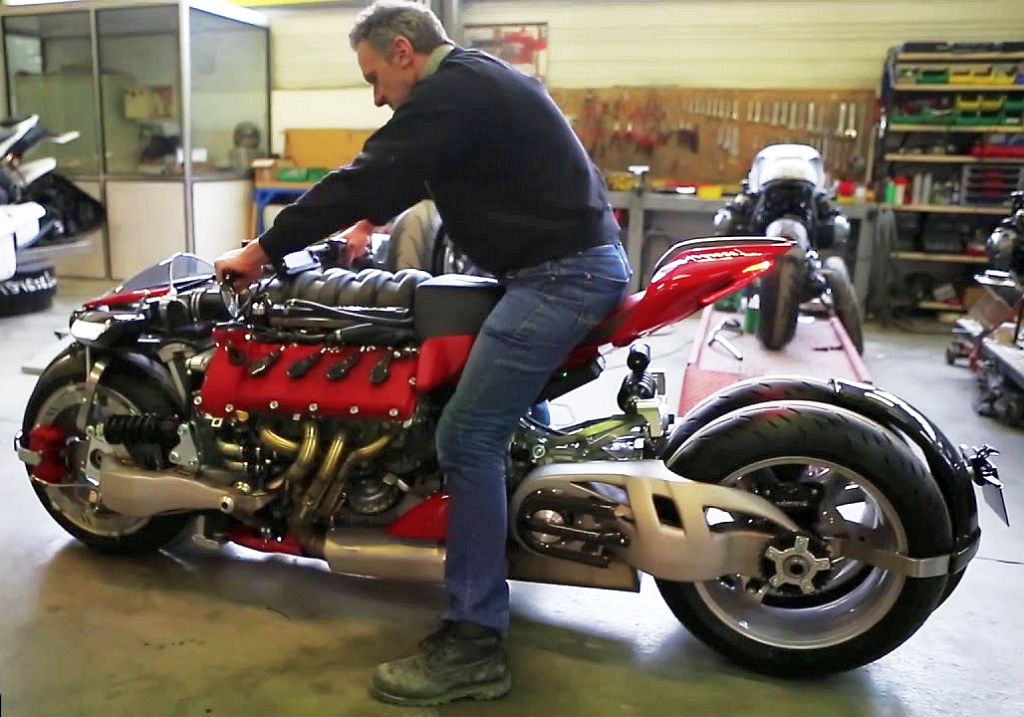
Ludovic Lazareth
He has entered the French into the history books with “the Moto Volante” by becoming the first manufacturer in the world to create a truly flying motorcycle. At the moment, the prototype hovers only one meter above the ground and its range is just over ten minutes. But Ludovic Lazareth is confident saying, “starting from nothing, we achieved this result in a few months.”
_______________________________________
Ludovic Lazareth
The Price
The Lazareth team will be bringing the Moto Volante to Gitex in Dubai this October. They plan to launch pre-orders there at a price of €496,000 (approx. US$560,000).
_______________________________________
To conquer the sky, start by rolling to fly:
Choose Your Destiny!
Visit our website if you want the perfect match between wheels and wings!
Happy
00 %
Sad
00 %
Excited
00 %
Sleepy
00 %
Angry
00 %
Surprise
00 %
We use cookies on our website to give you the most relevant experience by remembering your preferences and repeat visits. By clicking “Accept”, you consent to the use of ALL the cookies.
This website uses cookies to improve your experience while you navigate through the website. Out of these, the cookies that are categorized as necessary are stored on your browser as they are essential for the working of basic functionalities of the website. We also use third-party cookies that help us analyze and understand how you use this website. These cookies will be stored in your browser only with your consent. You also have the option to opt-out of these cookies. But opting out of some of these cookies may affect your browsing experience.
Necessary cookies are absolutely essential for the website to function properly. These cookies ensure basic functionalities and security features of the website, anonymously.
Cookie
Duration
Description
cookielawinfo-checbox-analytics
11 months
This cookie is set by GDPR Cookie Consent plugin. The cookie is used to store the user consent for the cookies in the category "Analytics".
cookielawinfo-checbox-functional
11 months
The cookie is set by GDPR cookie consent to record the user consent for the cookies in the category "Functional".
cookielawinfo-checbox-others
11 months
This cookie is set by GDPR Cookie Consent plugin. The cookie is used to store the user consent for the cookies in the category "Other.
cookielawinfo-checkbox-necessary
11 months
This cookie is set by GDPR Cookie Consent plugin. The cookies is used to store the user consent for the cookies in the category "Necessary".
cookielawinfo-checkbox-performance
11 months
This cookie is set by GDPR Cookie Consent plugin. The cookie is used to store the user consent for the cookies in the category "Performance".
viewed_cookie_policy
11 months
The cookie is set by the GDPR Cookie Consent plugin and is used to store whether or not user has consented to the use of cookies. It does not store any personal data.
Functional cookies help to perform certain functionalities like sharing the content of the website on social media platforms, collect feedbacks, and other third-party features.
Performance cookies are used to understand and analyze the key performance indexes of the website which helps in delivering a better user experience for the visitors.
Analytical cookies are used to understand how visitors interact with the website. These cookies help provide information on metrics the number of visitors, bounce rate, traffic source, etc.
Advertisement cookies are used to provide visitors with relevant ads and marketing campaigns. These cookies track visitors across websites and collect information to provide customized ads.