The Moust Essential Guide to Your Motorcycle Tires! – Continuation of “how to read your motorcycle tire codes”. Part #3

Read Time:6 Minute, 37 Second
Get the right motorcycle tires! BTRubber Tires

Motorcycle Tires 101

Information is a handy thing to have, and this is particularly true when it comes to something as important to your health as your motorcycles tires. Accordingly, tire manufacturers and the federal government have devised a system that lays out just about everything you need to know and placed it conveniently on the tire sidewall. The problem is that much of that information is in a sort of code that needs deciphering before the message means anything. What follows is a guide to doing just that.

It’s important to understand that while the law requires certain information, tire manufacturers have a lot of leeway in the way that material is formatted. They’re also free to add anything they deem pertinent, or even mildly interesting, so the amount of information and its placement can vary greatly between manufacturers or even between two similar tires from the same maker, so don’t be surprised if your tires don’t look exactly like our examples.

_______________________________

Manufacturer’s Name

This one is self-explanatory, it identifies the tire maker, and lets you know who to thank, or blame, if your tire elicits strong feelings.

Tire Type

This identifies the particular tire within the manufacturer’s range. It may appear as a name, for example, Cobra (Avon), Lasertec (Metzeler), or Battlax (Bridgestone), or as an alpha numeric designation like AM26 (Avon). If there’s enough room, some tires may include both.

_______________________________

Tire Construction Detail

The construction detail section describes the internal construction of the tire. Among other things, it’ll list the type of material used to build the tire carcass, and how many plies are used. It may not mean much to you, but it’s pornography to a tire geek!

Advanced Variable Belt Density

Remember what I said about the manufacturers being free to add information they thought you might like? Well, this little tidbit is basically advertising. It refers to the belt that runs throughout the circumference of the tire.

Get an example whit our own tire specs!
Get the right motorcycle tires! BTRubber Tires

_______________________________

Tire Size Designation

_______________________________

This one’s a biggie, kids. It tells you the size and profile of your tire, what size rim it fits, and, in most cases, includes information on the tire’s speed rating and construction, though these will always be listed separately. Over the years three basic systems have been used: the inch, which is the oldest, and formerly the most popular; the alpha-numeric, which was a little confusing and never very popular; and the current favorite and all-time most popular, the metric. While both inch and alpha-numeric systems are still in limited use, primarily among vintage bike enthusiasts, we’ll pass them by in the interest of brevity and concentrate on the metric system, which has become the standard of the industry.

In our example, the size designation is 170/60ZR17. The first number represents the tire’s nominal width, which is the width of the tire from sidewall to sidewall when the tire is mounted on its rim and properly inflated, but not under load. This is called the section width. In this case it’s 170 millimeters, and no, they never actually print the “MM” on the sidewall. The second number represents the nominal height of the sidewall as measured from the tire bead, where it contacts the rim, to the point where the tread meets the ground. This is called the aspect ratio. Where it gets tricky is that this second number, 60 in this example isn’t a dimensional measurement but a percentage of the tire’s width. In this case, 60 percent of 170 is 102, meaning we have a tire that’s 170 millimeters wide, and a side wall that is 102 millimeters high.

The Z represents the tire’s speed rating. Let me digress here and point out that unless the tire is Z-rated – meaning it’s good for sustained travel at 150 mph or more – the speed rating isn’t normally included in the size designation label. Manufacturers usually place the Z in the size description when the tire is W- (168 mph) or V- (186 mph) rated to indicate that this version of the tire is intended for high performance use and for bragging rights.

The R tells us that this is a radial tire; if it were missing we could rightly infer that the tire used bias ply construction, and in every case that would be listed somewhere on the tire as well.

The 17 means this tire is designed to fit a 17-inch rim. Armed with this information and only this information, you now know enough about your tire’s construction to safely replace it, no matter the circumstances.

_______________________________

Load Index and Speed

This box will contain a two-digit number followed by a single letter. The number tells you how much weight the tire can bear at its maximum inflation pressure. The letter indicates the maximum speed the tire can handle, also at its maximum pressure. The speed ratings can be a little confusing – as a rule, the higher the letter, the higher the speed, but there are exceptions. H, for example is rated at 130 mph, while an S-rated tire is only good to 112 mph. A fuller description of both load and speed ratings can found on most tire company websites or in their catalogs.

ECE Approval

This stands for the Economic Commission of Europe and means that they’ve approved the tire.

Tubeless or Tube Type

(Sometimes “tube type when fitted to a spoked wheel”): This indicates whether the tire can be used with a tube for spoke wheel applications and/or installed without one when appropriate.

Directional Arrow

The arrow indicates which way the tire should rotate when the motorcycle is moving forward.

Manufacturing Date Code

This is another handy piece of information. The date code is a four-digit number that tells you what week and year the tire was built. For example, 1721 means your tire was built during the 17th week of 2021.

DOT Compliance Symbol and
DOT ID Number

These indicate that the tire is both legal to sell in the US and traceable should the DOT need to recall them for any reason.

Maximum Load and Pressure

This one seems redundant as it repeats information we already have. However, in this case, rather than use a symbol, the maximum load is spelled out in pounds. The maximum pressure setting is always cause for confusion. This number represents the maximum amount of pressure the tire can safely withstand at its maximum load. It is not the recommend tire pressure for normal use.

Most motorcycles will have their stock tire sizes, and appropriate tire pressures on a sticker appearing low on the bike’s frame or swing arm.

Pattern Code

The manufacturer’s tread pattern code; it’s of academic interest only.

Country of Origin

If you need to know (Ours are from India and China).

Get the right motorcycle tires! BTRubber Tires

_______________________________

Lastly, there are two indicators missing from the illustration that are sometimes present. The first is the Balance Mark – a dab of paint that tells the tire installer where the tire’s light spot is; the second is and the Wear Indicators, which are small triangles, or the letters TWI (Tire Wear Indicator) imprinted at several points around the tire’s circumference. These show you where the tire’s wear indicators are located.

Finally

Please understand that while the foregoing provides you with a guide, and hopefully a better understanding of the type of tire your motorcycle requires, it’s by no means complete. In all cases, either the original equipment manufacturer or the tire builder’s catalog should be consulted when questions concerning tires arise.

_______________________________

Moust of all, Remember that Always You Can:

Choose Your Destiny!
Happy
Happy
0 %
Sad
Sad
0 %
Excited
Excited
0 %
Sleepy
Sleepy
0 %
Angry
Angry
0 %
Surprise
Surprise
0 %

The Driving Change: Why More Women are Riding Motorcycles Today?

Read Time:8 Minute, 42 Second

Whether it’s for freedom, adventure, spiritual experience, confidence, independence, or community, women are taking to motorcycles with an increased voracity.

_______________________________

Nine years ago, Debra Teplitz, 44, decided to silence the voice in her head that said, “Nice Jewish girls from the North Shore of Chicago don’t ride motorcycles.” Like so many women who are learning to ride in their 30s, 40s, 50s, and beyond, Teplitz has confronted personal challenges, societal stereotypes, and cultural expectations to embrace the freedom and independence of motorcycling. For many female riders, mastering a motorcycle has served as a catalyst for other long-awaited life changes. While their riding is at an all-time high, women on motorcycles are nothing new. We’ve been riding longer than we’ve been voting. Nonetheless, there are a lot more of us now. Women are one of the fastest growing demographics in the powersports industry.

_______________________________

Why Women Ride? A Female Bike Story

1. Freedom

After her divorce in 2007, Wendy Lamparelli, 51, was ready to buy a bike to fulfill a lifelong dream. Fearing for her safety, Lamparelli’s mom and kids begged her not to, so she ended up with a convertible instead. But the dream didn’t fade. In June 2012, she made it come true. What does she enjoy most? “The freedom and the pure adrenaline rush I feel when I’m in control of such a beautiful machine,” she says.

Teplitz, editorial operations manager for a multinational publishing house, loved riding with her dad. Even as a child, she felt free and relished the special time spent with him. Years later, while watching her husband learn to ride, she was bitten by the bug. In spite of being terrified of her klutziness, Teplitz signed up, too. She recalls being so tense that her body still ached two days after class. In spite of stressing over learning to shift, dropping the bike, and picking up speed, she passed her test on the first try.

2. Independence

Now 55, Idaho tourism manager Diane Norton started riding 14 years ago because she wanted the independence and a better view than the back of a helmet. She loves riding through Idaho’s scenic back roads alongside her husband. “It’s my Zen,” Norton says. “I’m completely in the moment. There’s no cell phone, music, or email that can take me away from my Zen.”

3. Adventure

Account manager Kelly Geissler, 46, always wanted to ride but never thought her husband was interested. Kids and careers took precedence and riding remained something for another day. That day finally arrived for both of them four years ago. Geissler hasn’t looked back since – except to check her mirrors.

_______________________________

Get de Right Tires for Adventure Bikes!

4. To Conquer Fears

Nine years ago, 46-year-old Christine Watson, learned to ride when her new husband decided he wanted to ride solo again. It was learn to ride, or see him less. The fear was almost paralyzing, but she overcame it and now wonders what took her so long. “I started on a Honda CBR 250, moved up to a 600, and now I’m on a Ninja 1000,” she says. “Riding’s been the driving force behind life changes. I now know I can do anything I set my mind to.”

Her excitement and drive hasn’t gone unnoticed. Christine’s 20-year-old daughter thinks her mom is cool to try new things and conquer fears. “I think it’s important for people to know you can do anything, no matter what your age,” Watson says.

5. Community

While riding is often about independence, riders appreciate the community aspect. “It’s given me a sisterhood with a group of women that has changed my life,” Watson says.

_______________________________

Speed Bumps and Traffic Cones: Obstacles to Riding

At the age of 16 (which is when I first learned to ride) most of us feel invincible and immortal – so it’s easy to learn. There’s no fear. Learning as an adult, however, is a whole different ball game. There’s an established stigma. Before you can learn, you have to get past myths based on:

  • Cultural training
  • Opinions of others
  • Physical requirements
  • Fear of failure
  • Fear of success

There are also skill-based fears, remedied through training and practice:

  • Operating the clutch
  • Turning at slow speeds
  • Picking up speed
  • Cornering
  • Dropping it
  • Finding others to ride with

Geissler’s biggest challenge was to get that little voice out of her head that said, “Why are you doing this? It’s dangerous!” As her time in the saddle increased, so too did her confidence, and that little voice isn’t even a whisper any more. “It’s cliché to say it’s freedom, but that’s as close as I can get,” she says. “It’s the ‘don’t fence me in’ spirit. It’s so beautiful and I can’t help but say a little prayer of gratitude. I’m always grinning.”

_______________________________

A Sisterhood of Riders

“With women’s affinity toward connection, it’s only natural these riders want to connect with each other,” says Genevieve Schmitt, founder and editor of Women Riders Now, the longest-running and most comprehensive resource for female motorcyclists. “As a result there are hundreds of women’s motorcycle riding clubs across the U.S. and Canada,” she says. These clubs provide an outlet for women to meet up on a regular basis and share their passion for motorcycling. “It’s also a way for new riders to get integrated into a community of like-minded riders,” Schmitt says.

_______________________________

Get de Right Tire for Your Bike!

One of those organizations is Women On Wheels (WOW). By day, WOW president Cris Baldwin is the assistant dean and registrar for the Sam Fox School of Design & Visual Arts at Washington University in St. Louis. But she devotes most nights and weekends to the not-for-profit organization. WOW has 75 Chapters in the U.S. and approximately 1,500 members worldwide. “This already gives me a network of females not accessible to me prior to WOW,” Baldwin says.

_______________________________

Women Take the Industry By Storm

Most telling of women’s impact on a still male-dominated arena is their entry into leadership positions in the powersports industry.

In February 2013, Maggie McNally-Bradshaw, an IT Specialist for New York State, was unanimously elected chair of the American Motorcyclist Association (AMA) board of directors. She is the first woman to lead the AMA board in the association’s 89-year history.

McNally-Bradshaw is used to defying the odds. It was her feistiness and pure determination that got her riding at 19. She and a group of friends were talking about dream cars. When 5’1” McNally-Bradshaw said she wanted to get a motorcycle, one of the guys said, “You can’t. Girls don’t ride motorcycles.” She had her permit within a week, and now teaches part-time.

_______________________________

Sarah Schilke, Head of Marketing and PR for Schuberth North America and Held USA, became the first woman to serve on the Board of Directors of the Motorcycle Industry Council (MIC) in its 100-year history. An avid street rider and amateur off-road racer, Schilke has been riding motorcycles for 20 years and worked in the motorcycle field for almost as long.

Like many women, Cam Arnold – MIC’s VP of Communications – learned how to ride from her college boyfriend. She enjoyed it, and bought a bike, which became her main form of transportation for years. A couple of close calls spooked her and she sold her bike to a friend, whom she later married. She had her bike back! Also typical of many women’s stories, Arnold took a break while focusing on family and career. She and her husband returned to riding once the kids were grown, and don’t plan on stopping any time soon.

_______________________________

Motorcycle Industry Response to Increase in Female RidersEmbed Image
In a move that’s a huge boost for women riders, PowerLily, a private LinkedIn group for women in the powersports industry (with more than 300 active members), recently became part of the MIC. Arnold will lead the program and work closely with its members to integrate MIC resources. “We’ll have support from all segments of the industry,” she says.

Industry leader Harley-Davidson has been pursuing women riders for years, with programs such as the Garage Party, designed to take the intimidation factor out of walking into a motorcycle shop. Their strategy worked. Harley-Davidson sold more new on-road motorcycles to women in the U.S. than all other brands combined in 2013. Perhaps more women have realized the benefits of riding that can extend to daily lives off the road. “Thousands of women have found riding a Harley-Davidson motorcycle is a powerful way to tap into their strength, independence, and confidence and take it to a whole new level,” said Claudia Garber, Director of Market Outreach for Harley-Davidson.

Honda has doubled its market share of female riders in the past five years by focusing on a proper fit for women riders. The broad appeal of the CTX700 and CTX700N cruisers with their lower seat height, lower center of gravity, and optional automatic transmission is evident with more than 30 percent of sales to women. Honda has also introduced lower and narrower seats on sport bikes, a move that has helped double the percentage of sales to women in that segment.

“I’ve also noticed a shift in more women seeking the adventure style of riding with an eye toward long distance touring on two wheels,” says Schmitt. The adventure touring motorcycle market has taken off in recent years; all the new models to choose allow riders more versatility for touring. Women are seeking out this style of riding and enjoying all the rewards that come from venturing outside of a set comfort zone and exploring new horizons, Schmitt explains.

Women on motorcycles are powerful. And they’re learning that if you can master your motorcycle, you can master anything. Transformation that begins with one inspires many more who are ready to make a change, with an established community waiting to welcome and provide support.

As women riders’ numbers and strength swell, so too does their positive influence, both in the powersports industry and in the organizations in which they work and play.

_______________________________

Moust of all, Remember that Always You Can:

Choose Your Destiny!

Happy
Happy
0 %
Sad
Sad
0 %
Excited
Excited
0 %
Sleepy
Sleepy
0 %
Angry
Angry
0 %
Surprise
Surprise
0 %

Sport or Adventure: Break the Routine and Choose Your Destiny Today!

Read Time:6 Minute, 23 Second

Should you want to get involved in dual sport or adventure riding, you’ll need a dedicated bike.

Dual Sport vs. Adventure Bike: What sort of bike best suits your needs?

Dual Sport Bikes

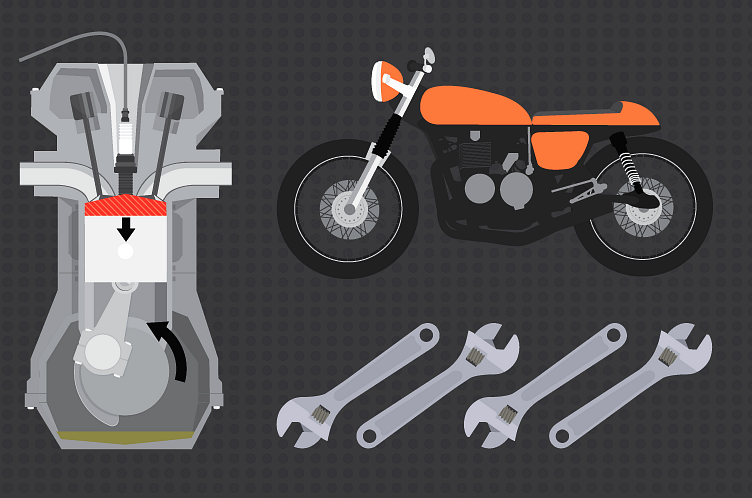
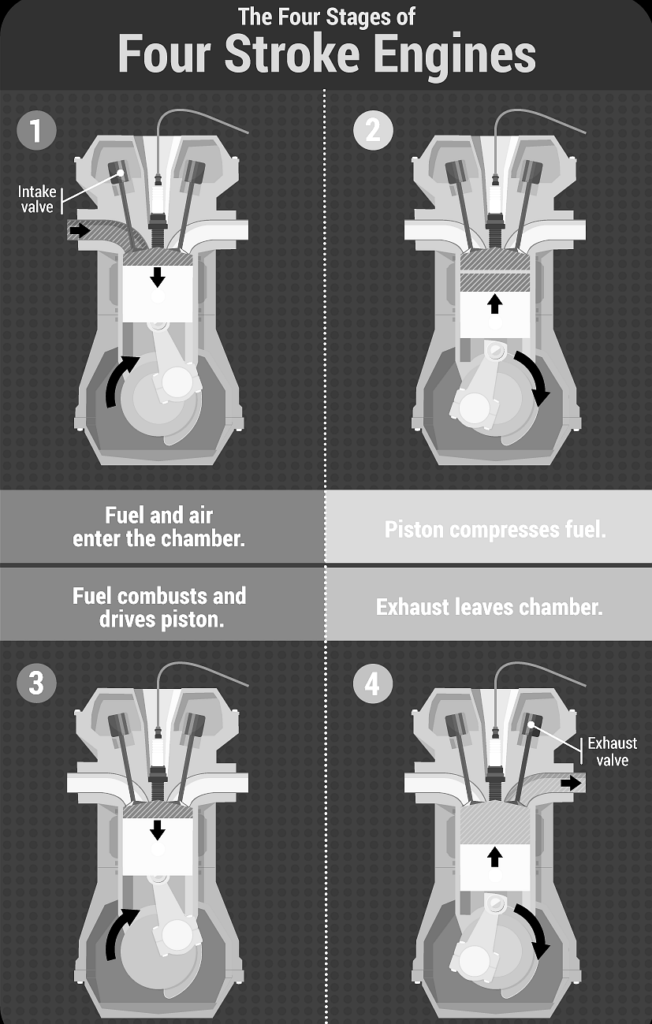
Dual sports are street legal motorcycles designed primarily as off-road bikes. With a few exceptions, dual sports are powered by single-cylinder four-stroke engines that typically displace between 125 and 650 cc. Following normal off-road practice, they have long travel suspensions, usually with some provision to adjust damping and spring preload, and plenty of ground clearance. Likewise, they normally use a 21” front wheel, which lets the tire ride up and over obstacles and reduces steering effort, especially on soft surfaces, and an 18” rear tire. Physically, dual sports tend to be tall – figure on a seat height of between 34 and 37 inches – and light, with an average weight of something around 350lbs.
_______________________________
Get de Right Tires for SportBikes!

Although dual sports are primarily designed for off-road use, the majority of them make excellent street bikes, so they’re a sound choice for the rider that may have to make one bike serve all their needs. By the same token, it’s worth mentioning that the high end dual sports, particularly those from the European manufacturers, are really thinly disguised race bikes that have been made street legal. As such they’re expensive, and may not be the best choice if you’re new to this.

Adventure Bikes

Adventure bikes are pavement-oriented motorcycles that have been designed to include some degree of off-road capability. As befits their mission, they are by nature larger, more sophisticated, and considerably more expensive than dual sport motorcycles. Typical attributes of an adventure bike are a large displacement multi-cylinder engine; an electronics package that includes features like ride mode control, ABS, electronic suspension adjustment; and plug-ins for your personal electronic devices.

____________________________________

Get de Right Tires for Adventure Bikes!

They generally offer some sort of weather protection, and large pannier-style bags will be included or available as an option. Although they generally have more ground clearance than pure street bikes, they don’t normally have as much as a dual sport. In most cases they’ll also have smaller rims, similar to those used on street bikes, with the less dirt-oriented versions often using cast wheels. Adventure bikes can be trail ridden, if the trail isn’t terribly challenging or if the pilot is exceptionally brave, and there are exceptions; some of the “rally” type of adventure bikes are extremely competent no matter how tough the trail. But overall most adventure bikes should be considered the two-wheel equivalent of an SUV.

_____________________________

Get de Right Tire for Your Bike!

Which to Choose?

The bottom line here is that while a dual sport and an adventure bike share similar DNA, in many ways they’re as different from each other as chalk is from cheese. If you want a touring bike that won’t be put off by broken pavement, unpaved roads, and the occasional off-road foray, an adventure bike is probably your best choice. On the other hand, if you want a street legal dirt bike that can be ridden to the trailhead, or one that can carry you to school or work during the week, and still give your buddies a good run for their money through the woods or even enter the occasional off-road race, then look toward the dual sports.

Equipment

An off-road bike can carry you farther into the wilderness in 10 minutes than most of us can walk in two hours. And while a broken street bike is inconvenient, help is seldom more than a phone call away. But if your dual sport or adventure bike breaks down in some remote off-road location, you’re probably going to be on your own, so as the Boy Scouts say: “Be prepared.

Adventure bikes tend to have ample storage space, so carrying tools, medical supplies, and a few well-chosen spares, along with anything else you might need, shouldn’t present much of a problem. Depending on how long you’re going to be out there, I’d recommend that, in addition to your travel needs, clothing, personal items, and whatever else you deem important enough to carry, you also pack the following:

  1. A good first aid kit. One that’s got enough stuff in it to do you or anyone that’s injured some good, and it should include at least a rudimentary guide to first aid.
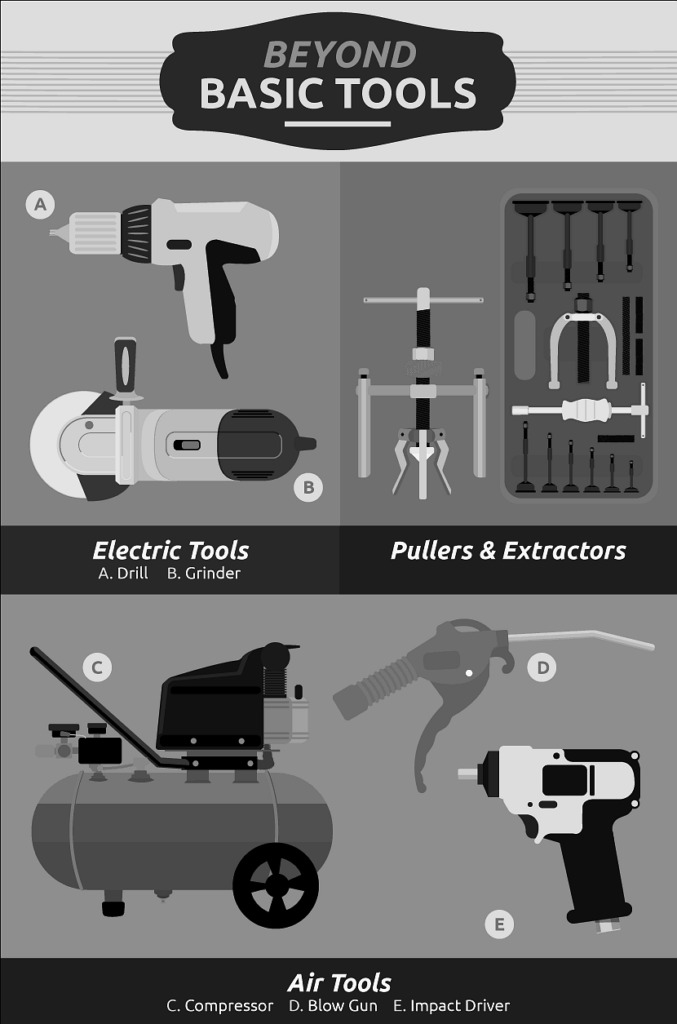
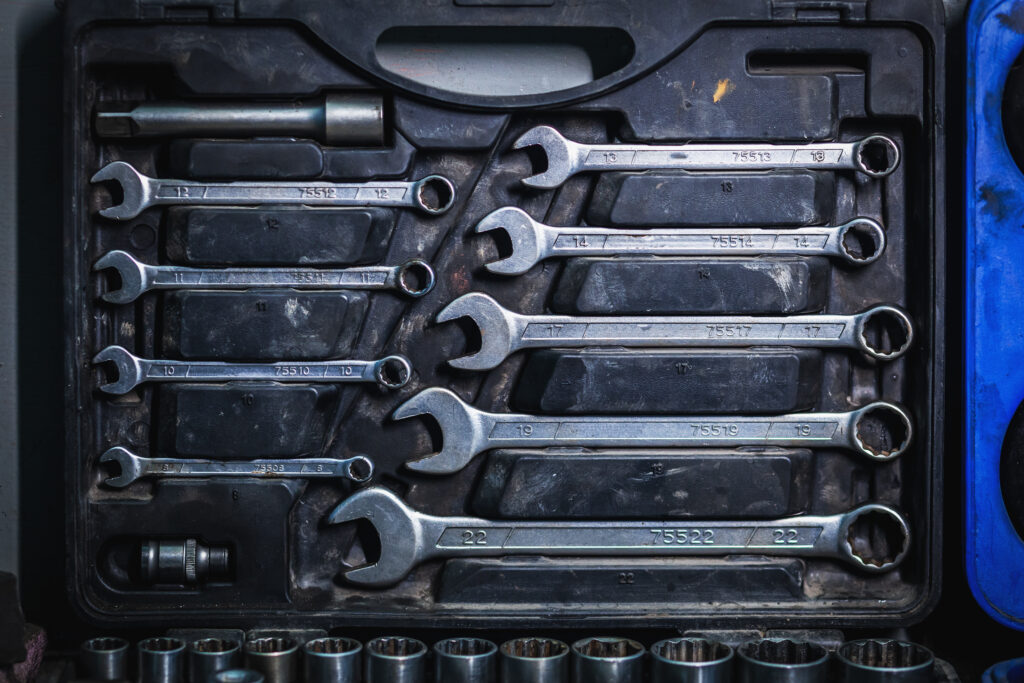
  2. A decent tool kit. If your bike doesn’t come with one you can trust, go out and buy the best grade tools you can afford. At the very least, your tool kit should include tools to remove a wheel, replace a spark plug, and tighten up anything that comes loose. On the last off-road ride I was on, my buddy’s KTM sprocket bolts came loose, locking up the rear wheel. The fix was simple, but if we hadn’t had the right Allen wrench it would have been a long, slow push home. If the bike has tubeless tires, a tire plug kit should be included along with some means of inflating the tire. If the bike uses tube-type tires, a spare tube and the tools needed to install it can come in mighty handy. We’d also recommend learning how to change the tube before it goes flat.
  3. A small vice grip. This is an absolute must-have. We’ve seen them used to replace broken shift, brake, and clutch levers and even used to operate a broken throttle cable. They’re pretty good at removing stuck or rounded-off bolts as well.
  4. A few well-chosen spares. Among other things We always carry a few nuts and bolts, a few feet of mechanic’s wire and a roll of electrical tape

How to pack for a motorcycle off-road tour

Because dual sport bikes don’t always have a lot of space, you’ll have to get a little creative in the way you carry things. Some guys tape tools and spare parts to out-of-the-way places on their bike. Some use tool kits that mount to the fenders, and some like to wear a fanny or back pack that can be crammed full. I’m a fanny pack guy, and in mine I generally carry a small adjustable wrench, a few dedicated wrenches that fit my bike’s fasteners. A tire inflator/sealer, and of course, my vice grips. A final tip here: a lot of the time our riding buddies and we divide up the tool-carrying chores. “John” carries the tire irons, “I” have the tube(s), and “Ric” has the axle wrench. Doing it that way allows us to carry a lot more gear, with a lot less hassle.

Travel tips:

If you ride alone, make sure someone knows where you’re going, the general route you’re taking, and your estimated time of arrival.

When riding in a group, establish any ground rules – before you let out the clutch – and make sure you’re all on the same page.

Lastly, no one should be out in the woods by themselves. I don’t care how close to home you are, riding alone can get you hurt or worse. Preferably any serious off-road ride should include three riders; that way if someone gets hurt, one person can stay with the injured rider, the other can go for help.

Moust of all, Remember that Always You Can:

Choose Your Destiny!

Happy
Happy
0 %
Sad
Sad
0 %
Excited
Excited
0 %
Sleepy
Sleepy
0 %
Angry
Angry
0 %
Surprise
Surprise
0 %

BTRubber / You and Your Motorcycle “3 Times Ready for Hell”

Read Time:5 Minute, 26 Second

As spring transitions into summer (some people says it’s “the hell”), it’s time to dust off the bike and head back out onto the road. But, before you strap on your helmet and thumb the starter, here are 3 tips for getting back on the road this hot summer!

1) Performing Maintenance

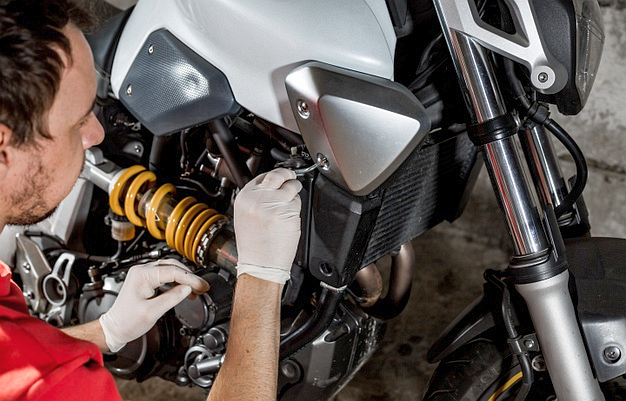
Before taking your first ride you’ll need to make sure your motorcycle is up to the task. Hopefully you put your motorcycle away properly last fall, so it takes minimal effort to bring it to life. If not, you may be in for some frustrating downtime.

With the help of a motorcycle owner’s manual, someone with moderately competent mechanical skill can perform most of the tasks we are about to discuss. For tasks that are not covered in your owner’s manual, please consult your dealer’s service center. These are the eight most important things to check on your motorcycle.

a) Fuel System

One of the most common pre-season mechanical problems involves the fuel system. It is caused by riders parking their bikes without adding fuel stabilizer to the gasoline. The problem is that old fuel turns into a gooey varnish that can clog the small passageways in the fuel system. This is a significant problem on motorcycles with carburetors, but even fuel-injected bikes can be affected.

If you neglected this task you may be looking at the time and expense of a thorough fuel system cleaning. If the gas in your tank is old it’s best to resist starting your motorcycle. Instead, drain the old fuel from the tank (and drain the carburetors if applicable). This can prevent stale gas from circulating through the system. If your bike runs poorly even after draining the gas, consult a mechanic and learn your lesson by storing your bike properly next time!

b) Air Filter

Check your air filter, as rodents seem to be particularly attracted to building nests in air boxes. Remove any debris and replace the filter if it looks particularly dirty.

c) Tires

Tire pressure will drop significantly over the winter and nothing affects handling and wear more than very low tire pressure, so be sure to put a gauge on those stems before the motorcycle rolls out of the garage. If the tread is worn near the tread-wear indicators, or if the tires show any signs of rot, now’s a good time to replace the old tires with new rubber.

d) Drive Train

While you’re down there, check drive train wear. Sprockets should show no significant signs of hooking and the chain should not pull very far away from the back of the sprocket. Replace the chain and sprockets as a set if necessary. If all looks good, check the adjustment and give the chain a good lube. Hopefully you lubricated the chain before storage, which means no rust should be present. If this duty was neglected, give the chain a clean and lubricate it before the first ride, then perform a more thorough lubrication after the chain is warm.

e) Engine Fluids

Check your oil level, or better yet, change the oil and filter if you didn’t do it before tucking your bike away last fall. Old engine oil contains acids that are best removed. If your bike is liquid-cooled, check coolant levels, including the fluid in your overflow tank (see your owner’s manual).

f) Brakes

It is important you maintain your brakes. Squeeze the front brake lever and press on the rear brake pedal to feel for a firm application. Look in the sight glass or at the brake master cylinders to see that brake-fluid levels are good and if the fluid is the color of apple juice or darker, plan on replacing it soon.

Grab a flashlight and take a close look at your front and rear brake calipers to see how much brake pad material there is remaining. Most brake pads have a notch cut into the pad as a wear indicator. If in doubt, have the pads replaced. It’s cheap insurance.

g) Battery

Weak or dead batteries are another common mechanical issue that can stand in the way of reviving a motorcycle after a long period of dormancy. Hopefully you kept your battery charged. If not, you will likely have to charge the battery before it will start the engine. If it will not hold a charge, a new battery is in your future.

h) Lights, Cables, and Fasteners

Once your battery is good to go, be sure to check that all of your lights are operational. Check that both front and rear brake-light switches illuminate the brake light. Check turn signals, taillight, and headlights (high and low beam) to make sure they work.

Confirm that the throttle, clutch and brake (if applicable) cables operate smoothly before heading out. Finally, go around the whole bike, tightening any loose fasteners.

2) Awakening the Rider

Now that you’ve made sure your motorcycle is ready to roll, you can think about your first ride. A word of caution before you press the starter button: spending many months in a car can cause you to become oblivious to motorcycle issues like visibility or road surface hazards.

It’s a good idea to begin your season by taking a refresher course with a local motorcycle-training program. It’s also smart to take some time to brush up on your emergency skills in a parking lot. Whether you choose to attend a formal rider course or go it alone, we recommend that every rider practice the critical skills by performing some cornering and braking drills. Here are three basic, slow-speed exercises to awaken your inner rider.

3) Summer Roads and Inattentive Drivers

Even if you and your bike are fully ready for the new season, remember that the roads may not yet be motorcycle-friendly. Expect surface hazards during the early summer until the earth thaws and the road crews can repair the scars. And remember that drivers aren’t used to seeing motorcycles on the road, so be extra vigilant when riding in traffic.

Study your owner’s manual and perform these routine tasks so you are prepared for the upcoming season. Also, be sure to carefully evaluate road conditions before venturing out. Taking the time to prepare for the upcoming season can ensure it is a safe and enjoyable one.

Moust of all, Remember that Always You Can:

Choose Your Destiny!

Happy
Happy
0 %
Sad
Sad
0 %
Excited
Excited
0 %
Sleepy
Sleepy
0 %
Angry
Angry
0 %
Surprise
Surprise
0 %

BTRubber / Riding Hard in City Traffic? Know this 4 Essential Survival Tips!

Read Time:6 Minute, 17 Second

This recommendatios come from the Motorcycle Safety Foundation (MSF). Here are some tips that should help you too survive riding in city traffic.

First off, if you didn’t know it by now, congratulations: you own an invisibility cloak! No matter what you do to increase your visibility to others, there will always be drivers who won’t see you. You can have modulating headlights, reflective tape and jacket, and heck you can wear a spinning yellow light on top of your helmet. But, you must still ride as if you’re invisible. Even police cars, with their lights flashing and sirens blaring, have had cars pull out in front of them or been hit by unwary drivers!

01. Be Unhittable

One of the principles I ride by is “Be Unhittable.” What does this mean? It means ride fully expecting drivers to not see you and positioning yourself to be more visible to any driver that can possibly ruin your day.

Positioning is important: try not to ride adjacent to cars. You should always ride in the front line of vision of the driver behind you, not in their peripheral vision. Often people fail to use their turn signals, or even fail to check their blind spots, so keep alert and out of the blind spots of other vehicles. Place yourself so that if the driver unexpectedly moves into your lane, he will do so without hitting you.

Along with being aware of what is immediately around you, don’t forget to check what is seven to 12 seconds in front of you. The way I see it, if traffic events surprise you, you weren’t paying attention. Riding in traffic is not the time to think about anything but the threatening environment around you.

Do you ride where there’s an “escape lane”? Do you create options for yourself in case the car in front of you stops unexpectedly or the car behind you doesn’t notice that traffic has come to a stop?

Do you create and maintain a safe reaction zone between the vehicle in front of you and your motorcycle? (This zone is also called a Safe Following Distance.) Essentially, it’s all about giving yourself enough time to react.


02. Use a Visible Intersection

Although you cannot assume for an instant that any driver sees you, you must ride in a way that affords them the chance to see you.

A Safe Following Distance not only gives you the time you need to react to a situation, but it also serves to prevent the vehicle in front of you from blocking the oncoming traffic’s view of you. If you ride too close to a vehicle’s bumper, chances are drivers coming your way won’t see you and will try and make a turn into you after they pass the vehicle ahead of you.

In my opinion, the greatest threat to motorcyclists at intersections is a left-turning vehicle. There have been medical studies which suggest motorcycles are “not seen” by car drivers who are turning left because humans don’t perceive motorcycles as a threat, compared to the size of the car they are in. In essence, the brain appears to ignore the smaller vehicle that’s oncoming. How many times have you heard the stories where the driver of a car is quoted to say: “Honestly, Officer, I didn’t see him”?

As you approach the intersection, you must catch the eye of the left-turning driver by presenting yourself in their line of vision. By doing a slight weave within your lane, your headlight becomes an unusual moving object. This perhaps will gather more attention from that driver. Furthermore, don’t watch the driver’s eyes, but rather watch the front tire and what it is doing. I’ve had drivers look me straight in the eye and still initiate a left turn towards me. If at all possible, transit an intersection with a “buddy”: a car either to your left or right, which the left-turning driver will perceive as a threat. Always be on the lookout for escape lanes as you approach intersections. You should have a final resort if the driver happens to turn into your path. Lastly, don’t forget to double-check your turn signals after you’ve made a turn, and before you approach intersections. You don’t want to signal the wrong information!


03. Escape Lanes

Understanding the concept of escape lanes is imperative to being safe on your bike. Basically, you want to develop the habit of being constantly aware of available space in the road ahead, should the need arise to maneuver there. The escape-lanes concept applies to two different situations.

First, when stopped at an intersection, the car in front of you can become one third of a “meat sandwich” should the car coming up behind you fail to stop in time. Know whether you’d maneuver right or left in that situation. Also, remember to flash your brake light to attract a driver’s attention as they come up to the intersection behind you. I tend to keep a close eye on the approach of the car behind me, and only relax when I see them slow and come to a stop.


Second, while riding along pick a lane where, if necessary, you could swerve out of harm’s way. On my commute, this involves riding in the lane next to a bike path, or perhaps next to a painted median where I could possibly swerve to avoid a collision with a car. Riding next to raised medians should be avoided.

Escape lanes come and go, and you must continually look for them. One sign you’re not paying enough attention to what’s around you? A car suddenly passes you and you weren’t even aware it was there.


04. It’s up to you

In sum, it is up to you to ride as though you were invisible to other drivers. A bike will always lose in a collision with a car. You may have had the right of way, but do you really want to be dead right? I’ve talked about how to be unhittable, making yourself more visible to other drivers, and most of all remaining aware of what is around you and in your line of travel. The British teach their riders to always do the “Lifesaver.” What’s that? Before you change lanes, actually turn your head and look: you’d be surprised how many times you’ll find a car riding along in your blind spots.

Get to know your commute route, including the best times to travel, and the best shortcuts and traffic patterns. I’ve found that the shortest way is not the best way, and the taking the longer route can result in a lot less stress. At the same time, my closest calls have actually been on quiet neighborhood streets and not congested city roadways!

There’s a lot more to learn and practice about safe motorcycle riding, and the techniques and best practices needed in different environments. If you haven’t taken the MSF’s Basic Rider Course, We strongly encourage you to do so. We’ve met riders who, after riding for years, took the course and admitted they discovered some bad habits which required correcting. Safety on a bike is the key to ensuring you’ll be riding for years to come.

Ride Safe. Ride Aware.
Choose Your Destiny

Happy
Happy
0 %
Sad
Sad
0 %
Excited
Excited
0 %
Sleepy
Sleepy
0 %
Angry
Angry
0 %
Surprise
Surprise
0 %