Ural fresh start

Read Time:3 Minute, 6 Second

Ural Motorcycles is going in an entirely different direction. Will the change be a fresh start that allows the company, which dates to World War II, survive? Or is this a radical change of direction that will leave behind the traditional customers for the quirky sidecar rigs while failing to attract new buyers?

I don’t think it’s an exaggeration to say Ural is fighting for survival. Ural co-owner and company President Ilya Khait says the same of the radical changes. “The alternative was losing Ural altogether. We’d rather see the name move forward than carved on a tombstone,” he wrote in an open letter to customers posted on the company website.

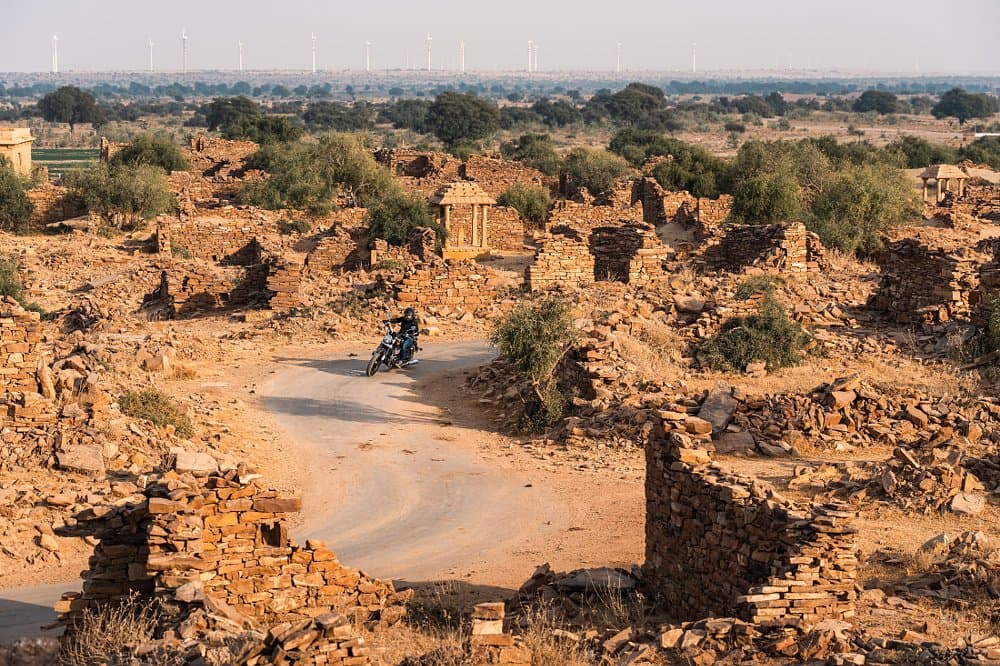
blue Ural Gear Up traditional model

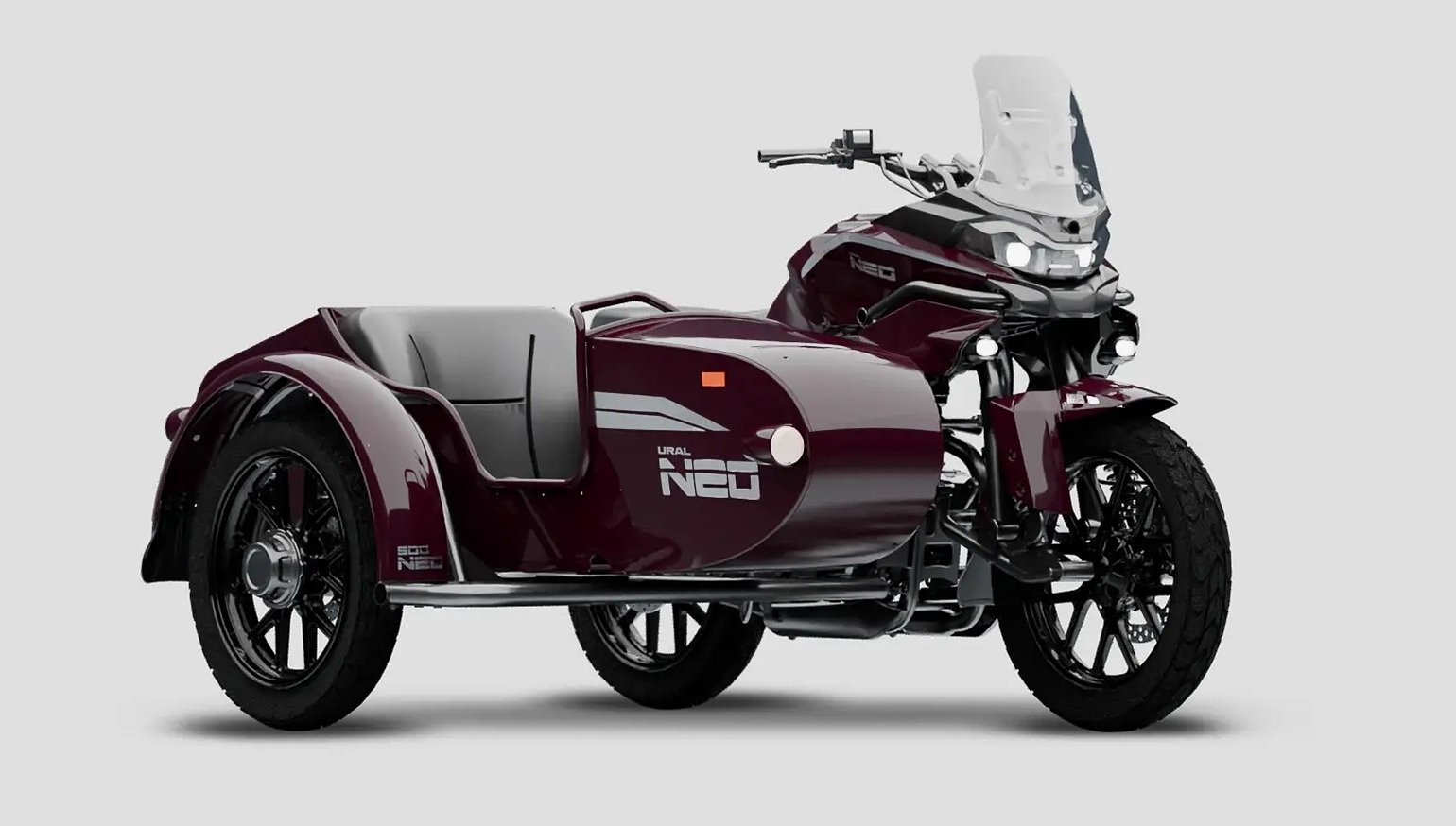
In short, Ural has ceased production of its “legacy models,” the two-wheel-drive motorcycle-and-sidecar rigs that look like they could have been fending off the German invasion of Russia more than 80 years ago. Is that pause permanent? Khait says that’s uncertain at this point. But for now, at least, Ural will be producing the Ural Neo 500 instead, a very different looking motorcycle and sidecar rig built with the Yingang company in China.

It seems like a risky gamble. Buyers who wanted the old-time look of the legacy Ural models are unlikely to take to the appearance of the Neo, so Ural will have to court an entire new cohort of buyers. And sidecars are not an easy sale, to begin with. But, as Khait described it in his letter, a risky move is better than certain failure. The company was no longer able to build its legacy models profitably.

Ural Neo 500
It has a sidecar, but that’s the only thing about the Ural Neo that’s going to look familiar to anyone who has known Ural during the past 80 years. Ural Motorcycles photo.

A series of life-threatening challenges

For Ural, existential crises seem to come along at regular intervals and the company has survived them all so far, so maybe it can survive this one, too.

Formed from the need to mechanize troops in World War II, the company grew in the Soviet era to employ nearly 10,000 people at its plant in Irbit, primarily producing vehicles for the domestic market. The first crisis came with the fall of the Soviet Union. With cheap cars now being imported from eastern Europe, Russians weren’t buying motorcycles with sidecars. The company nearly went under.

Ural was bought by Khait and other investors who revamped the company, greatly reducing the workforce and buying parts and components from suppliers instead of trying to make every single part in-house. Though production continued in Irbit, Khait ran the company from a small office and warehouse in Washington state. Then came the next crisis when Russia invaded Ukraine and Russian companies were hit with international sanctions. Ural hastily moved production across the border to a plant in Kazakhstan to avoid the sanctions, while still keeping some operations in Irbit. But Khait says that model has become unsustainable. Then, on top of that, the company was hit with the new tariffs this year, making it even more unprofitable to import to the United States, Ural’s largest market.

rider wearing a retro style helmet in the woods on a Ural with sidecar

Once again in financial difficulties, Ural is already dealing with unhappy customers who have not been able to get parts for their older models. I doubt many of those customers, who found the idea of a Russian BMW-knockoff straight out of the 1940s to be a charming choice for personal transportation will shift to deciding a far more modern-looking unit styled and built in China is a suitable substitute. Which means Ural will have to find an entirely new set of customers to survive its latest crisis.

Happy
Happy
0 %
Sad
Sad
0 %
Excited
Excited
0 %
Sleepy
Sleepy
0 %
Angry
Angry
0 %
Surprise
Surprise
0 %

2026 Triumph Street Triple RX and Moto2 first look

Read Time:3 Minute, 23 Second

For several years, the Street Triple was Triumph’s best-selling model, and one way it racked up those big numbers apart from its all-around goodness was offering multiple flavors for riders of varying tastes and needs.

Someone on a budget who wanted a modern ride for weekday commuting that was still plenty sporty enough for weekend fun rides might choose the base model. A rider doing multiple track days a year might spring for a higher spec version with additional ride modes. Those seeking a certain style or exclusivity could opt for the RX version that was around a few years or the limited-run Moto2 edition paying tribute to Triumph’s role as engine supplier to that world championship.

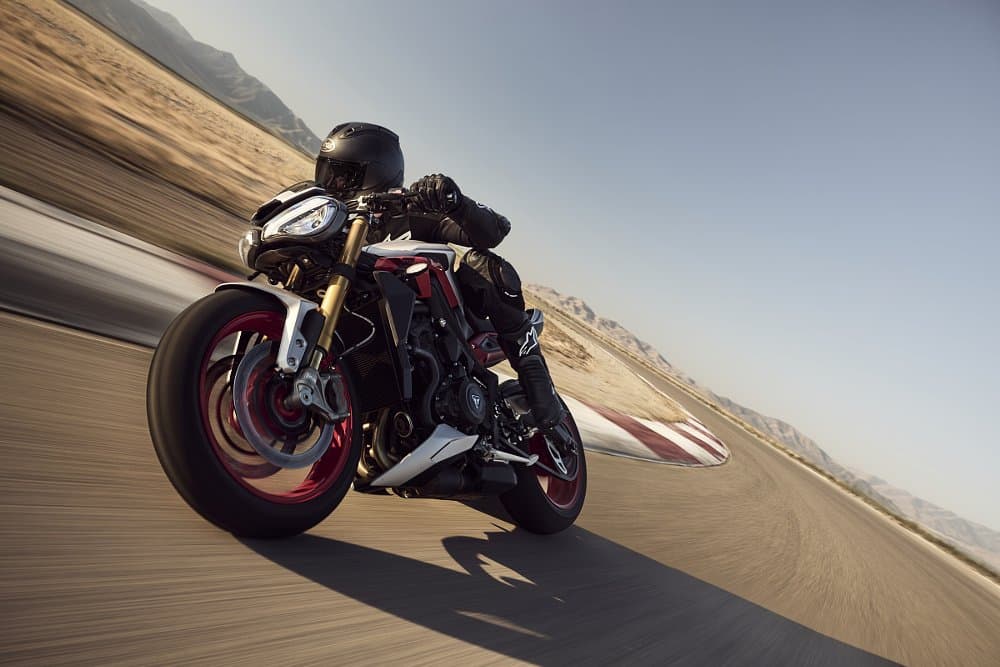
rider on the Street Triple RX on the track in a turn at high speed

Now that Triumph has introduced the Trident 800, the Street Triple line is free to pursue its sportier side. The Trident can now fill the slot for riders who want a middleweight for street duty but have no plans for track days or for those who never got comfortable with the Street Triple’s evolving looks and have spent the last decade-plus complaining that its headlights aren’t round. So while previously the Street Triple RS was the sportier member of the family, now it gets two siblings for 2026 that are even higher spec.

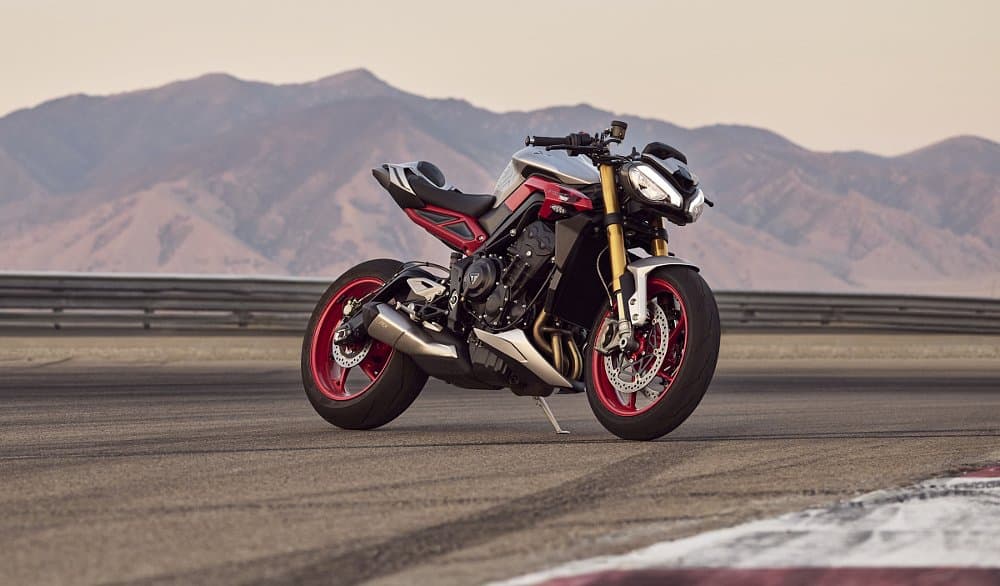
Street Triple RX parked at the track

The 2026 Street Triple RX brings back that spicy suffix to the Striple line, while the 2026 Street Triple Moto2 is another limited-edition model that leverages Triumph’s role as engine supplier to the Moto2 world championship series. Both are identical mechanically, with Triumph claiming 128.2 horsepower at 12,000 rpm and a wet weight of 414.5 pounds. Both get a fully adjustable Öhlins NIX30 fork, instead of the previous Showa front suspension, to match the Öhlins rear shock.

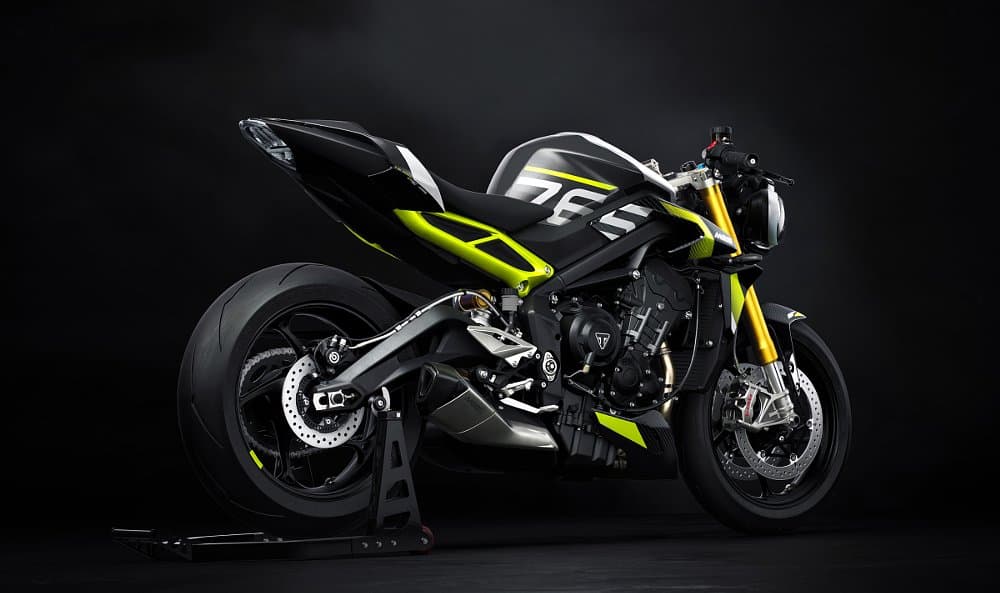
rear view of the white and neon yellow Moto2 parked at the track

Both models also carry on the full set of electronic rider aids, with five ride modes, including one optimized for the track and one that can be customized by the rider, as well as cornering ABS and cornering traction control. There’s also a bidirectional quickshifter.

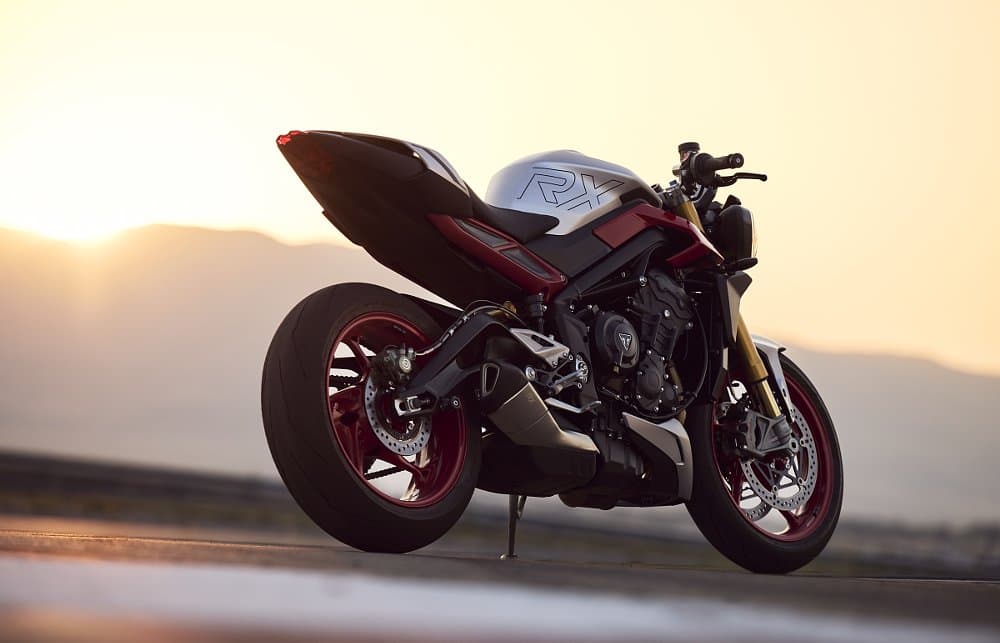
rear view of the Street Triple RX parked at the track

Triumph built a Street Triple RX a decade ago, with sportier styling, and earlier this year it introduced the Speed Triple RX, with clip-ons and carbon fiber bits and semi-active suspension, making it the highest performing entry in the Speed Triple line. The same RX formula now applies to the Street Triple, with clip-ons instead of a traditional handlebar and a sleek tail section to go with the uprated suspension.

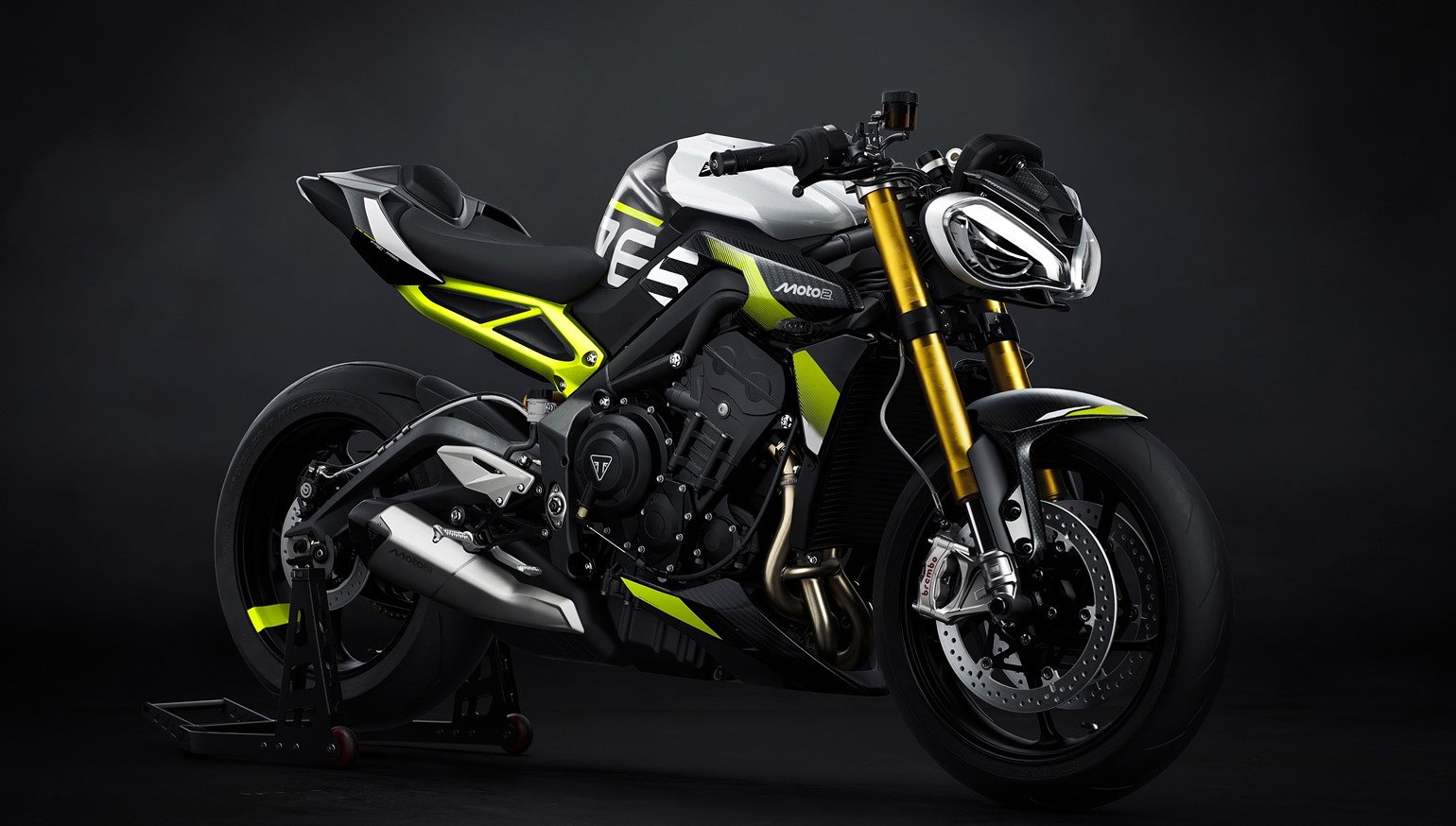
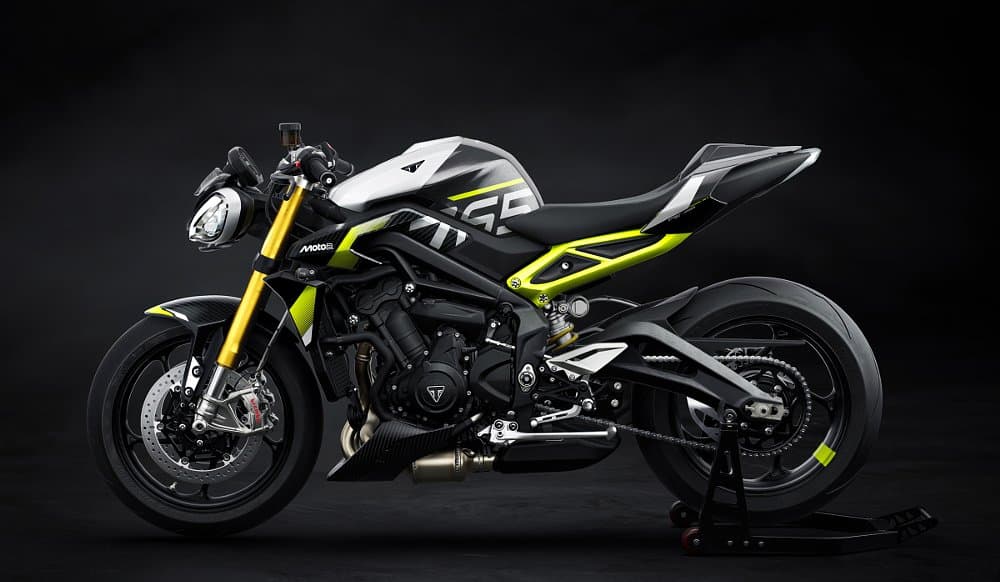
studio view of the Street Triple Moto2 from left side, silver with neon yellow-green highlights

Triumph has been supplying race-prepped 765 engines for the Moto2 series since 2019 and the company noted that those engines have now run more than a million miles in race conditions. The 2026 Street Triple Moto2, like the Moto2 street motorcycles before it, highlights that racing connection. While the Moto2 is the same mechanically as the RX, it adds an element of exclusivity because it will be limited to 1,000 numbered units worldwide. It gets a few carbon fiber bits and a lot of Moto2 branding, along with its numbered top triple clamp and unique paint. 

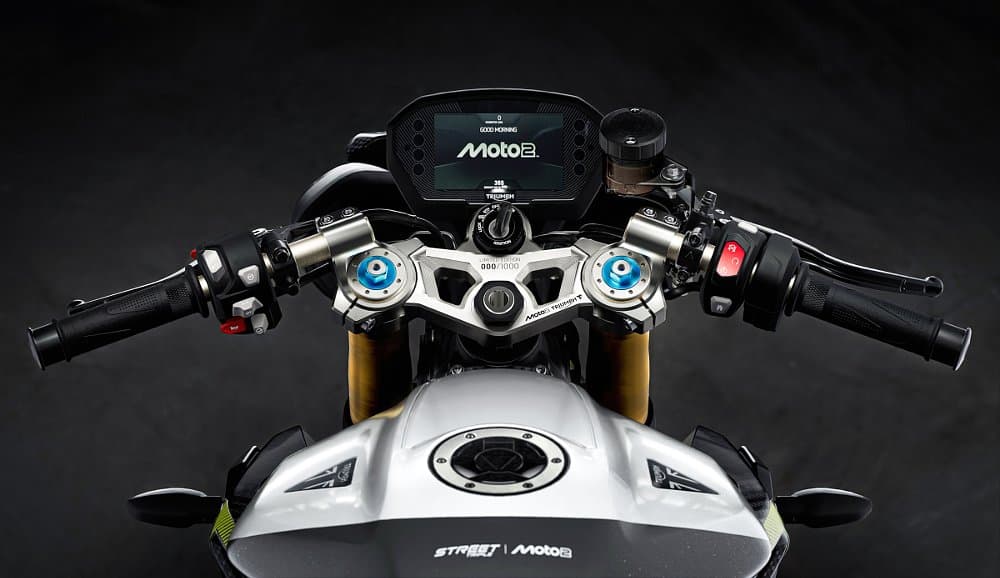
cockpit view of the Street Triple Moto2 showing the 000/1000 numbering on the top triple clamp

The RX will be available in dealerships in North America in December and the Moto2 arrives next spring. See pricing and details in the specifications below.

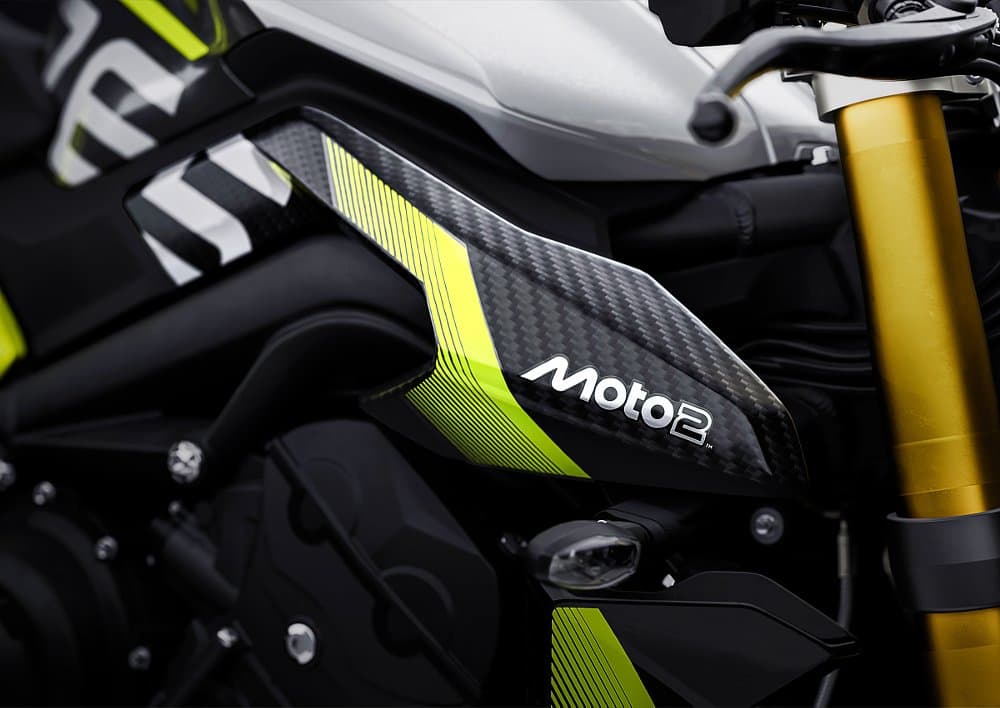
close view of the Moto2 logo on the Street Triple's body work
2026 Triumph Street Triple RX and Moto2
Price (MSRP)Street Triple RX: $14,496 (U.S.), $17,495 (Canada)
Street Triple Moto2: $16,495 (U.S.) $19,995 (Canada)
Engine765 cc, liquid-cooled, 12-valve, inline triple
Transmission,
final drive
Six-speed, chain
Claimed horsepower128.2 @ 12,000 rpm
Claimed torque59 foot-pounds @ 9,500 rpm
FrameAluminum twin-spar
Front suspensionÖhlins NIX30 fork, adjustable for preload, compression and rebound damping; 4.5 inches of travel
Rear suspensionÖhlins STX40 shock, adjustable for preload, compression and rebound damping; 5.16 inches of travel
Front brakeDual Brembo Stylema four-piston calipers, 310 mm discs with ABS
Rear brakeBrembo single-piston caliper, 220 mm disc with ABS
Rake, trail23.0 degrees, 3.75 inches
Wheelbase55 inches
Seat height33 inches
Fuel capacity3.96 gallons
TiresPirelli Diablo Rosso Corsa, 120/70ZR17 front, 180/55/ZR17 rear
Claimed weight414.5 pounds wet
AvailableRX: December, 2025; Moto2: March, 2026
Warranty24 months
More infotriumphmotorcycles.com
Happy
Happy
0 %
Sad
Sad
0 %
Excited
Excited
0 %
Sleepy
Sleepy
0 %
Angry
Angry
0 %
Surprise
Surprise
0 %

2026 Indian Sport Scout RT first look

Read Time:2 Minute, 24 Second

Indian Motorcycle is going all-in with the mid-size cruiser market. 

It unveiled a fully revamped Scout series in April 2024. An updated Scout Sixty line followed just six months later. With eight variants now comprising the mid-size range, I thought the Minnesota-based manufacturer had exhausted all its Scout permutations. Apparently, I thought wrong.

The 2026 Sport Scout RT proves there’s still blood to squeeze from the Scout stone. The new variant earns its spot in the group thanks to modest travel accommodations, but it shares much with an existing Scout.

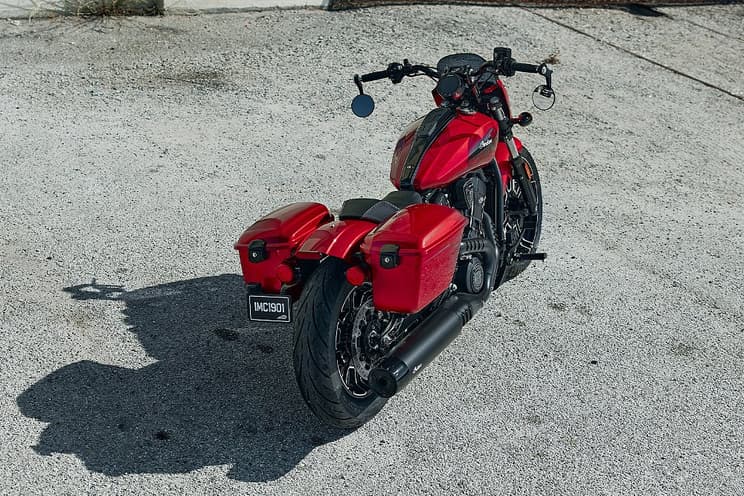
The Sport Scout RT pictured from above in an empty parking lot.

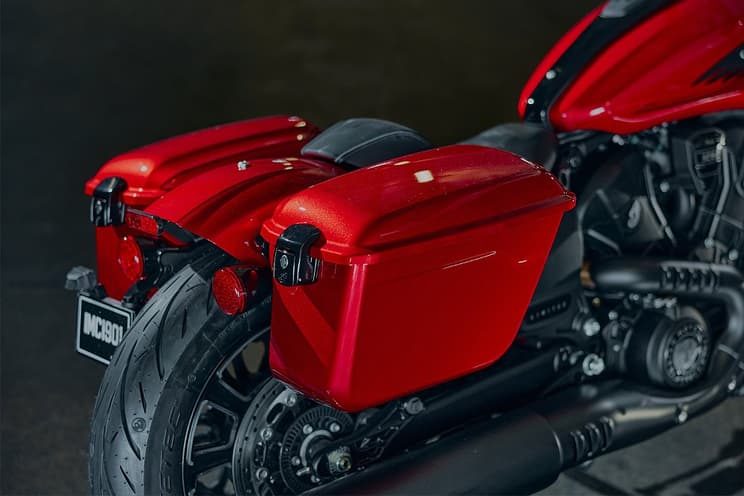
Let’s just drill down to the core of the Sport Scout RT, shall we? Basically, Indian took its Sport Scout and dressed it up with color-matched fenders, hard bags, and a fairing. Of course, the standard Sport Scout also comes with fenders and a fairing, but they’re only available in black. The real story here is the RT’s luggage, which offers “over 10 gallons of weatherproof storage.” Indian also claims the bags carry “an entire set of riding gear, including boots, pants, a jacket, and gloves.” 

Under the saddlebags and matchy-matchy bodywork, the RT is mechanically identical to the base mode Sport Scout. That means it features a liquid-cooled 1,250 cc V-twin that Indian lists at 105 horsepower (at 7,250 rpm) and 82 foot-pounds of torque (at 6,300 rpm). Its 19-inch front wheel maintains the Sport Scout stance and a 25.7-inch seat height caters to inseams of all lengths — even if rear suspension travel totals just three inches as a result. 

It’s those similarities that call the RT’s viability into question.

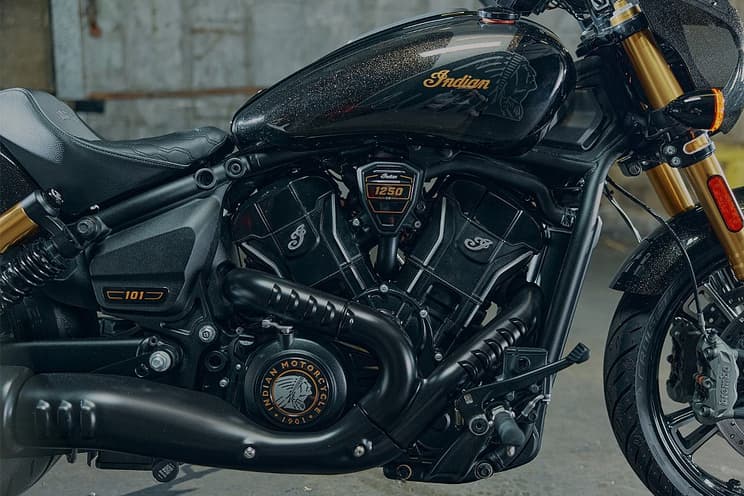
A close-up of the Sport Scout's black metal-flake painted tank and V-twin engine.

Scout customers could use some luggage options, but introducing a whole new model seems excessive. That’s especially true when the Sport Scout RT starts at $16,999, or $3,500 more than the 2025 Sport Scout. Heck, its $2,000 more than the base model 2025 Chief. 

A close-up of the Sport Scout RT's 10-gallon saddlebags.

Now, some of that price difference comes down to Indian only offering the Sport Scout RT in its Limited +Tech trim, which includes cruise control, traction control, ride modes, and a round four-inch TFT display. Still, it’s a hefty price tag for a mid-size cruiser.

2026 Indian Sport Scout RT
Price (MSRP)$16,999
Engine1,250 cc, liquid-cooled, eight-valve, V-twin
Transmission,
final drive
Six-speed, belt
Claimed horsepower105 @7,250 rpm
Claimed torque82 foot-pounds @ 6,300 rpm
FrameSteel tubular
Front suspension41 mm fork; 4.7 inches of travel
Rear suspensionDual shocks, adjustable for spring preload; 3.0 inches of travel
Front brakeSingle two-piston caliper, 298 mm disc with ABS
Rear brakeSingle-piston caliper, 298 mm disc with ABS
Rake, trail29.0 degrees, 4.8 inches
Wheelbase61.5 inches
Seat height25.7 inches
Fuel capacity3.4 gallons
TiresMetzeler Cruisetec 130/60B19 front, 150/80B16 rear
Claimed weight528 pounds (dry)
AvailableNovember 2025
Warranty24 months
More infoindianmotorcycle.com
Happy
Happy
0 %
Sad
Sad
0 %
Excited
Excited
100 %
Sleepy
Sleepy
0 %
Angry
Angry
0 %
Surprise
Surprise
0 %

Maeving unveils 2026 RM2 with two-up capability

Read Time:2 Minute, 42 Second

Maeving’s all-electric RM1. Its range and output may not meet the needs of all riders, but the classically styled e-roadster still appeals to Maeving’s core audience: hip, city-dwelling commuters. 

So when the British startup went back to the drawing board for the follow-up to the RM1, it aimed to pair that attractive form with additional functionality. The end product is the 2026 RM2.

Male and female models stand next to the 2026 Maeving RM2.

As the nameplate suggests, the RM2 is Maeving’s first motorbike made for two-up riding. To accommodate a passenger, Maeving did away with the RM1’s bobber-inspired floating seat and shrunk the gas tank-shaped storage compartment to 8.5 liters of storage volume (compared to the RM1’s 10 liters). That, in turn, pulls the saddle forward, which reduces the rider’s reach to handlebar and makes room for a passenger on the one-piece seat. Two birds, one stone.

A handful of chassis revisions also headline the new model. Its rear suspension, for example, not only earns additional travel but also “more refined damping.” A frame-mounted rear mudguard may be necessary for the two-up configuration, but it also reduces the rear wheel’s unsprung weight. Meanwhile, new Mitas H-02 tires result in what Maeving characterizes as a “more planted ride,” and a larger 240 mm rear rotor reportedly yield greater stopping power and improved feel.

Given my experience testing the sporty RM1S, many of the RM2’s updates are welcome changes. On the other hand, the new electric stops short of addressing the RM1’s main limitations. 

A couple rides the RM2 down a cobblestone road somewhere in Europe.

Instead of upgrading the RM2’s powertrain, Maeving carried over the same 5.46 kWh dual battery pack (2.73 kWh per battery) and brushless DB hub-mounted motor found on the RM1 and RM1S. The brand still lists that package with a combined range of 80 miles, but my trips aboard the RM1S regularly fell short of that estimate. 

An RM2 rider removes the motorbike's electric battery.
M

Per Maeving, the RM2’s powertrain still “outperforms all other 125 cc segment powertrains on the market.” The problem is, the RM2 isn’t priced similarly to other 125 cc-equivalent bikes. That includes its closest competitor, BMW’s CE 02, which starts at $7,599. Of course, the Beemer is neither passenger-friendly nor conventionally handsome, giving the RM2 a leg up in those respects. 

Only time will tell if the RM2’s marriage of form and function drives reservations, which opened on Maeving’s website this morning. 

2026 Maeving RM2
Price (MSRP)$10,995
DrivetrainAir-cooled hub motor
Claimed horsepower9.7 (7.2 kW) continuous, 14.9 (11.1 kW) peak
FrameSteel cradle
Claimed range80 miles
Claimed battery capacity5.46 kWh
Claimed charge time6.5 hours @ Level 1 (120V)
Front suspension37 mm fork; 4.3 inches of travel
Rear suspensionDual RSU shocks, adjustable for spring preload; 4.0 inches of travel
Front brakeSingle three-piston caliper, 300 mm discs without ABS
Rear brakeSingle-piston caliper, 240 mm disc without ABS
Rake, trail25.0 degrees, 4.0 inches
Wheelbase55.0 inches
Seat height30.5 inches
TiresMitas H-02, 3.50 x 19 in. front, 3.50 x 19 in. rear
Measured weight320 pounds
AvailableNow
Warranty24 months
More infomaeving.com

Please feel free to leave us your comment.

Happy
Happy
0 %
Sad
Sad
0 %
Excited
Excited
0 %
Sleepy
Sleepy
0 %
Angry
Angry
0 %
Surprise
Surprise
0 %

Polaris sells majority stake in Indian, making it a separate company

Read Time:3 Minute, 3 Second

Parent company Polaris announced today that it is selling a majority stake in the motorcycle manufacturer to a Los Angeles-based private equity firm. The deal is expected to close in the first quarter of 2026 and the new, independent Indian will be led by CEO Mike Kennedy, a former CEO at both RumbleOn, the nation’s largest powersports dealership group, and Vance & Hines, the aftermarket parts and accessories manufacturer, as well as a long-time employee at Harley-Davidson.

Purchasing the controlling stake in the company is Carolwood LP, which was founded in 2014. Polaris “will maintain a small equity position in the business,” according to the news release from Polaris. Polaris said the transaction would add about $50 million to its earnings but additional terms of the deal have not yet been disclosed.

For Indian customers and most employees, Polaris said business will carry on as usual. The new Indian will continue selling motorcycles, parts, and accessories through its 600 current dealers. The sale includes Indian’s manufacturing facilities in Spirit Lake, Iowa, and Monticello, Minnesota, as well as its industrial design and technology center in Burgdorf, Switzerland. About 900 employees will move to the new company, with “the majority of its team” being retained, according to Polaris.

Except for retaining a small stake in Indian, the sale marks the end of Polaris’ dalliance in the motorcycle business. The company, which has mostly focused on off-road vehicles over the years, first formed the Victory brand of motorcycles in 1997, building heavyweight cruisers aimed directly at Harley-Davidson. In 2011, Polaris acquired the Indian brand and in 2017 the company closed down the Victory line to focus all its efforts on Indian.

It’s yet another change in ownership for the Indian brand, which goes back to 1901, two years before Harley-Davidson was founded. The original company, founded in Springfield, Massachusetts, was once the largest motorcycle manufacturer in the world. It went out of business in 1953 and the brand changed hands several times thereafter. For years, the Indian name was slapped on scooters, mopeds, and other small imported two-wheelers. In 1999, a company was formed to build Scouts and Chiefs in the Indian tradition, using S&S engines, but it only lasted four years. The recent run under Polaris’ ownership has given the brand the most stability it has seen since the original company went out of business more than 70 years ago.

Under Polaris, Indian provided a domestic challenger to Harley-Davidson, but motorcycles have always been a small part of Polaris’ business portfolio. The company said Indian accounted for 7.0% of Polaris’ revenues over the 12-month period ending June 30, 2025.

“Polaris and Indian Motorcycle both stand to benefit from this deal, which will enable each business to move faster, deliver industry-leading innovation, and lean further into our respective market strengths,” said Polaris CEO Mike Speetzen. “For Polaris, the sale will further strengthen our focus on the areas of our portfolio that offer the strongest growth potential and allow us to accelerate investments in key initiatives and create wins with customers and dealers.”

“With its current product portfolio, global dealer network, category expertise and manufacturing resources, the business is well positioned to succeed as a standalone company with a dedicated focus on its industry,” Speetzen added. “We were highly intentional and selective in our search and planning efforts for Indian Motorcycle’s next chapter of growth. In Carolwood, Indian Motorcycle has a partner that believes in building on the business’ current momentum and supporting its next stage of success.”

Reportedly, Carolwood has never sold any of the assets it has acquired.

Happy
Happy
0 %
Sad
Sad
0 %
Excited
Excited
0 %
Sleepy
Sleepy
0 %
Angry
Angry
0 %
Surprise
Surprise
0 %