Who the Tiger Sport 660 is for and what’s new
The Tiger Sport 660 remains Triumph’s entry into the Tiger range, and for many, it’ll be their first big bike. It bridges the gap between sub-50-horsepower motorcycles and the ones that can help you lose your license without ever leaving first gear. But the Tiger Sport 660 is also meant for riders who use their bike every day think twisties, touring, and commuting combined.
If you stopped reading now, the most important takeaway is that the Tiger Sport’s 660 cc 12-valve inline-triple engine received a 17% power boost for 2026, bringing its peak power up to 94 horsepower at 11,250 rpm. Torque is up too, hitting 50.2 foot-pounds at 8,250 rpm. I delve into exactly how Triumph achieves this power boost and what engine components had to change in my Trident 660 review, as both bikes use the same powerplant.
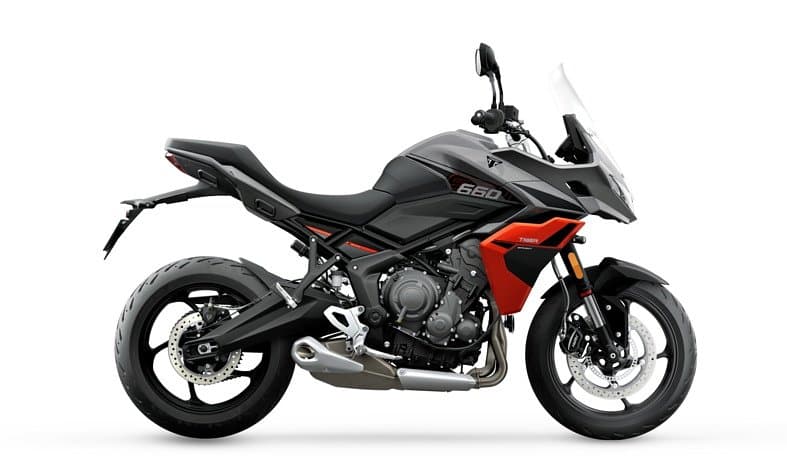
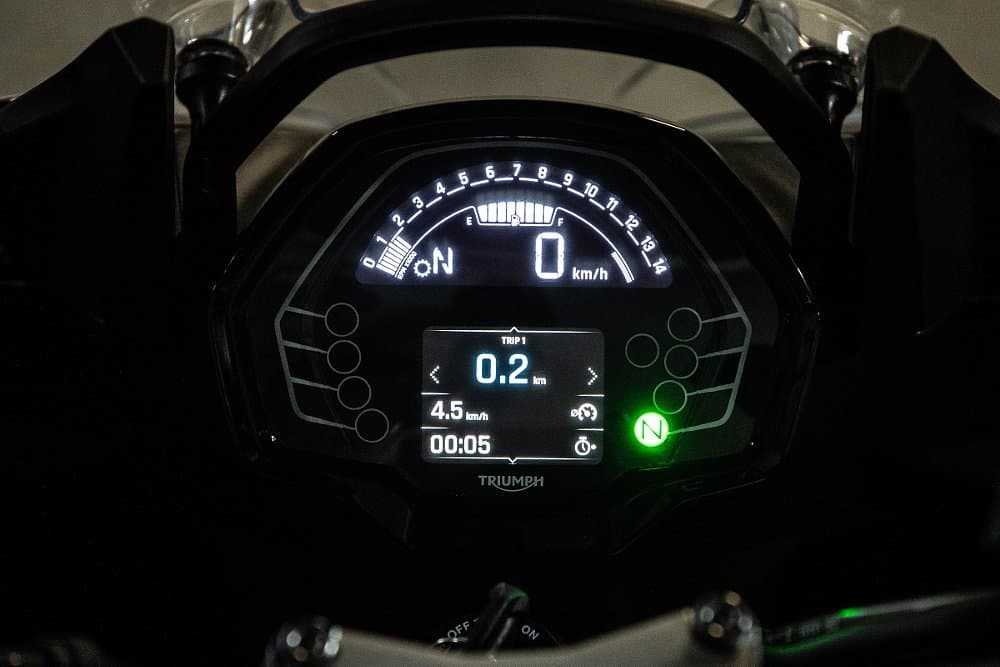
What you’ll actually notice on the road is a rev ceiling that’s 20% higher than before, touching 12,650 rpm, and that 80% of the engine’s torque is available between 3,000 rpm and 12,000 rpm. If you’ve ridden the previous model, you’ll also likely notice improved fueling and responsiveness, thanks to the use of three 44 mm throttle bodies versus the single 38 mm one used on the 2025 Tiger Sport 660.
Most of the systems involved in laying the power down were also revised to account for the power increase. That means the three-way Traction Control system, ABS, Shift Assist, riding modes — Rain, Road, and Sport — and gear ratios have all been updated. The traction control is linked to the riding mode you choose, but they don’t have to stay linked. So if you want the least-intrusive Sport TC in Rain mode, you can have it. (I don’t advise this.)
You can still turn off TC altogether and pull great big wheelies on closed roads. Just remember, if you switch off the ignition, the bike will remember what riding mode you were in, but it won’t remember that you switched TC off something to be aware of if you don’t want your friends laughing at your wheelie attempts. Mine laugh at me regardless of my TC setting, so no issue there.
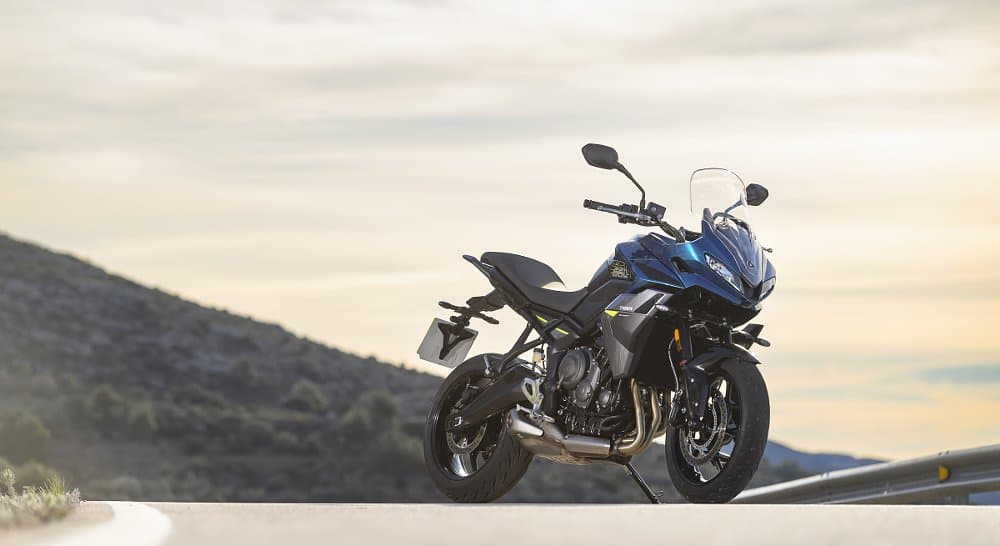
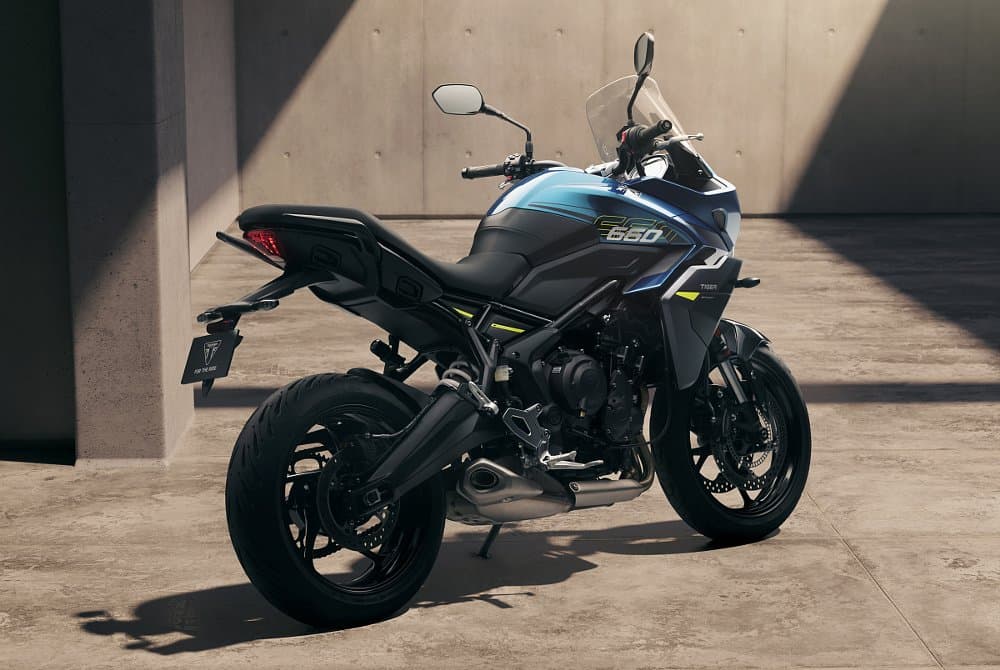
“What’s the point in buying the newest model if no one knows it’s the latest?” I hear you proclaim. Don’t worry, Triumph hears you and made the front of the Tiger Sport’s bodywork more substantial. To ensure the Tiger Sport doesn’t just look heavier, Triumph has given the new fairing panels sharper lines, too. The more sizable and aggressive appearance matches the power bump nicely. The bike also features new side radiator cowls, which are meant to improve airflow management and weather protection, thus increasing the bike’s mile-munching credentials.
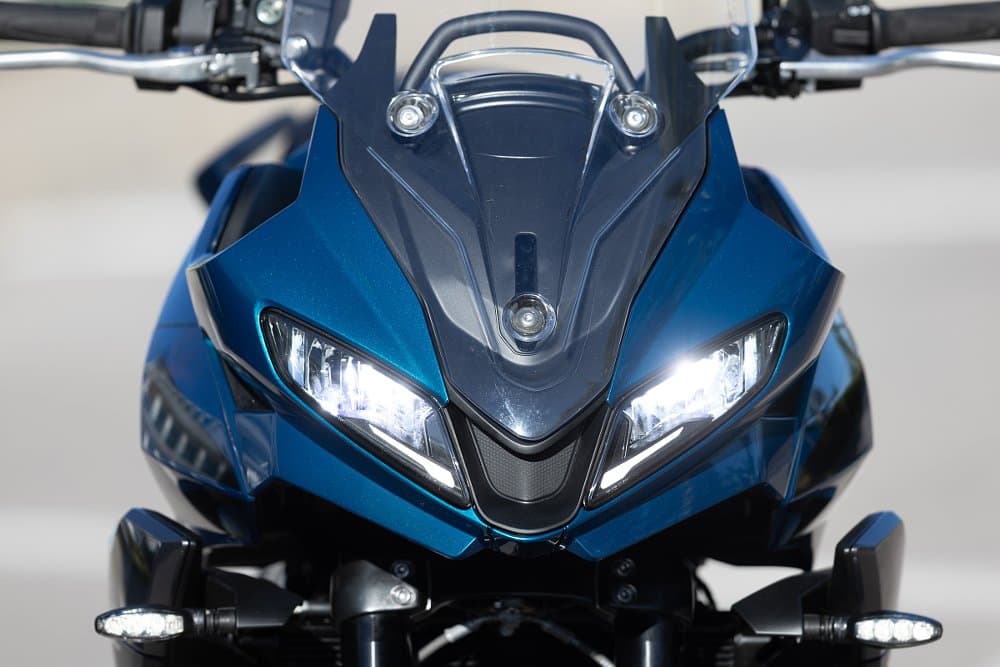
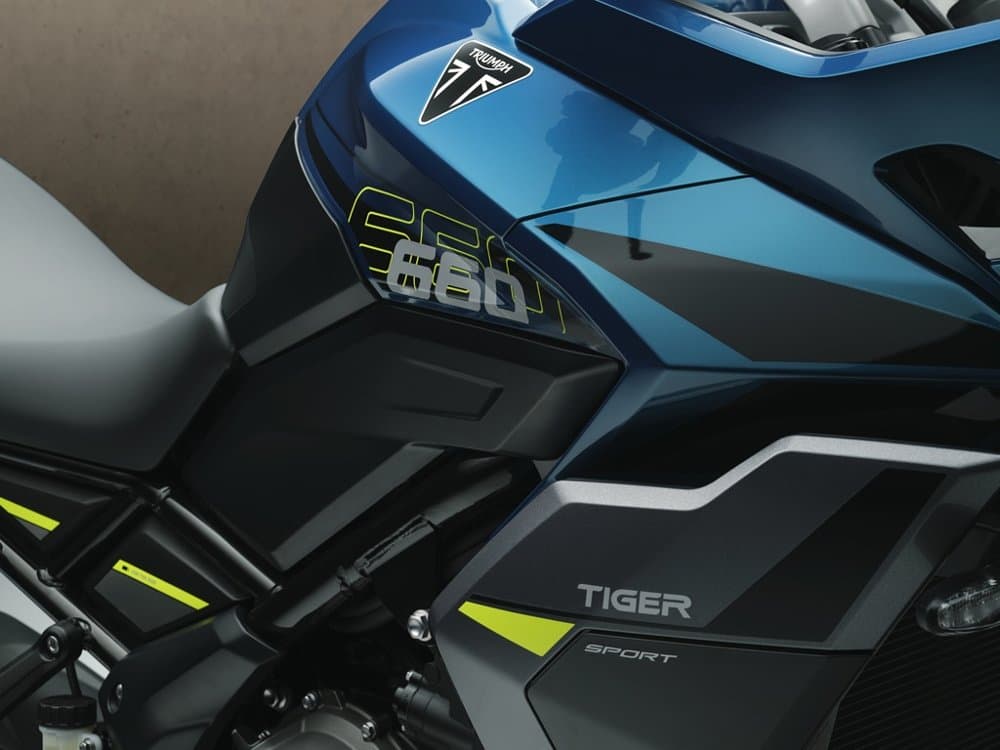
The larger front end probably also has something to do with the fact Triumph increased the Tiger Sport’s fuel capacity by 8%, meaning it no longer has the smallest tank in its class and can now hold 4.9 gallons. There are two new color schemes this year in the form of Interstellar Blue & Mineral Grey and Silver Ice & Intense Orange.
All other specs are essentially the same as the 2025 model, meaning you get sliding two-pot Nissin calipers biting into twin 310 mm discs, Showa 41 mm USD separate-function cartridge fork with 150 mm (5.9 inches) of travel and a Showa monoshock at the rear with 150 mm (5.9 inches) of travel and a remote hydraulic preload adjuster. But, given this was my first time on a Tiger Sport, everything was new to me.
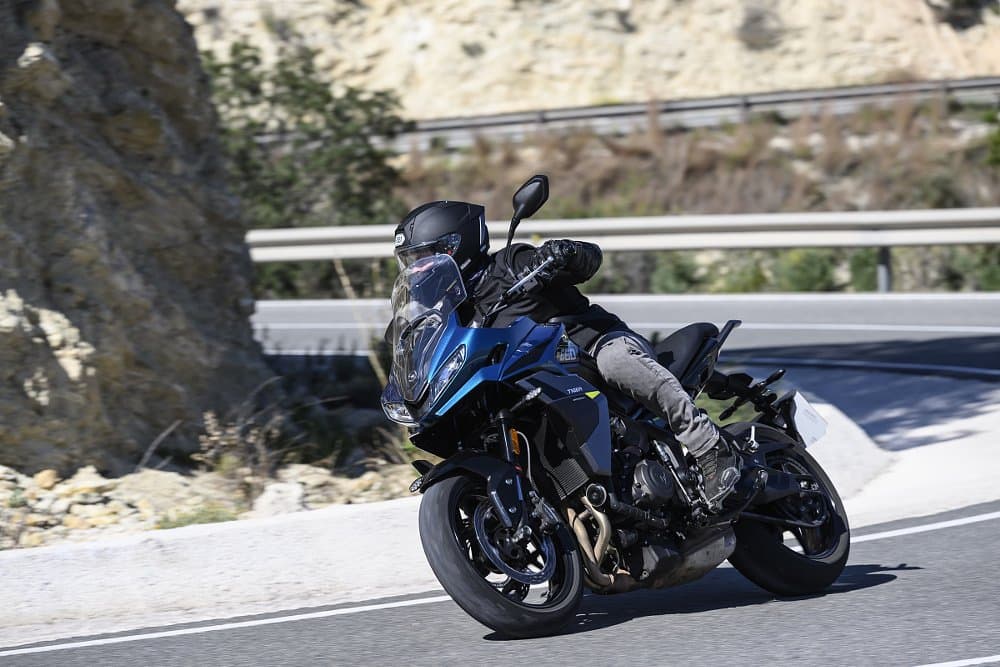
Riding the Tiger Sport 660
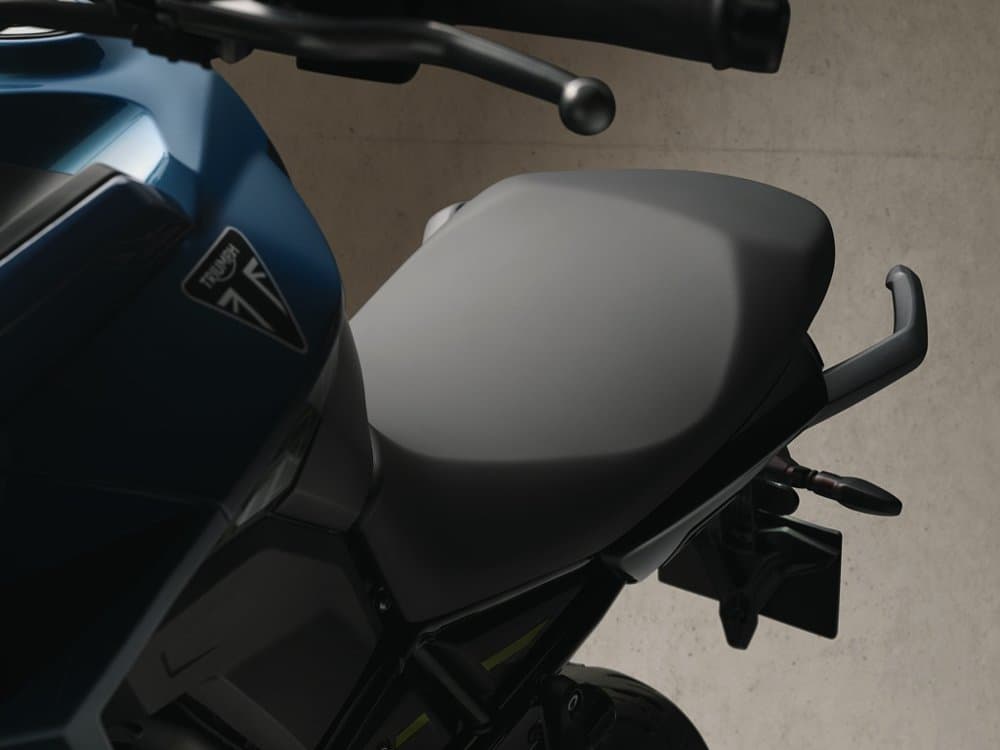
Settling on the Tiger Sport 660’s seat, my right foot resting on the peg, I felt a lot more stretch in my knee than I’m used to these days. It’s the kind of roomy position that wouldn’t make you think twice about setting off on a long journey, but without feeling disengaged from the bike. It’s worth noting here that I’m six feet tall and could flat-foot the bike fairly easily. When my hands met the grips, I knew Triumph would need to really mess this bike up to make it tough to ride in a city. The Hinckley brand hadn’t messed up.
A light pull on the slip-and-assist clutch, followed by reassuring feedback from the gear shifter, and the first quarter mile passed almost without thought. I was in third gear before I knew it. My first time clocking miles on a Tiger Sport 660 and I was at home out of the gate. When we rode out of the suburbs and into the city, the Tiger Sport continued to grow on me.
That upright riding position and light clutch action that made pulling away a doddle married well with the 660’s velvet-smooth low-end power delivery to make the Tiger Sport a breeze around town. The rear brake has the right amount of force and feedback to dig into and help navigate lane splitting where legal, of course. Even at low speeds, there’s an ease to the bike’s nimbleness. But, once I spun up over 3,000 rpm, a peppy response let me know it’d happily be an urban menace. Around the city, the bike has a sense of refinement and an engine note that doesn’t make it feel like I am simply getting from A to B.
I was relaxed as we left the city, but before long, my body became tense. The pace quickened but we hadn’t hit any twisties yet, so the cold got me, and I had only straight lines and steady rpm ahead. Damn. Then, I remembered Triumph fitted the optional heated grips to my unit, which brought dexterity back to my fingers rapidly. Once I had feeling in my hands again, almost like an impulse, I reached forward and slid up the seven-way manually adjustable screen. It was effortless.
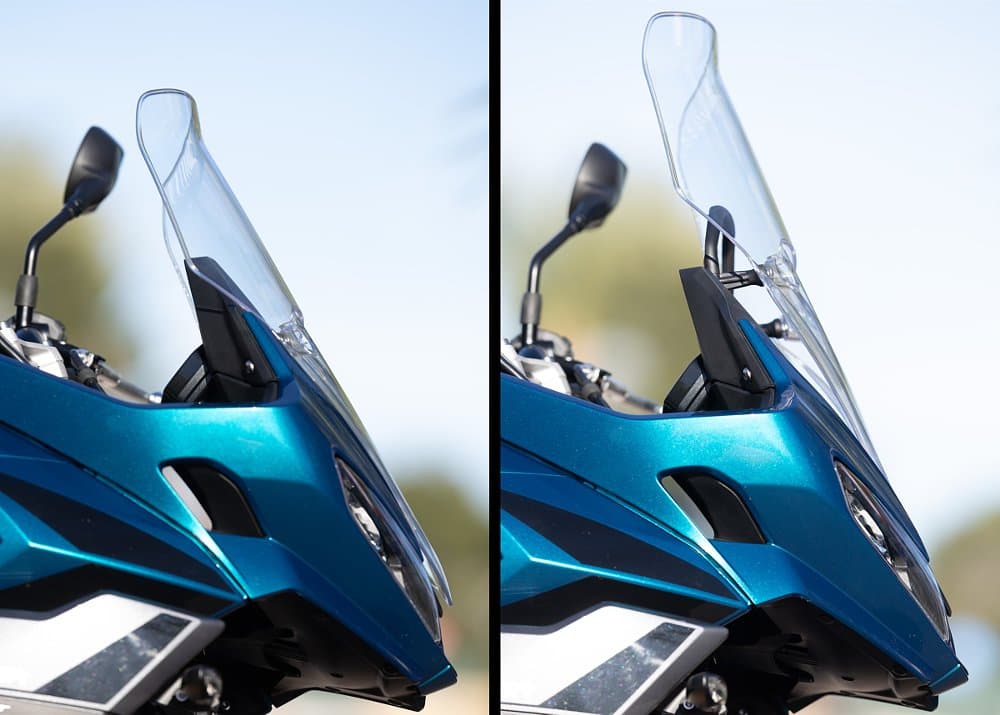
Now that the stream of cold air was off my neck, I realized just how much calm air the screen was providing my midsection in its lowest position. The revised bodywork in general showed its worth; from my knees hiding under the larger, more aggressive side panels to my neck sitting in almost dead air, I knew the harshest of the weather was deflected. Unfortunately, the Tiger Sport suffers from the same issue that plagues most tall-rounders: buffeting. The sustained beating I was taking from the wind was getting to me, so as the temperature rose, I slid the screen down to its lowest position, where it stayed for the rest of the ride.
Now, with the interim roads between city and twisties in my rearview, I’d arrived at the kind of pavement that makes you think about moving house (read “country”). The route was almost perfectly suited to exploit this level of power, and I didn’t hesitate. I spent enough time enjoying the 660’s mellow low-end power delivery. When I spun it up, the revs progressed just as smoothly as before, but now served the hit I was waiting for.
By 6,000 rpm, the bike lets you know it’s made for more than meandering through the country hills, and at around 8,000 rpm, the powerplant delivered its punch. The top third of the rev range, between peak torque at 8,250 rpm and peak power at 11,250 rpm, is where the Tiger Sport earns the “Sport” in its moniker. By this point, it was howling similarly to the Street Triple 675 the engine draws lineage to, and inside, so was I. There were no unexpected wheelies under hard acceleration, but as I’d yet to add any preload to the rear shock, I wouldn’t discount the possibility. But all the extra power as part of the update isn’t just to make degenerates like me echo the triple’s howl. It’s to make the Tiger Sport a more competent tourer.
If I was covering a few hundred miles per day, I wouldn’t be doing it all in the manner I just described. I’d short-shift and live in the Tiger Sport 660’s delectable mid-range, where there’s still a strong enough pull to play through the twisties without feeling like things are getting frantic. Thanks to the added power for 2026, embracing the short-shift pull should still be an option if you’re two-up with loaded panniers, although I didn’t get to test this theory. Triumph claims the Tiger Sport makes 80% of maximum torque between 3,000 to 12,000 rpm, and I’m inclined to believe that. But knowing there’s more power up top for overtakes and general shenanigans makes this bike a very viable option for those wanting to do it all.
I only spent around 50 miles in the saddle before switching over to the Trident, but between trying to hang off it in the twisties and make an armchair out of it on dull straights, I couldn’t fault the Tiger Sport 660’s comfort. It doesn’t have all the fancy gizmos we’re used to on top-spec sport-touring or tall-rounder motorcycles, but the whole package works together in a way that makes those features nice-to-haves instead of necessities. The suspension is on the soft side of plush, the seat comfy, the riding position roomy, and the power smooth, yet ample. It’s a budget tourer that doesn’t feel particularly budget.
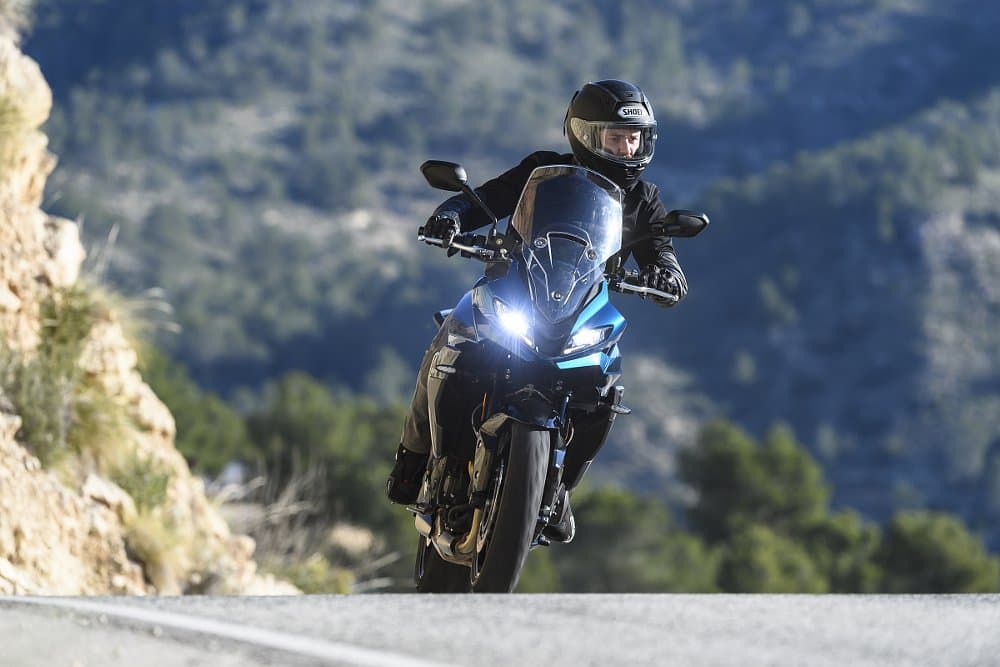
The comfort provided by the relatively simple suspension comes with a price when pushing through the twisties. The Tiger Sport is a flop around the bends; it just prefers a gentler, flowy ride and well-thought-out corner entries. At first, I applied the Nissin brakes with force, the suspension dove far more than I expected, and I tried to remain calm while reducing the force to achieve the right level of trail into the corner. In reality, this is how I take a corner on basically every motorcycle — albeit usually without the “trying to remain calm” part but the softness of the long-travel suspension meant that it felt like a more drawn-out process on the Tiger Sport.
The new Tiger Sport has the same rake, trail, and wheelbase as the 2025 model, which means it’s nimble enough to chuck into corner after corner and engaging enough that you feel like turning around and doing it all again. I added eight more clicks of preload, out of a possible 32, to the rear shock via the remote adjuster to try to gain some more composure while keeping up with the Trident 660s in the group. The added preload and saying “Slow is smooth, smooth is fast” in my head helped keep my 187-pound body from making the bike act like a pogo stick.
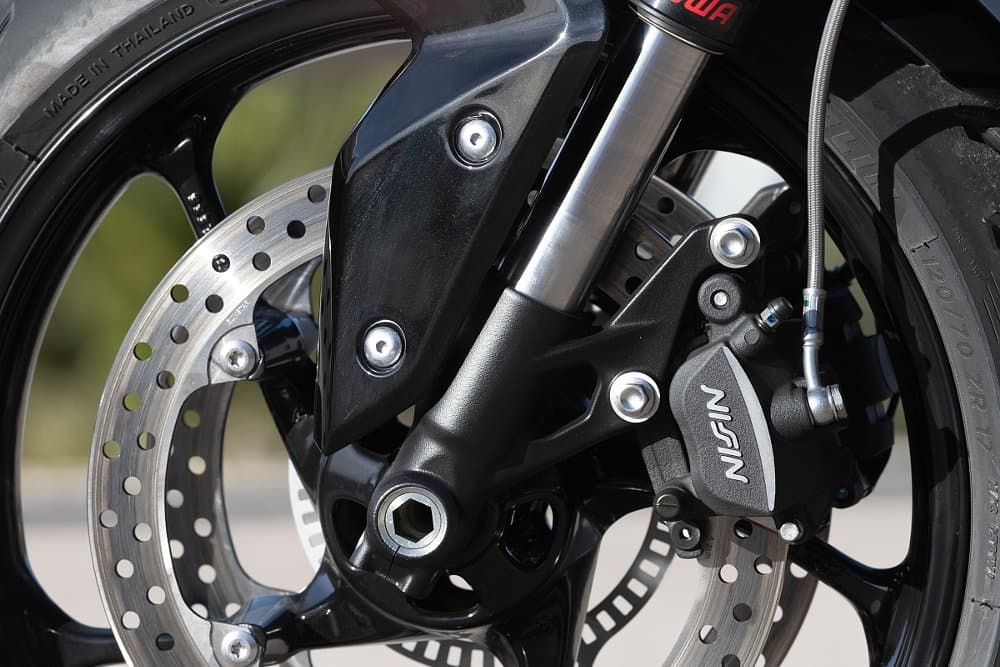
That less aggressive riding style also suited the front two-pot Nissin calipers, which were too weak for my liking. The bike now weighs around 10 pounds more than when it was first introduced and has an added 14 horsepower, but the brakes remain the same as when it launched in 2022. The issue I have with the brakes isn’t just that they’re soft. It’s the conflict between the fact that they’re aimed at a newer-rider audience on one hand and the fact some other users will ride this bike two-up with luggage. It’ll be interesting to find out if this issue can be remedied by simply swapping the pads out for more aggressive ones. Although I’d like more stopping power, the feel through the lever was good.
Even with my more Zen-like approach to riding, I still caused the lean-sensitive traction control to kick in twice. I was in Road mode and the Road TC setting, and I have nothing to complain about; the system stepped in when it should have and not a moment before, considering the riding mode. Similarly, the lean-sensitive ABS wasn’t overly intrusive for the type of riding the Tiger Sport is made to do.
One thing I appreciated on the Tiger Sport, as on the Trident, is that the power delivery in Sport mode wasn’t overly aggressive, as it is on quite a few modern bikes. That said, I spent approximately 70% of the ride in Road mode and was happiest there. I didn’t get to use the one-touch cruise control on the Tiger Sport, but it’s the same as the one on the Trident, which I used. It works simply and effectively.
The Tiger Sport has all the toys a newer rider needs to enjoy themselves on a good road day after day. Triumph nailed the package in terms of what features come as standard. Something that transcends the technology aimed at newer riders is Triumph’s Shift Assist bi-directional quickshifter, which is a stand-out feature regardless of how long you’ve been riding. The reassuring, reliable snip from each movement of the gear shifter made playing between the engine’s torque-laden midrange and somewhat peaky top end more addictive. The Shift Assist can change down while you accelerate or up while you decelerate, which is quickly becoming a gold-standard feature of quickshifters.
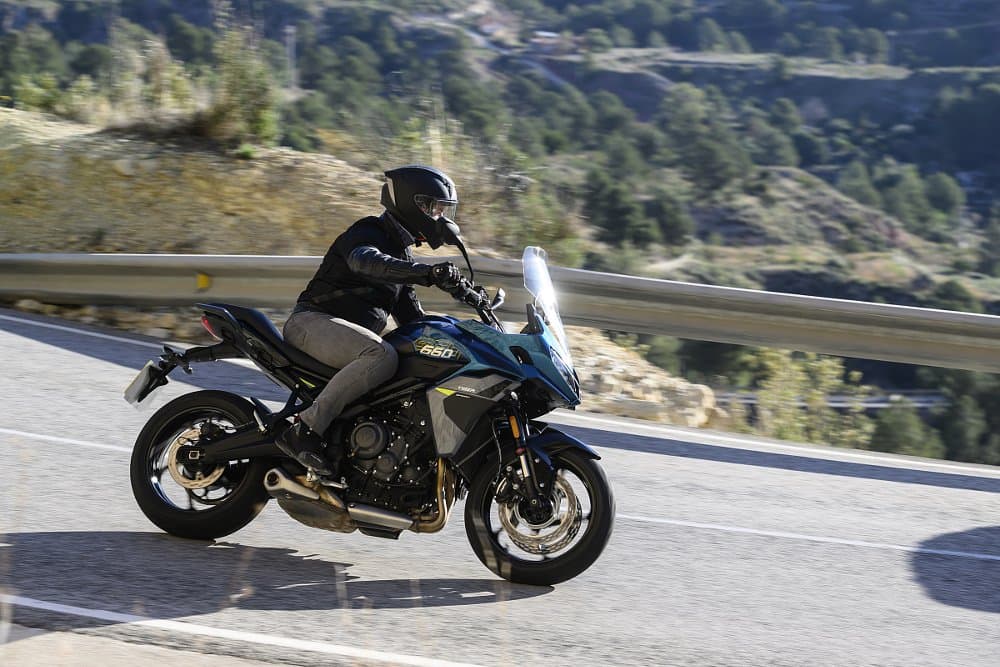
I spent the majority of my time chasing Trident 660s on roads more suited to that bike. The Tiger Sport kept up but required more work. I realize now that, somewhere in my mind, I wanted to be on the Trident because these roads were so amazing — that’s the headspace I referred to in my intro and that led me to underappreciate the Tiger Sport at the time. But thinking back, in the time since I rode the two bikes in Spain, my appreciation for the Tiger Sport has changed.
How the Tiger Sport 660 stacks up to the competition
During the ride, I couldn’t see the forest for the trees. If I was given the chance to ride home and keep one of those bikes that day, I’d have chosen the Trident, influenced by the roads that I’m still obsessing over as I type this. Now, however, with the benefit of time and a calmer mind, I wouldn’t make the same choice.
When I stop looking through the lens that this bike is made to be the most powerful A2-restrictable model in the category, it stops looking like a great entry-level tall-rounder and starts looking like a bloody competent do-it-all motorcycle for anyone. Except, it benefits from entry-level pricing with an MSRP of just $10,445.
For that price you get a motorcycle that rides engagingly on any stretch of twisty blacktop, commutes like one of the best in the business, and is ready for a two-up tour, although you’ll need to add some luggage. (Triumph’s accessory panniers cost $805; add $165 if you want the color-matched infill panels.) I didn’t appreciate enough what Triumph did to the Tiger Sport 660 at the time, but adding more torque and so much more horsepower puts this bike into a class of its own, far more than it does with the Trident 660.
The Tiger Sport 660 now has a good 20 to 30 horsepower advantage over its direct competitors, and that’s so far ahead it’s almost not even in the same category. But it’s still 10 to 25 horsepower and around 20 foot-pounds of torque short of the next level of tall-rounders, like the BMW F 900 XR and Yamaha Tracer 9.
In the middleweight tall-rounder category, the Tiger Sport 660’s standard features and category-destroying horsepower number make it great value, even as one of the more expensive options. When compared to the models a half-step above it, it’s still great value because, although less powerful and feature-laden, you’re saving anywhere between $1,500 to $4,800. That’s enough to add Triumph panniers, an aftermarket windscreen, upgrade the brake pads, and keep enough change to buy gas for your first adventure.
No matter what way you look at it, the Tiger Sport is priced attractively and should capture newer riders as they continue their two-wheeled journey.
I’d wager the Tiger Sport will also appeal to seasoned riders, likely ones who’ve lived through their ridiculous-horsepower era already, don’t need to arrive home after an adrenaline dump that leaves them silently grateful to be alive, and appreciate the engagement a more moderately powered motorcycle has to offer.
| 2026 Triumph Tiger Sport 660 | |
|---|---|
| Price (MSRP) | $10,445 |
| Engine | 660 cc, liquid-cooled, 12-valve, inline triple |
| Transmission, final drive | Six-speed, chain |
| Claimed horsepower | 94 @ 11,250 rpm |
| Claimed torque | 50.2 foot-pounds @ 8,250 rpm |
| Frame | Steel tubular perimeter |
| Front suspension | Showa 41 mm fork; 5.9 inches of travel |
| Rear suspension | Showa monoshock, adjustable for spring preload; 5.9 inches of travel |
| Front brake | Dual two-piston calipers, 310 mm discs with ABS |
| Rear brake | Single-piston caliper, 255 mm disc with ABS |
| Rake, trail | 23.1 degrees, 3.82 inches |
| Wheelbase | 55.83 inches |
| Seat height | 32.9 inches |
| Fuel capacity | 4.9 gallons |
| Tires | Michelin Road 5, 120/70R17 front, 180/55R17 rear |
| Claimed weight | 465.2 pounds |
| Available | Now |
| Warranty | 24 months |
| More info | triumphmotorcycles.com |