
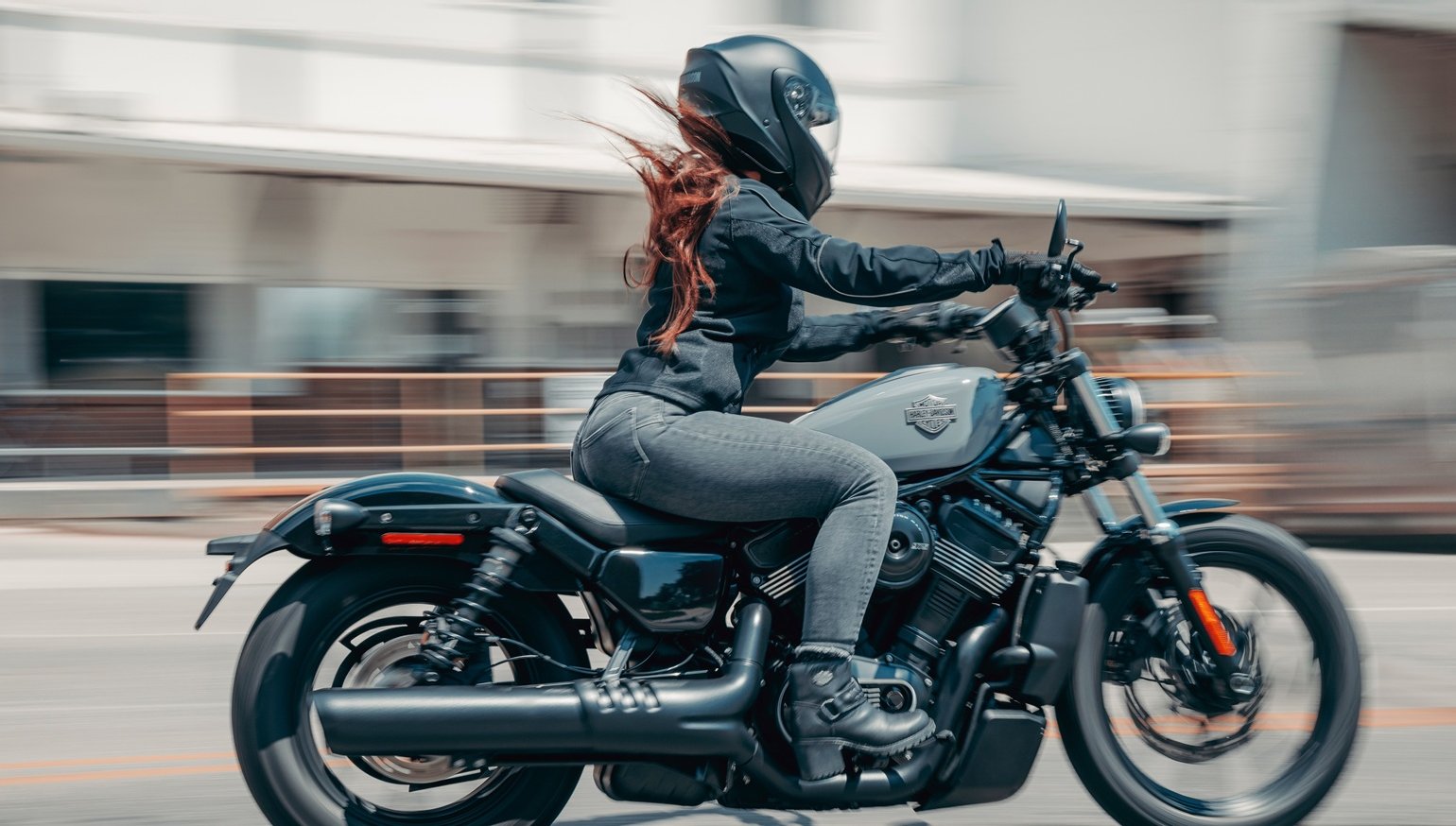
Women riders are more visible than ever
We’ve reached a point where women on motorcycles are more visible than ever, and still, somehow, unexpected.
The 20th anniversary of International Female Ride Day, coming up Saturday, brings this paradox into focus. For me, it also draws attention to the times when I experience riding as something universal, and feel like just any other rider, and others when my being a woman shapes the experience in distinct ways.
Recently, while on an afternoon ride, I noticed a red-and-black sport bike following our group of four. That’s not unusual, since riders sometimes tag along for a bit before peeling off. This one didn’t. Instead, the rider followed us onto the small dead-end street by the lake where we’d planned to stop for photos and pulled up behind me.
Vicki Gray of Motoress created International Female Ride Day in 2007 to encourage more women to ride while celebrating those who already do. This year’s theme, “Women Accelerate,” will play out across the world through independent, loosely organized rides sometimes tied to local causes.
I’ve taken part in several women’s motorcycling events over the years: a Women’s International Motorcycle Association rally, an all-women training session at the Eternal City Motorcycle Show in Rome, and International Women’s Day rides and seminars in both the United States and Italy. Each one, in its own way, has linked me to a longer lineage of women riders, women like the Van Buren sisters, who crossed the United States in 1916, and Louise Scherbyn, who founded WIMA in 1950. These women traversed many of the same routes in New York I ride today.

Women riders still make up only about 15% to 25% of the American motorcycling population, depending on the study. In that context, women-only events offer something tangible: community, support, and a temporary release from the quiet scrutiny of men.
I’ll admit it. I get irritated when men feel the need to “teach” me. The mansplainers arrive right on cue every spring, pointing out a “leaky fork seal” I didn’t ask about or questioning if I can handle a liter bike. Not the guys I actually ride with, but the ones I run into at a gas station, an early-season event, or online.
When I ride with women, the tone changes. We still talk bikes, maybe even more than when I ride with men, but there’s less scrutiny and more ease. At the last IFRD ride, we swapped notes on what we love about our machines, complimented each other’s gear, and compared classes we’ve taken. There were funny stories, a few disaster stories, and yes, some lighthearted teasing about men who ride with us.
But there’s an unintended side effect of women’s events. The more space we carve out for women riders, the easier it becomes to contain us there and treat us as a niche or an exception to the assumed male rider.
You can hear it in the phrasing. “Best motorcycles for women” often really means beginner bikes or options for shorter riders. I’m neither. Ask me about the best modifications “for women,” and I don’t have a useful answer because good modifications are personal, shaped by ergonomics, riding style, and preference, not gender.
Even gear reflects this tension. Add pink to a jacket, and it signals “woman rider,” but only for those who want that signal. I like pink for my ballet shoes. On a motorcycle, I’m not interested in announcing my gender to everyone I pass.
That’s the ongoing dilemma. I can’t speak for all women riders, since we come in all shapes and from different backgrounds, with our own ideas about riding.
But women riders also shape this tension. Separate spaces can, over time, become comfortable enough that you stop leaving them. The intention matters. Are these groups helping women riders break into male-dominated spaces, or building something that doesn’t need that validation? And either way, are they changing the culture or just reshaping familiar patterns?

I’ve seen a strong show of support among women riders, especially for those just starting out. There’s more freedom to make mistakes, to ride a little slower, or a lot faster. (Once, in Texas, I rode harder than I ever had with a group of women I’d just met.) Just as important, there’s room to ask questions without feeling exposed or judged. That kind of environment can make all the difference in building confidence, including to ride comfortably in mixed-gender groups.
At the same time, I’ve watched new hierarchies take shape within women-only spaces, such as cliques forming or the occasional “mean girls” dynamic emerging. Riding with women isn’t a guaranteed sisterhood. That may be part of why both informal groups and more structured clubs develop. They give riders a way to find their people and settle into a common language of motorcycling.
I don’t have a simple answer to the question of why it’s special to ride with women. Most of the time, I think of myself simply as a rider. Still, I value the occasional all-women event and moments when another woman joins a ride and it feels entirely normal.
Perhaps that’s part of what IFRD makes possible: a chance to reflect on what riding means to us individually and to women’s motorcycling communities. And maybe it invites something simple from men, too, not to overlook it because it’s about women riders, and to think about what they can do to encourage more women to accelerate.


