
People are more connected than ever these days. Our smartphones talk to everything from our smart watches to our smart toilets.
It’s worth clarifying that crash-detecting systems are used for various purposes, not just contacting emergency services.
Fly Racing’s Formula S helmet leverages impact-detection algorithms and proprietary circuitry developed by Quin helmets. The Dallas-based company claims its tech can differentiate between an accidental helmet drop and a major crash. When the latter occurs, the Formula S sends location, health, and safety data to the rider’s emergency contacts via text message, e-mail, and push notifications. Unfortunately, Quin only alerts emergency dispatchers for customers with an Apex membership ($7.99 monthly). Otherwise, a user’s friend or family member will need to hail medical services themselves.
While most crash-detection systems function like Quin’s, there’s no shortage of options at the customer’s disposal.
Airbags aren’t the only protective gear showcasing this technology.
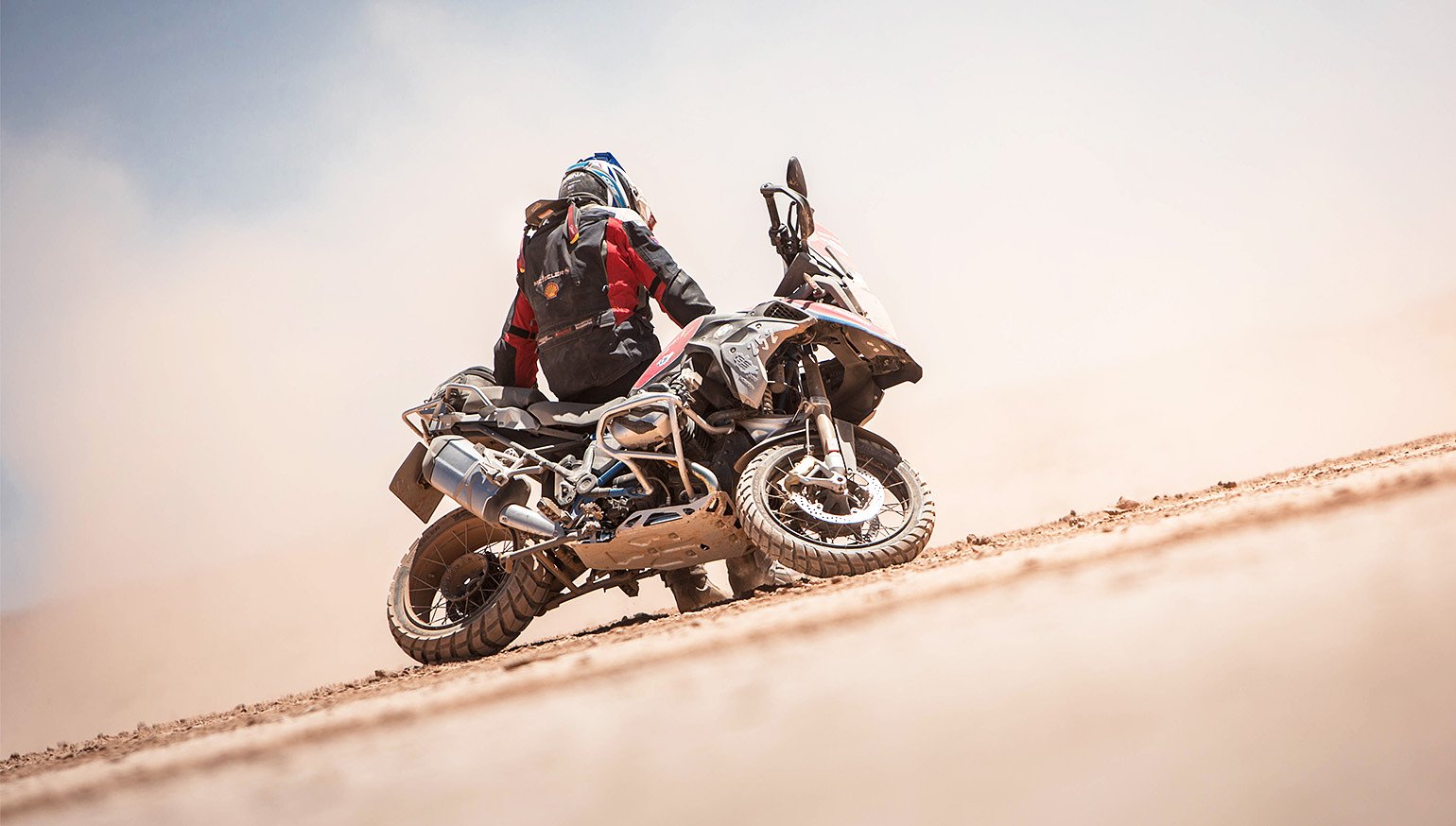
BMW was the first motorcycle OEM to offer onboard crash detection when it debuted Intelligent Emergency Call (IEC) as an option in 2016. Unlike the Formula S helmet, which hinges on Bluetooth connectivity and the user’s mobile device, IEC benefits from its own mobile network module. When the bike’s acceleration and lean angle sensors detect a spill, the program contacts one of BMW’s qualified call centers.
Crash detection has come a long way in the last 60 years. From airbag vests to comm units, from onboard systems to cloud-based algorithms, the technology grows more sophisticated by the year. With that said, more impact detection isn’t necessarily better.
According to Apple, its service “won’t override any existing emergency calls placed by other means.” Instead of purchasing multiple crash-detecting devices, it’s best to choose the solution, or solutions, that suit your needs. After all, who can afford multiple ambulances or airlifts arriving at their crash site?
Each option has its strengths and shortcomings. Apple’s Crash Detection boasts satellite connectivity but its car-oriented algorithm may not identify the same subtleties as BMW’s IEC or Cardo’s PackTalk Pro, two products developed for motorcyclists. In the end, the choice comes down to where and how the customer rides and what level of features is desired. Our world may be more connected than ever, but that’s not necessarily a bad thing, especially when it comes to the safety provided by today’s crash-detecting tech.


